Door orientation depends on hinge placement and swing direction, which determine handing, defining how the door opens, how hardware is installed, and how you interact with the space.
Proper orientation and handing prevent installation issues, such as misaligned hardware and reduced functionality.
Handing is not only about convenience; it influences security, accessibility, and spatial flow. Whether you prefer ornamental hardware, such as the Bamboo Lever or Arched Entry Sets, use consistent handing definitions to achieve compatibility across doors, frames, and locking systems.
Understanding right hand vs. left hand doors allows you to select precise hardware and place custom orders. With accurate identification, you can align the locks, levers, and hinges for seamless operation and aesthetics.
This guide explores right-hand vs. left-hand door handing and hardware, and how to tell the difference between them.
Right Hand vs. Left Hand Door: Quick Visual Comparison
The right hand vs left hand door swing and hinge is all about perspective. From the same perspective, a left-hand door hinges on the left and opens inward; the right-hand door hinges on the right and opens inward.
The Door Handing Quick Reference (Hinge + Swing Rule)
Door handing is determined by hinge position and swing direction. The standard reference point is the side where the door swings toward you. From this position, hinge placement defines handing.
Imagine using the Bronze Concealed Bearing Butt Hinges; if the hinges are on the left and the door swings toward you, it is a left-hand door. Conversely, if the hinges are on the right and the door swings toward you, it is a right-hand door. This method applies consistently across interior and exterior doors.
The same hinge logic applies to doors that swing away from you, but they are classified as left-hand reverse or right-hand reverse. This distinction is important when specifying hardware, especially for locks and levers that are not reversible; misidentifying either hinge position or swing direction may result in incompatible hardware and improper installation.
Understanding Inswing vs. Outswing Directions
Inswing and outswing in a left-hand or right-hand door describe the direction the door moves relative to your position. However, an inswing door is one that opens into a room or a building, while an outswing door opens outward, away from the interior space.
Inswing doors are common in residential interiors because they protect hinges and hardware from external exposure. They also align with typical room layouts, where door clearance is planned within the space.
Outswing doors are often used for exterior entries or areas where interior clearance is limited. They improve weather sealing and can enhance security when paired with the appropriate type of hinges and locking systems, such as the Arched Patio Door Set. This distinction between inswing and outswing directly affects handing classification and determines how hardware is configured for proper operation.
How to Determine Door Swing in 3 Simple Steps
Identifying door swing is as effortless as observing the position, hinge placement, and swing direction using a consistent reference point for accuracy. Use these three simple steps:
Step 1: Stand on the Outside (The Secure Side)
Start with the correct reference position, which is always the outside, also known as the secure or key side of the door. This is typically the side where a lock cylinder or key entry is located.
For interior doors without locks, choose the side from which the door opens toward you. Use a consistent position because switching perspectives will lead to incorrect identification.
Standing on the outside or secure side is the standard reference point used by manufacturers and installers. All handing definitions assume this perspective when accessing hinge location and swing direction.
Step 2: Identify the Hinge Position
With your position established, locate the hinges; their placement determines whether the door is left- or right-handed. Hinges are always visible on the side the door swings toward.
If the hinge placement is on the left side of the frame, the door is classified as left-handed from your perspective. If the hinges are on the right, it is right-handed. This rule applies regardless of door size or function.
Hinge placement should be confirmed visually rather than assumed because the orientation defines handing. For concealed hinges, check the pivot point or refer to the installation documentation.
Step 3: Watch the Direction of the Swing

After identifying hinge placement, observe how the door moves; the direction of the swing determines whether the door is standard or reverse-handed. Left vs right hand door swings feature no distinction in terms of configuration.
If the door swings toward you, it is a standard, regardless of hinge placement. If it swings away, it is a reverse configuration, such as left-hand reverse or right-hand reverse.
Swing direction affects clearance, hardware orientation, and how you interact with the door, while also determining how locks engage and how door levers are installed. Confirm this movement to assess whether the door operates as intended within the space.
A Quick Shortcut: The “Butt-to-Hinge” Method
The “butt-to-hinge” method offers a quick way to determine door handing without going through the detailed process of assessing perspective and swing direction. Simply stand with your back, or “butt,” facing the hinges.
If your left side aligns with the hinges, the door is left-handed; if your right side aligns with the hinges, it is right-handed. This method simplifies identification and is a method installers may use to quickly determine swing in fast-paced jobsite conditions.
While convenient, this shortcut still requires correct positioning. You must stand on the secure side of the door for accurate results, and it is most useful for standard hinged doors. Reverse swings and specialized configurations require the initial step-by-step hinge and swing rule, which provides a more accurate assessment.
Why Door Handing Matters for Hardware Selection
Door handing is not only a matter of preference—it determines hardware compatibility and affects installation, operation, and alignment of locks, levers, hinges, and other functional components. Handing decisions are directly tied to how hardware will be used on your door, as shown below:
Handed vs. Reversible Door Hardware
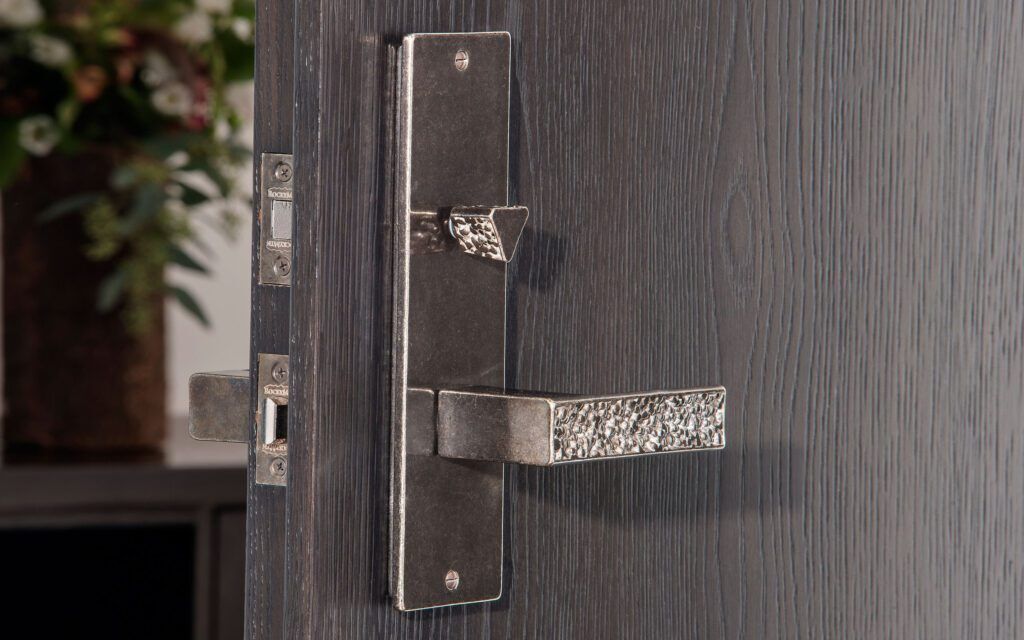
When looking for high-quality door hardware, you’ll encounter handed and reversible options. Handed hardware is usually designed specifically for left-hand or right-hand door designs and cannot be installed on the opposite configuration without modification.
Reversible hardware can be adjusted during installation to fit either right or left-handed doors. This flexibility simplifies ordering but may limit design options or mechanical complexity.
High-end hardware, especially custom or architectural pieces, such as the Capitol Lever, is often handed. This allows for precise alignment, improved ergonomics, and better integration with the door’s design.
Choosing between handed and reversible hardware generally depends on project requirements, budget, and the level of customization required.
High-Security Mortise Locks vs. Standard Latches
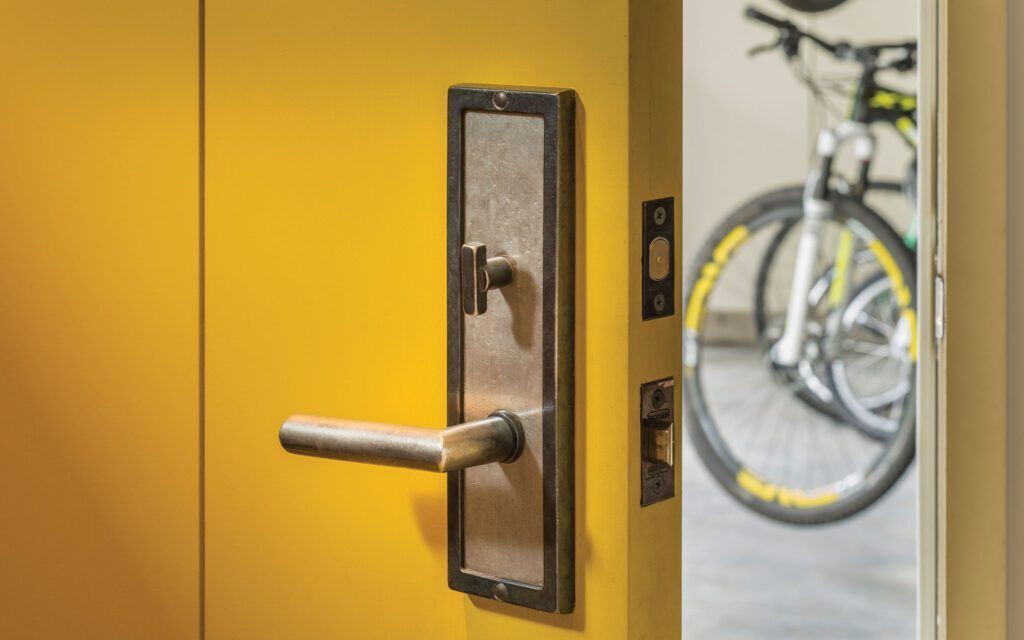
Mortise locks are complex, high-security systems installed inside a pocket within the door. These locks are known for their durability and advanced locking mechanisms, making them favorable for exterior applications and high-security environments, such as bedrooms, data rooms, and other private areas.
The locks require precise handing because internal components are configured for a specific orientation, which can be left or right. Incorrect handing will render the lock unusable without reconfiguration.
Standard tubular latches are often simpler and reversible; they can be adjusted during installation, making them more flexible and suitable for everyday applications.
The choice between mortise and standard tubular systems boils down to security needs, door construction, and hardware compatibility. This decision doesn’t affect left-hand door vs right-hand door selection, as the locs function on both options. However, you must select the right handing to achieve proper installation, especially when using mortise locks.
Determining Handing for Custom Bronze Levers and Grips
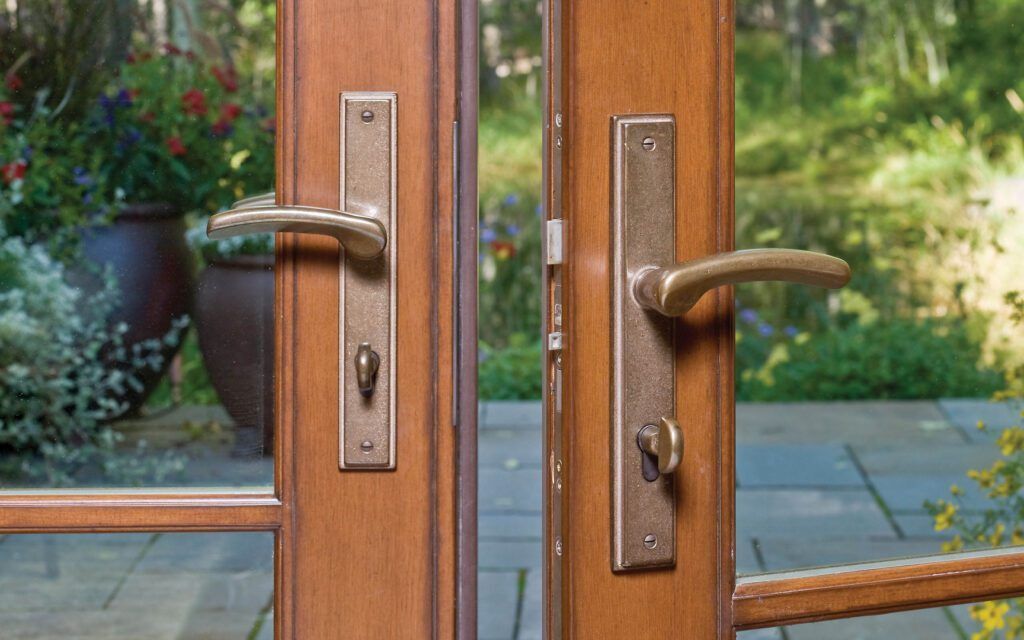
Custom levers and grips, including the Classic Bronze Lever, are typically handed to maintain ergonomics and visual alignment. Their shape and orientation are designed for specific door configurations and operation.
Unlike generic hardware, these pieces are not easily reversible. The lever direction, return angle, and mounting points are all dependent on correct handing. The details, such as arches, curves, and ornamental design elements that contribute to ergonomics and handling, also make it impossible to reverse the installation.
When specifying custom hardware, confirm door handing early in the design process to get pieces that integrate correctly with the door and surrounding architecture. Accurate handing supports your comfort, preventing the levers from feeling awkward or restricting movement.
Why Handcrafted Bronze Hardware Requires Precise Handing

Handcrafted bronze hardware, like the Chiseled Lever or Egg Door Knob, is produced through a casting process that creates fixed forms for precise handing. These pieces are not designed for post-production adjustment, so correct installation is essential.
Each component is shaped with a specific orientation in mind, whether left or right. Levers, escutcheons, and backplates must align with door swing and hinge placement to function properly. The artisanal design elements, like contours, also favor specific directions and handing.
This level of precision delivers durability and performance, but increases the importance of accurate specification before ordering. Because of the material’s density and construction, modifications after casting are limited. Errors in handing definition often require complete replacement rather than adjustment.
Door Handing for Double, French, and Pivot Doors
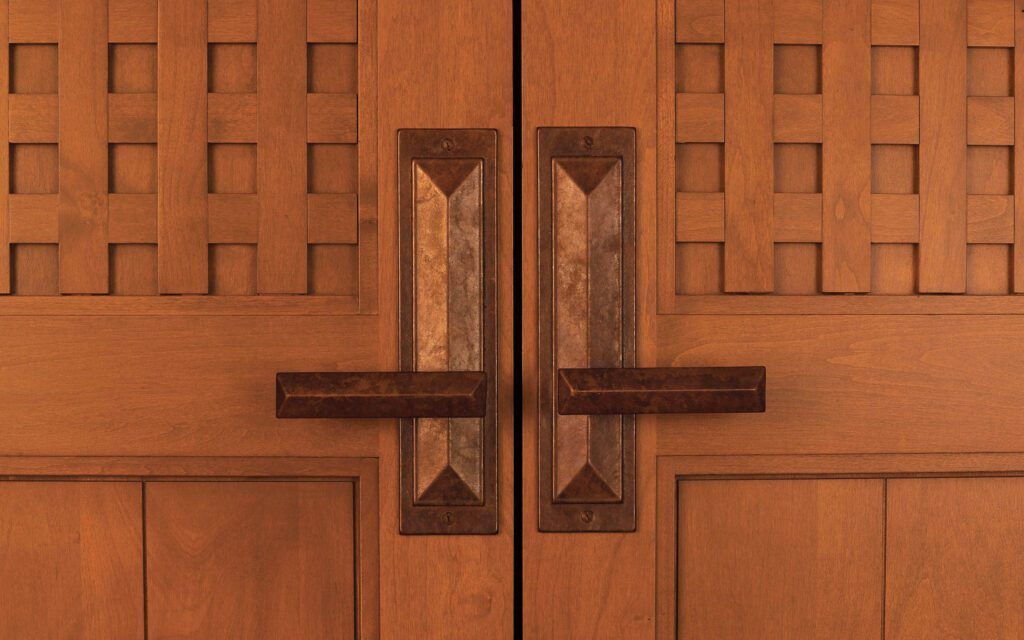
Learning how to determine door swing for single-panel left-handed and right-handed doors is straightforward. That’s not the case when dealing with double, pivot, and French doors. These designs use complex operations that involve active and inactive panels, requiring hardware coordination and movement mechanics across multiple door leaves.
Identifying the “Active” Door Leaf
In double or French doors, the active leaf is the door that opens first and contains the primary locking or latching hardware. The inactive leaf typically remains fixed until released from its position, even though both leaves can swing open in one or both directions, depending on the design.
The active door determines hardware placement, including bronze door handles, locks, and latching systems. Identifying this leaf allows you to accurately determine handing specification required for installation.
Look for the door with the handle, key cylinder, or latch mechanism; this is usually the active leaf. In some systems, the inactive side may include flush bolts or concealed hardware, so don’t confuse that with the primary hardware.
Specifying Handing for Double Entry Sets
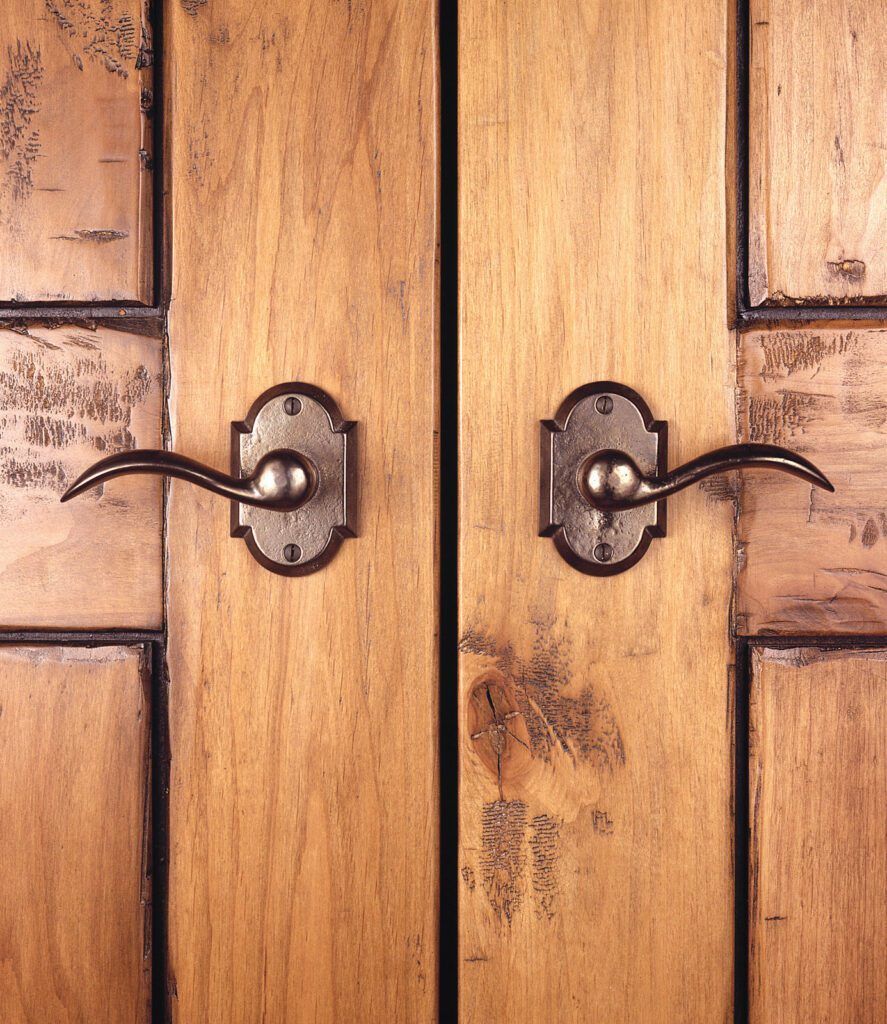
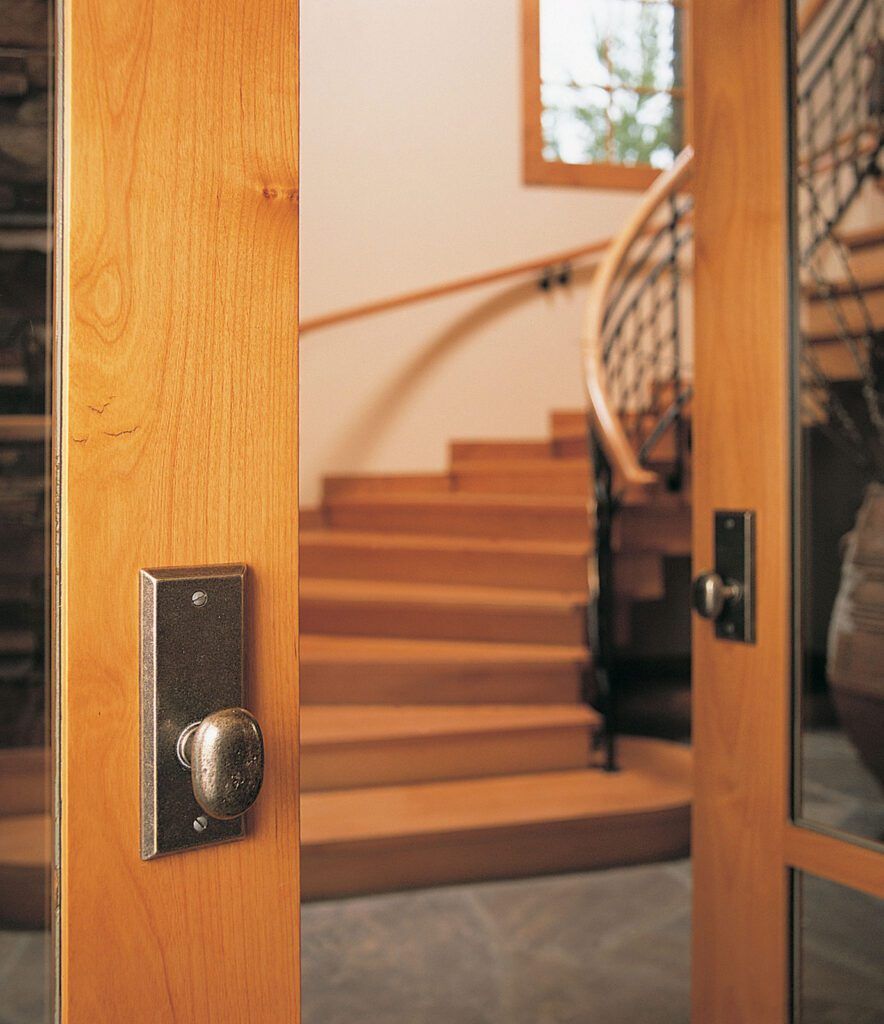
Each door in a double-entry design requires coordinated handing between the panels; the handing is specified individually while maintaining overall symmetry and function.
Identify the active door and follow standard handing rules; refer above for how to tell if a door is left or right. The inactive door is configured to support the active leaf with the primary hardware—lever, latches, and locking systems. Align hardware placement across both leaves and learn how to choose door handles that help maintain visual cohesion and functional balance.
When specifying handing, indicate the active and inactive door, the swing direction, and hinge placement for both panels. Accurately determining these aspects leads to compatibility between locking systems, handles, and structural components, preventing specification errors that can complicate installations.
Hardware Considerations for Large-Scale Pivot Doors
Pivot doors operate differently from hinged right vs left-hand door designs. Instead of swinging inward or outward, they rotate on a central or offset pivot point. As such, handing is less about door hinges and more about the direction of movement.
Hardware should accommodate this motion, with pulls, locks, and latches positioned based on how the door rotates and where you interact with it. Because pivot doors are often oversized, scale the hardware properly to maintain cohesion and visual aesthetics. You can use larger pulls, such as 24-inch Flute Grip Pulls, and reinforced components to support weight and usability.
Traditional handing rules are less rigid in pivot designs, but direction and orientation still influence hardware placement. Plan accurately to install doors that operate smoothly and align with the intended design.
The Professional Order Checklist for Door Hardware
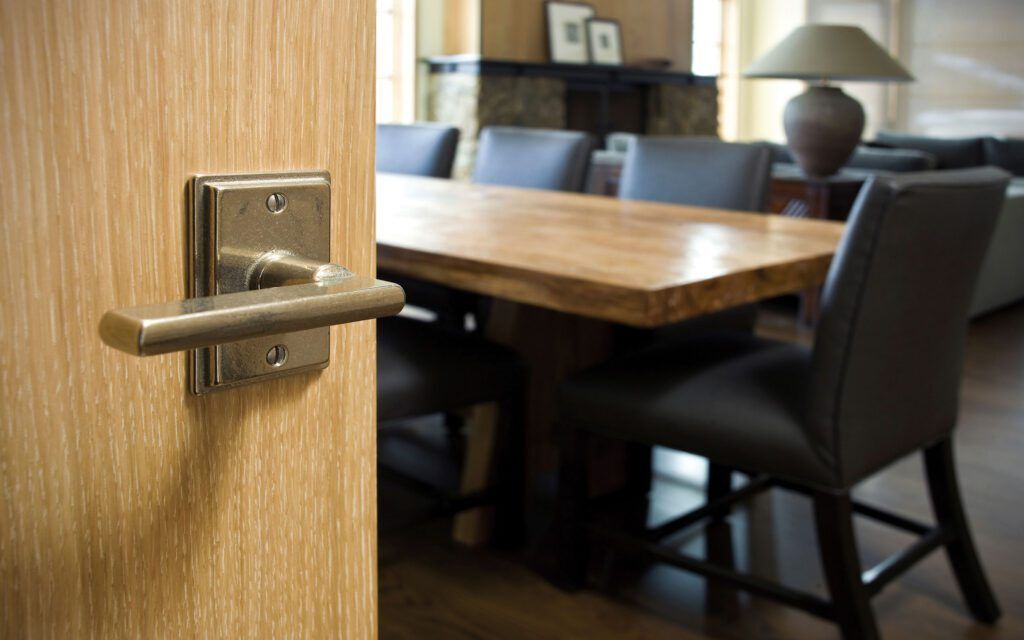
Right-hand door vs left-hand door hardware aren’t any different as they both use knobs and rings, pulls, levers, hinges, escutcheons, backplates, and other accessories. Simply maintain accurate measurements, verified handing, and clear specifications for compatibility with door construction.
Measuring Backset and Door Thickness for Custom Castings
Backset refers to the distance from the edge of the door to the center of the bore hole; this measurement determines hardware alignment and should match the lock or latch specification.
Door thickness also affects hardware compatibility. Generally, thicker doors can accommodate bulky hardware and more complex systems, while slim panels usually require dummy knobs, such as the Ellis Door Knob, and lightweight latching and locking. Standard doors come in varying designs and usually match standard hardware.
Custom and solid-core doors require extended components and specialized fittings, making them ideal for tailored, handcrafted designs.
Prioritize accurate measurement when dealing with custom cast hardware to avoid incorrect backset or thickness, which can lead to misalignment and installation issues. Verify dimensions before ordering to get components that fit precisely within the door structure.
Verifying Clearance for Decorative Plates and Trim
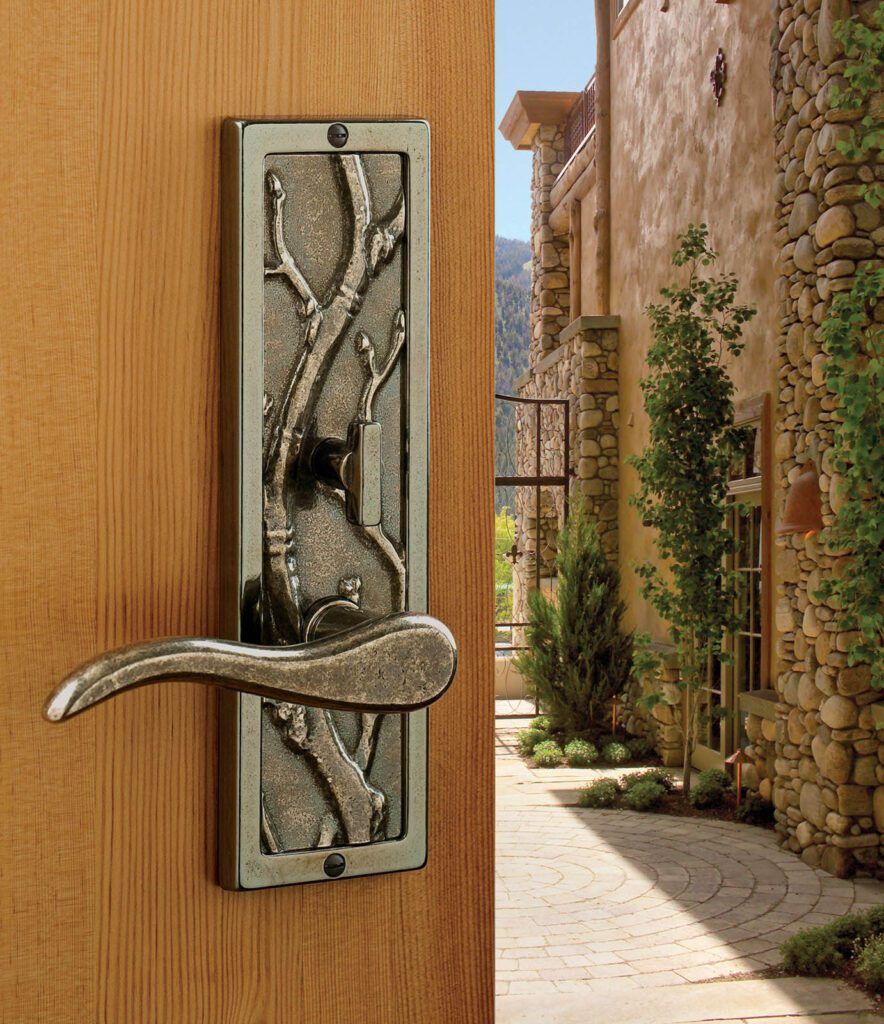
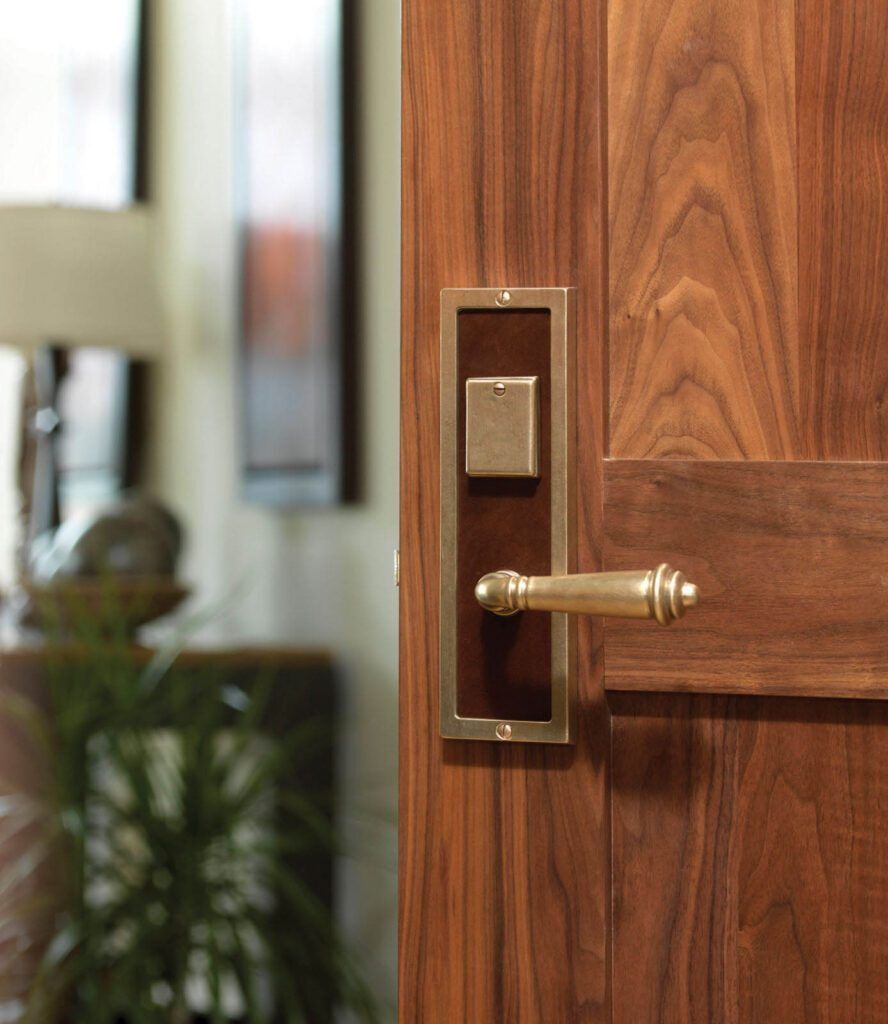
Doors with decorative plates and escutcheons require enough clearance. The trim should also have sufficient clearance around the door edge and frame; this supports smooth operation.
Check the spacing between the door edge, frame, and adjacent walls and verify that the hardware does not overlap or obstruct movement. This is especially important for custom or oversized pieces, such as 40-inch Lariat Grip Pulls and Long Olympus Levers.
Clearance also affects visual balance—the hardware should sit comfortably within the door’s proportions without appearing cramped. Review these dimensions holistically, paying attention to the final look, feel, and operation when everything is fully installed. This approach helps prevent conflicts, allowing decorative elements to integrate cleanly with the door design.
How to Consult with a Design Showroom Before Ordering
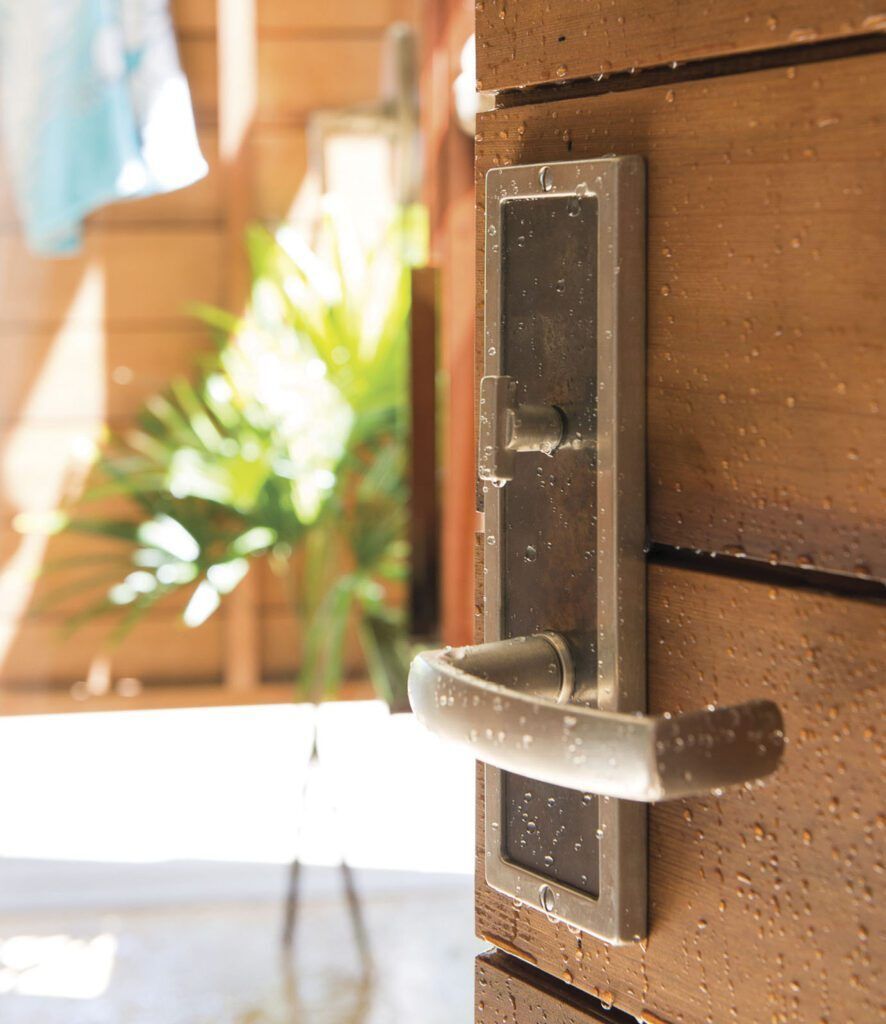
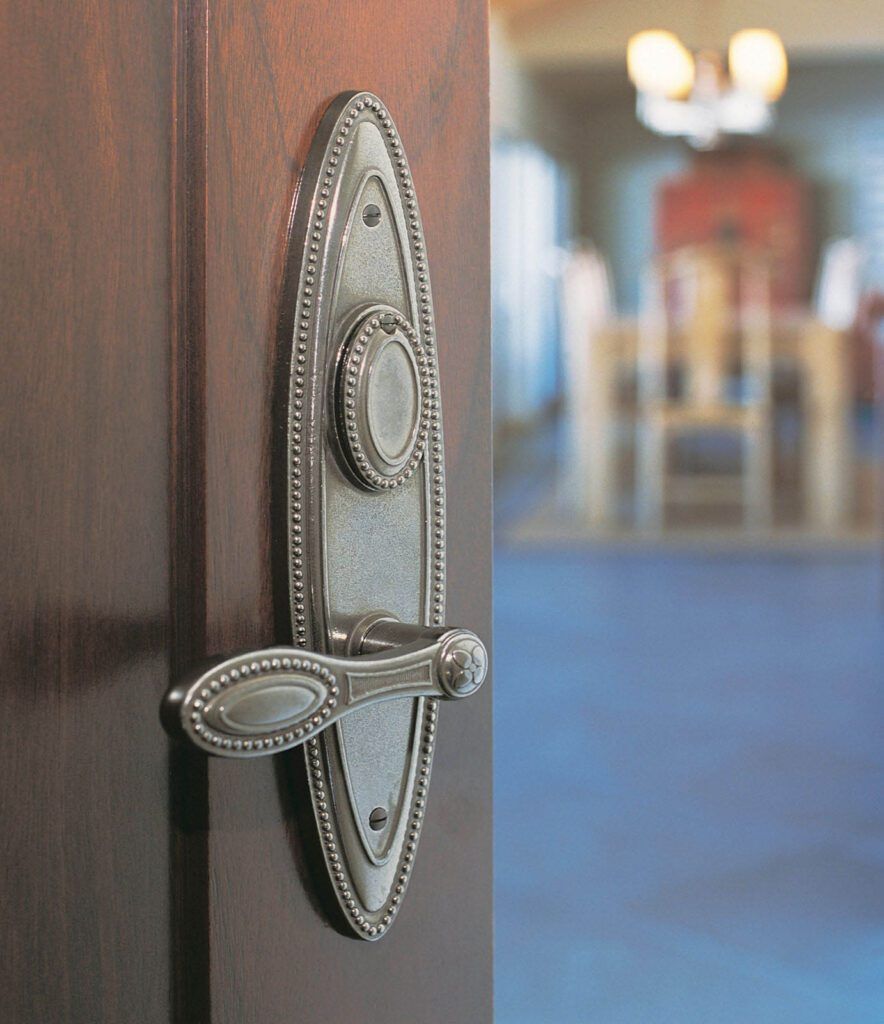
Right-hand vs left-hand door hardware decisions improve when you involve a design showroom. You can get physical samples, technical guidance, and expertise in matching hardware to door configurations, allowing you to confirm specifications before placing hardware orders.
Remember to bring your measurements and door details—even layout plans if possible—this allows consultants to recommend appropriate hardware. The consultants will verify all aspects, including handing, backset, and compatibility, while specifying door hardware that aligns with your design specifications and preferences.
Showroom consultations ultimately reduce the likelihood of ordering errors, while also providing insight into material finishes, scale, and tactile qualities that are difficult to assess online.
You can explore high-quality pieces from Rocky Mountain Hardware, including premium bronze pulls, handles, knobs, hinges, and complete door sets. Get high-value standard hardware or custom, handcrafted pieces designed according to your specifications.
Right Hand vs. Left Hand Door FAQs
How Can I Tell if My Door Is Left or Right-Handed?
To tell if a door is left or right-handed, stand on the secure side, observe hinge placement, and note swing direction. If the hinges are to the left, it indicates a left-hand door; if they are to the right, they indicate a right-hand configuration.
Does It Matter if the Door Opens in or Out?
Yes. Swing direction affects clearance, security, and hardware configuration, so learning how to determine door swing is important. The swing influences how you use and access the door, including where locking hardware is positioned. It determines whether the door is inswing or outswing and impacts installation requirements.
Can I Change the Handing of My Hardware After It Arrives?
It depends—if the hardware is reversible, you can change the handing without affecting installation and function. For handed hardware, especially custom or mortise systems, you cannot change the handing; these systems are designed to match the door’s original specification.