Commercial door hardware does more than secure an opening. It determines how a building performs under daily stress, how safely people exit in an emergency, and how often the maintenance team gets called about a stuck lock. Choosing the right door hardware supports security, meets code requirements, and aligns with the building’s overall design language.
Hardware also affects user experience. A lever that operates smoothly, a closer that does not slam, a latch that engages cleanly. These details shape how people feel moving through a space. You can pair a solid bronze lever with matching push plates, hinges, and exit devices to maintain visual cohesion across an entire project.
Each decision, from grade rating to material selection, should support both durability and long-term design consistency. This guide explores commercial door hardware types, covering locks, handles, latches, hinges, closers, and exit devices.
Main Types of Commercial Door Hardware
Commercial hardware is not standard. It is a category comprising several interconnected systems, each with its own function, grading, and installation requirements.
Comparison Table: Commercial Door Hardware at a Glance
The table below summarises the main commercial door hardware types, their primary function, and common applications.
| Hardware Type | Primary Function | Common Applications |
| Cylindrical Locks | Entry/privacy control | Office doors, interior rooms |
| Mortise Locks | Heavy-duty security | Main entries, high-traffic doors |
| Deadbolts | Secondary locking | Exterior and secure interior doors |
| Electronic Locks | Access control | Restricted areas, modern workplaces |
| Lever Handles | Grip and operation | ADA-compliant entries throughout |
| Pull Handles | Manual door operation | Storefronts, lobbies, heavy doors |
| Push Bars/Plates | High-traffic passage | Corridors, restrooms, service areas |
| Spring Latches | Self-latching closure | Interior passage doors |
| Deadlatches | Security latching | Exterior and keyed entry doors |
| Roller Latches | Light-duty closure | Cabinets, light interior doors |
| Ball Bearing Hinges | Smooth, durable swing | All commercial door applications |
| Continuous Hinges | Full-length support | Heavy or wide doors |
| Pivots | Architectural swing | Oversized, statement entry doors |
| Door Closers | Controlled closing | Fire-rated and exterior doors |
| Exit Devices | Emergency egress | Any door serving as a fire exit |
Commercial Door Locks
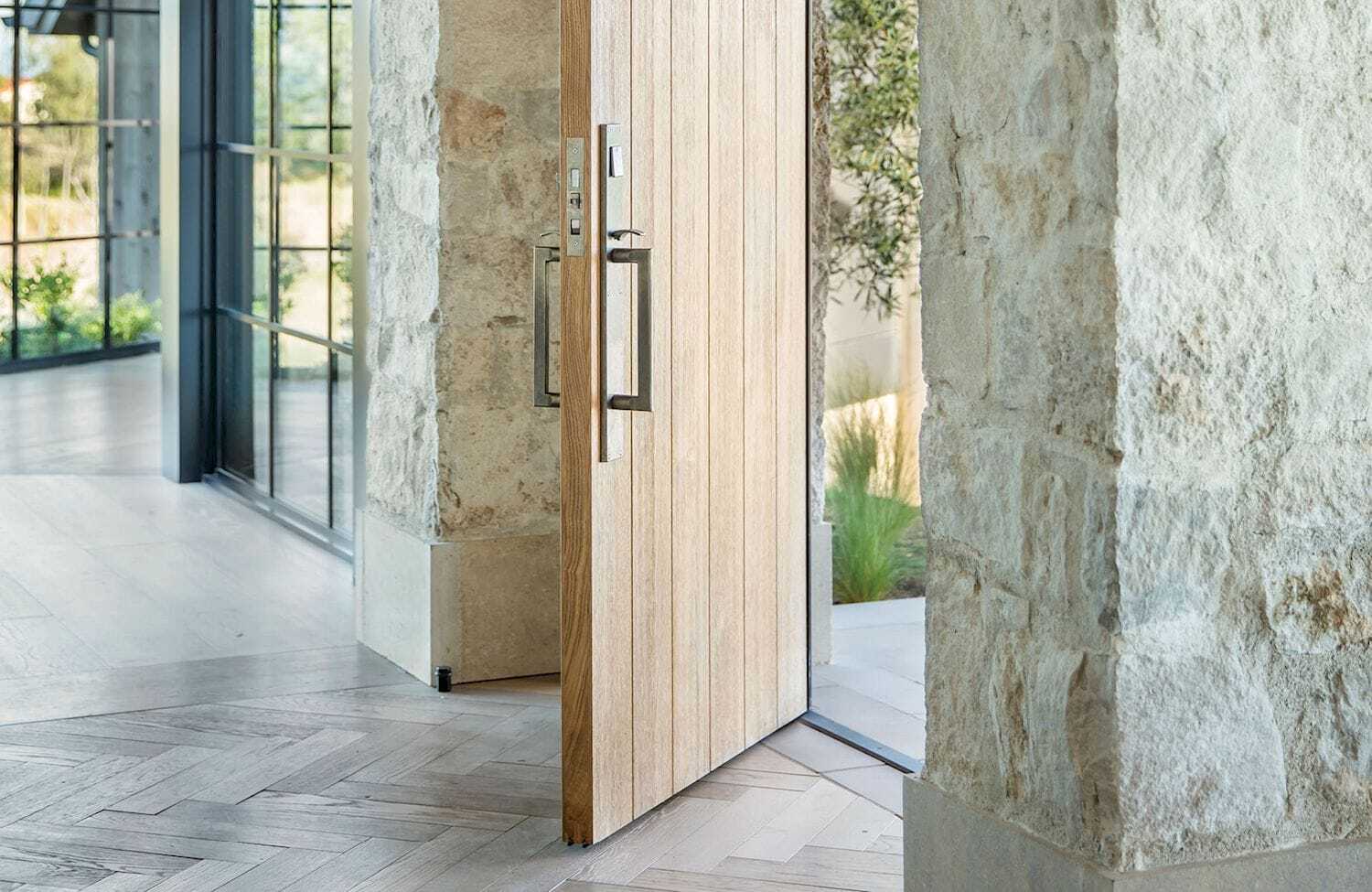
Locks are the backbone of any commercial door hardware specification. They control access, provide security, and must operate reliably for years. The four main commercial door lock types you will encounter are cylindrical, mortise, deadbolts, and electronic.
Cylindrical Locks
Cylindrical locks are installed through a hole bored in the door. They are common in offices, classrooms, and interior rooms. ANSI grades separate the options.
- Grade 1: Heavy-duty, 1 million-plus cycles. For high-traffic exterior doors in hospitals, government buildings, and schools.
- Grade 2: Mid-range, 400,000 cycles. For low-traffic exterior doors or secure interior spaces like private offices.
- Grade 3: Standard, 200,000 cycles. For closets, break rooms, and infrequently used spaces.
Do not assume a cylindrical lock is commercial-grade just because it looks heavy. Check the grade stamp.
Mortise Locks
A mortise lock sits inside a rectangular pocket cut into the door edge. The lock body is larger and stronger than a cylindrical chassis. Mortise locks offer more functions and longer service life.
- Institutional grade uses reinforced steel plates and anti-pick pins. It is for prisons, mental health facilities, and high-security zones.
- Commercial grade is fire-rated and durable. It works for hotels, office buildings, and mixed-use spaces.
Mortise locks require a skilled installer with a mortising machine. Once installed correctly, a quality mortise lock can easily last as long as the door itself, often decades with basic maintenance. Complete door sets often pair mortise locks with coordinated trim.
Deadbolts
Deadbolts add a second layer of security. The bolt is solid steel and cannot be retracted without a key or thumb turn. Three configurations are common.
Single cylinder deadbolts have a key cylinder outside, and a thumb turn inside. They are standard for offices and retail but vulnerable near glass. Double cylinder deadbolts require a key on both sides. They prevent break-ins through glass doors but can block emergency exits. Use them with caution. Classroom function deadbolts lock from the outside with a key while allowing free exit from the inside.
Electronic and Smart Locks
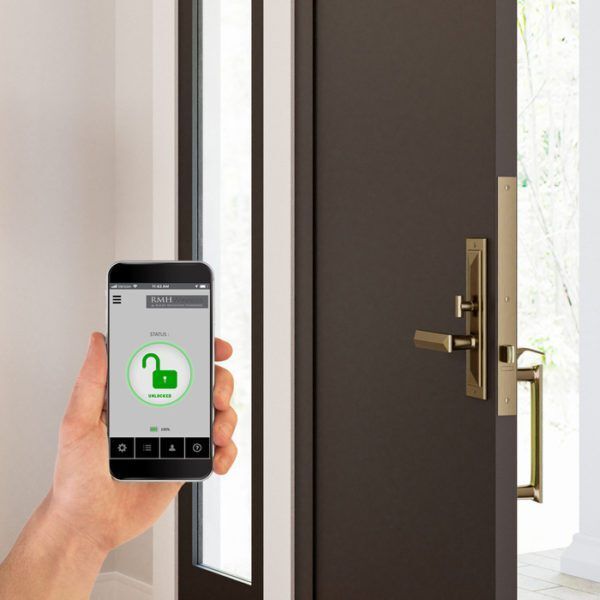
Electronic locks remove the need for metal keys. Access is managed through credentials like keycards, PIN codes, mobile devices, or fingerprints.
Keypad locks require numeric codes. They work for storage rooms and shared workspaces. Look for anti-tamper features. Card reader systems use magnetic strips or RFID chips. Biometric locks use fingerprint or retina scans for high-security areas like labs. Smart locks allow remote access through mobile apps, which works for granting temporary entry to contractors.
The electronic door locks category includes options for both standalone and networked access control systems.
Commercial Door Handles and Levers
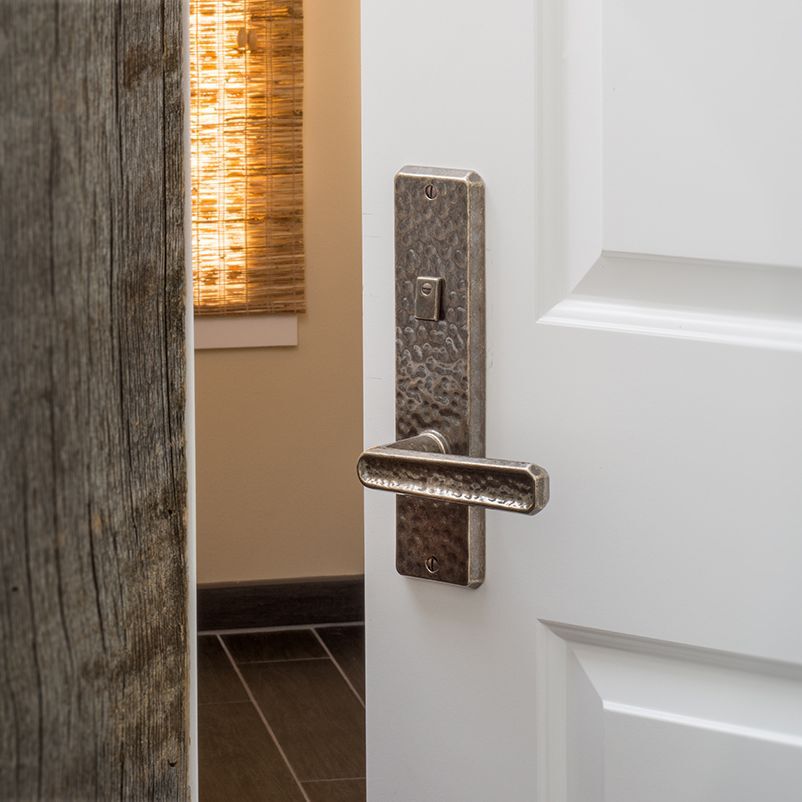
Handles and levers are the most-touched components on any door. They wear out faster than almost anything else in the hardware set, so specifying the right type and grade matters considerably. Understanding the different commercial door handle types helps you match the right product to traffic patterns and user needs.
Lever Handles
Lever handles dominate commercial settings because they are easy to operate with full hands and work for more users than knobs. Duty ratings matter. Standard duty handles 225 pounds of leverage force. Heavy-duty handles 350-plus pounds for hospitals and public buildings.
Healthcare levers add curved shapes and antimicrobial materials for easy sanitizing. Style options run broad. Oil-rubbed bronze or satin brass finishes anchor high-end lobbies or hotel corridors without sacrificing durability. Choosing from luxury door handles means you don’t have to sacrifice design quality for durability.
Pull Handles
Pull handles provide a robust grip for doors requiring extra force to open.
- Straight Pulls: Center-mounted on wide doors over 4 feet.
- Offset Pulls: Positioned to prevent conflicts with surrounding mouldings.
- Tubular Pulls: Hollow steel construction. Lightweight yet durable.
Pairing them with a well-chosen push plate on the opposite face keeps the hardware set complete and visually cohesive.
Push Bars and Push Plates
Push bars are exactly what they sound like, horizontal bars that let you push a door open. They belong on the egress side of doors that swing outward.
Push plates serve the same function on doors that do not require a full bar but still need a designated push surface.
Commercial Door Latches Types
Latches hold a door closed but do not provide security in the way a lock does. There are several commercial door latch types, each suited to different applications.
Spring Latches
A spring latch uses a beveled bolt held forward by a spring. When the door closes, the strike plate pushes the bolt back, then the spring extends it into the strike hole. Spring latches are common in cylindrical locksets. The limitation is that a spring latch can be retracted with a knife blade or credit card if there is enough gap between the door and frame. For security, pair a spring latch with a deadbolt.
Deadlatches
A deadlatch includes a secondary locking pin that prevents the main bolt from being pushed back once the door is closed. This makes deadlatches more secure than simple spring latches. They are standard in mortise locks and high-security cylindrical locks. Most quality commercial locksets incorporate a deadlatch as a standard feature.
For openings requiring extra security, a door guard and latch adds a layer of protection against forced entry.
Roller Latches
Roller latches use a spring-loaded roller instead of a beveled bolt. They are quieter and smoother. They work for doors that get constant use but do not need to latch tightly, such as kitchen swinging doors or pass-through openings. Roller latches offer almost no security. They only hold a door in a closed position.
Hinges and Pivot Hardware
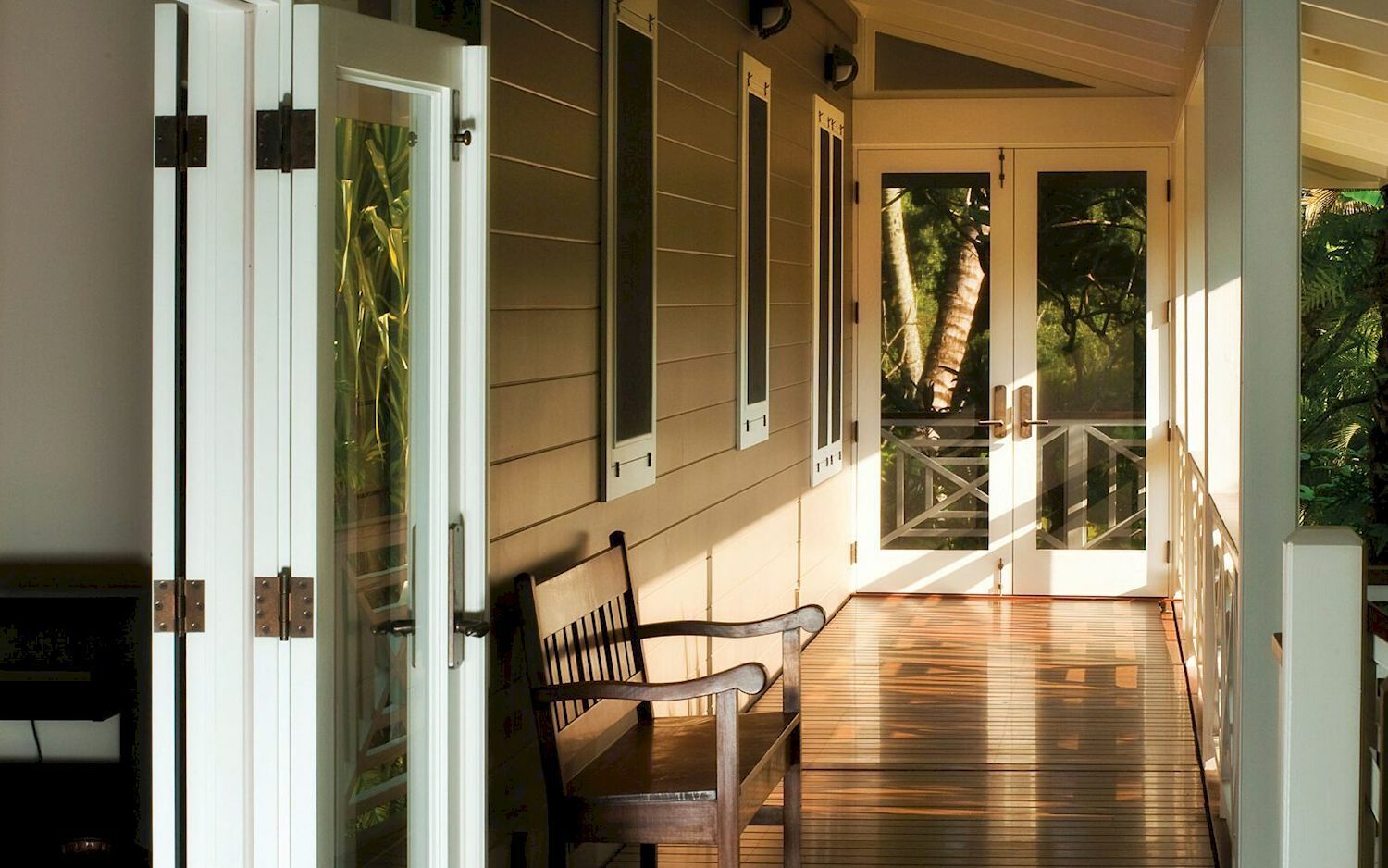
A door is only as good as its pivot point. Door hinges and pivots carry the full weight of the door.
Ball Bearing Hinges
Ball bearing hinges contain bearings between the knuckles, reducing friction and wear. For any door that weighs more than 50 pounds or opens frequently, ball bearing hinges are necessary. Standard residential hinges fail quickly under commercial loads.
Continuous Hinges
Continuous hinges run the full height of the door. Also called piano hinges, they distribute weight evenly across the entire frame. This eliminates the stress points that standard hinges create. Continuous hinges are common in schools and hospitals. Installation requires precise alignment, but the payoff is a door that stays square and operates smoothly for decades.
Pivots
Pivot hardware mounts at the top and bottom of the door rather than on the side edge. Pivots are necessary for heavy doors like solid wood, glass, or metal. They also work for doors where you want a clean, hinge-free look on the exposed side. Pivot systems require reinforced floor and header mounting.
Door Closers
Door closers are hydraulic devices that automatically close a door after it is opened. They are required on most fire-rated doors and exterior entrances. A good door closer controls speed, latching force, and backcheck, which cushions the door from slamming open.
Commercial closers are rated by size from 1 through 6 based on door width and weight. Oversizing a closer makes the door hard to open. Undersizing means it may not latch. Match the closer to the door.
Several mounting types are available:
- Surface-Mounted (Regular Arm): The most common. Mounted on the push side. Allows up to 180° swing.
- Surface-Mounted (Parallel Arm): Compact design. Flush with the door frame. Ideal for narrow corridors.
- Surface-Mounted (Top Jamb): Mounted vertically above the door. Keeps vestibules obstruction-free.
- Concealed Closers (In-Frame or In-Door): Hidden inside the door or frame for a seamless aesthetic.
- Floor Closers (Surface or Concealed): Mounted at floor level. Strong and discreet.
Exit Devices
Exit devices, often called panic bars or crash bars, are required on doors serving spaces with 50 or more occupants. They let anyone exit with a single, downward motion, regardless of the lock status. Four main types are widely used:
- Rim Exit Devices: Surface-mounted push bars. Cost-effective for schools and theaters.
- Mortise Exit Devices: Recessed into the door’s edge for a sleek, corporate-friendly look.
- Vertical Rod Exit Devices: Secure double doors at the top and bottom with metal rods.
- Concealed Vertical Rod Devices: Hide the rods inside the door for aesthetics without sacrificing security.
How to Choose the Right Commercial Door Hardware
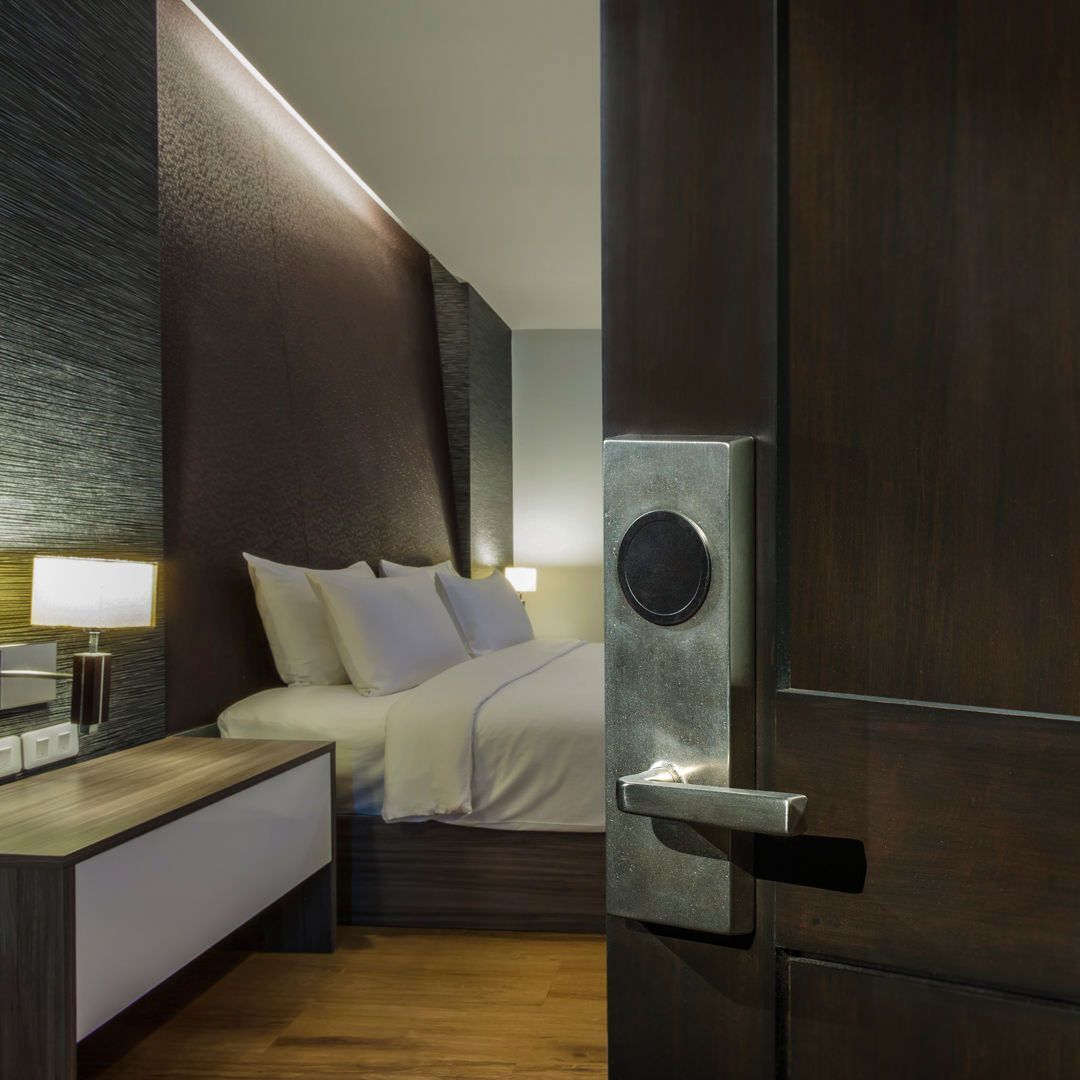
Selecting commercial hardware isn’t primarily a design exercise, though design matters. It starts with functional and regulatory requirements, and works outward from there. Choosing the right door hardware means understanding traffic patterns, code requirements, and material grades before you ever look at a catalog.
Commercial Hardware Selection Checklist
Before opening a catalog, answer these questions for each door:
- What is the fire rating of the door and frame?
- How many openings per day will this door see?
- Does the door require ADA compliance?
- Is the door on a means of egress?
- What level of security is needed?
- Who will maintain the hardware?
Security and Access Control
Security requirements should drive lock selection before anything else. A cylindrical lock is appropriate for a private office; it’s inadequate for a building’s main entry. A mortise lock with a deadbolt suits an exterior door; an electronic lock with audit capability suits a server room or pharmacy.
Think about who needs access, how that access should be controlled, and what happens when it’s compromised. Those answers determine the lock type, the credential system, and the level of key control needed.
Traffic and Durability Requirements
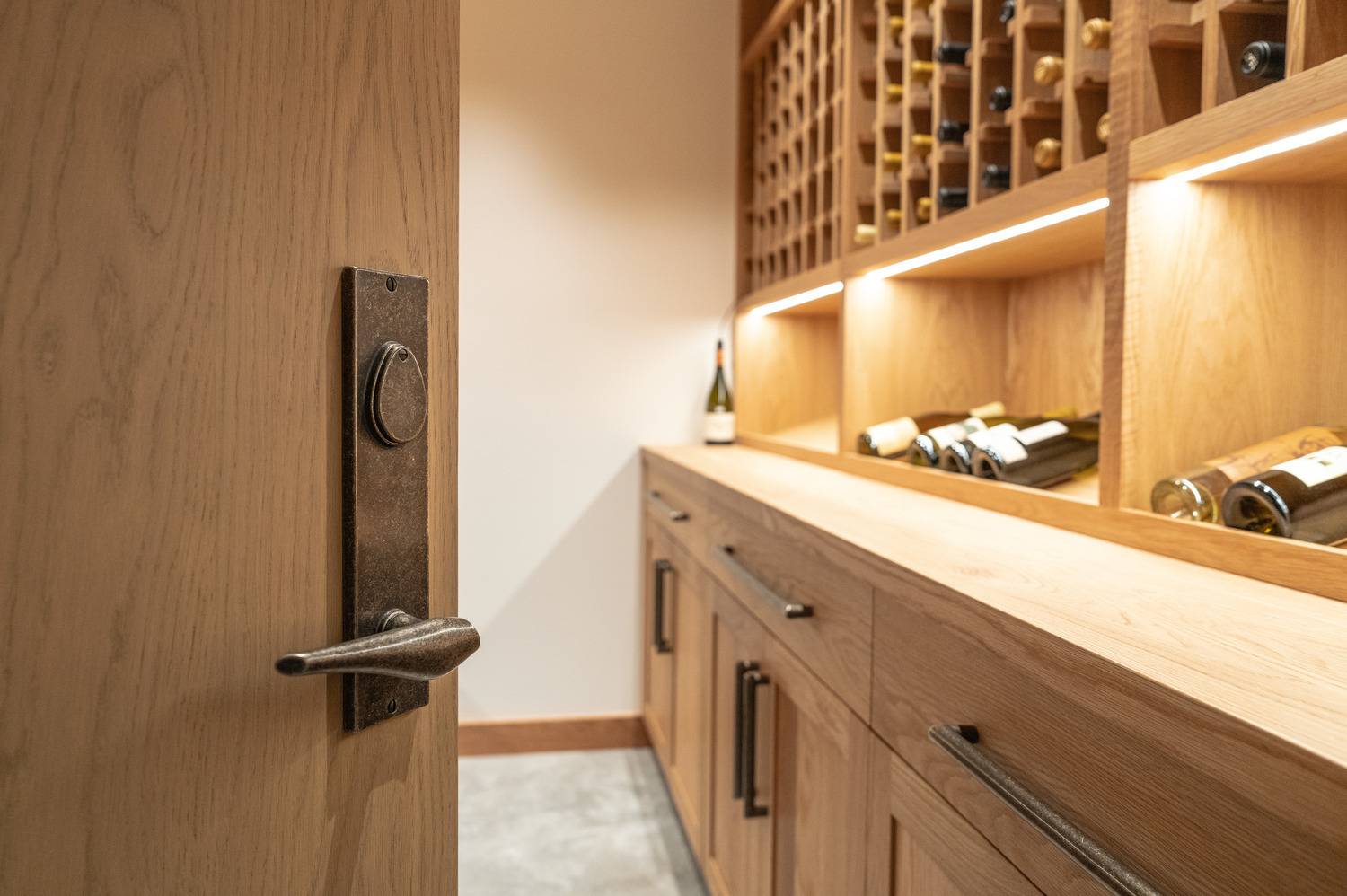
High-traffic doors fail hardware faster than almost anything else. A lever handle or latch that performs fine on a door opened 20 times a day will show significant wear on a door opened 300 times a day. ANSI/BHMA grading accounts for this. Grade 1 hardware is cycle-tested to far higher use counts than Grade 2 or 3.
Always specify door hardware that’s rated beyond the expected use. The margin protects against the reality that traffic estimates are often conservative, and that early failure in commercial hardware is genuinely disruptive and expensive to address.
ADA and Fire Code Compliance
ADA compliance affects lever style, operating force, and hardware projection. No knobs on egress doors. Levers must operate with 5 pounds of force or less. Hardware cannot protrude more than 4 inches into the walking path.
Fire codes dictate which closers, hinges, and latches can be used on rated doors. A fire-rated door without a labeled closer is a code violation waiting to be found during inspection.
Safety and Emergency Egress
Every door on a means of egress must open with one motion, without tools or special knowledge. That means no deadbolts that require a key from the inside, no two-step operations, and no complex latches.
Exit devices are the gold standard, but a properly specified lever trim with a latch retractor can also meet code. When in doubt, consult the local authority having jurisdiction (AHJ).
Grade 1, 2, and 3: What ANSI/BHMA Ratings Mean
The American National Standards Institute (ANSI) and Builders Hardware Manufacturers Association (BHMA) jointly rate commercial hardware. Grades are simple:
- Grade 1: Highest durability. Minimum 1 million cycles. For high-traffic, high-abuse settings.
- Grade 2: Medium duty. 400,000 to 1 million cycles. For standard commercial use.
- Grade 3: Light duty. 200,000 cycles. Best for residential or very low-traffic commercial.
Always specify the grade you need. Do not assume a product is commercial-grade just because it looks heavy.
Materials and Finishes for Commercial Door Hardware
The material underneath the finish determines how long hardware lasts. Plated surfaces can look great for a year, then fail. Solid materials age differently.
Stainless Steel
Stainless steel is the default for high-abuse commercial hardware. It resists corrosion, does not chip, and cleans easily. The most common grades are 304 (standard) and 316 (marine-grade, for coastal or high-salt environments).
The trade-off is aesthetic. Stainless steel looks industrial. For some projects, that works. For others, it feels cold.
Brass, Aluminum, and Other Common Metals
Brass is traditional and polishes beautifully, but unlacquered brass tarnishes. Lacquered brass resists tarnish but can peel over time. Aluminum is lightweight and inexpensive but lacks the heft of steel or bronze. For interior applications with moderate traffic, brass or aluminum can be appropriate.
Bronze: The Architectural-Grade Option
Bronze is not the cheapest option. It is the right option when durability, patina, and craftsmanship matter.
Why Bronze Outperforms in High-Traffic Commercial Settings
Bronze is dense. A solid bronze lever feels different in the hand, substantial, balanced, quiet. Unlike plated metals, bronze does not have a surface coating to wear through. The material is the same all the way through.
In high-traffic commercial settings, that means no flaking, no brassing (where a plated finish wears away to reveal a different base metal), and no visible edge wear after two years. Bronze simply darkens and deepens with use.
How Bronze Patina Develops Over Time
Bronze develops a living finish through exposure to air, touch, and environment. The technical term is patina. In practical terms, the hardware starts with a warm, dark brown tone and gradually evolves. Areas of frequent contact become richer and darker. Less-used sections retain their original character.
This is not a defect. It is the opposite of the cheap, static look of painted or plated hardware. For architects and designers who understand material aging, bronze patina is a feature, not a compromise.
Where Custom Bronze Hardware Belongs
Custom bronze hardware belongs on doors that define a building. Main entrances, elevator lobbies, private offices, luxury retail storefronts. Places where hardware should feel intentional, not generic. When standard catalog options do not fit the design vision, custom casting delivers the scale, form, and finish you need.
Commercial Door Hardware by Project Type
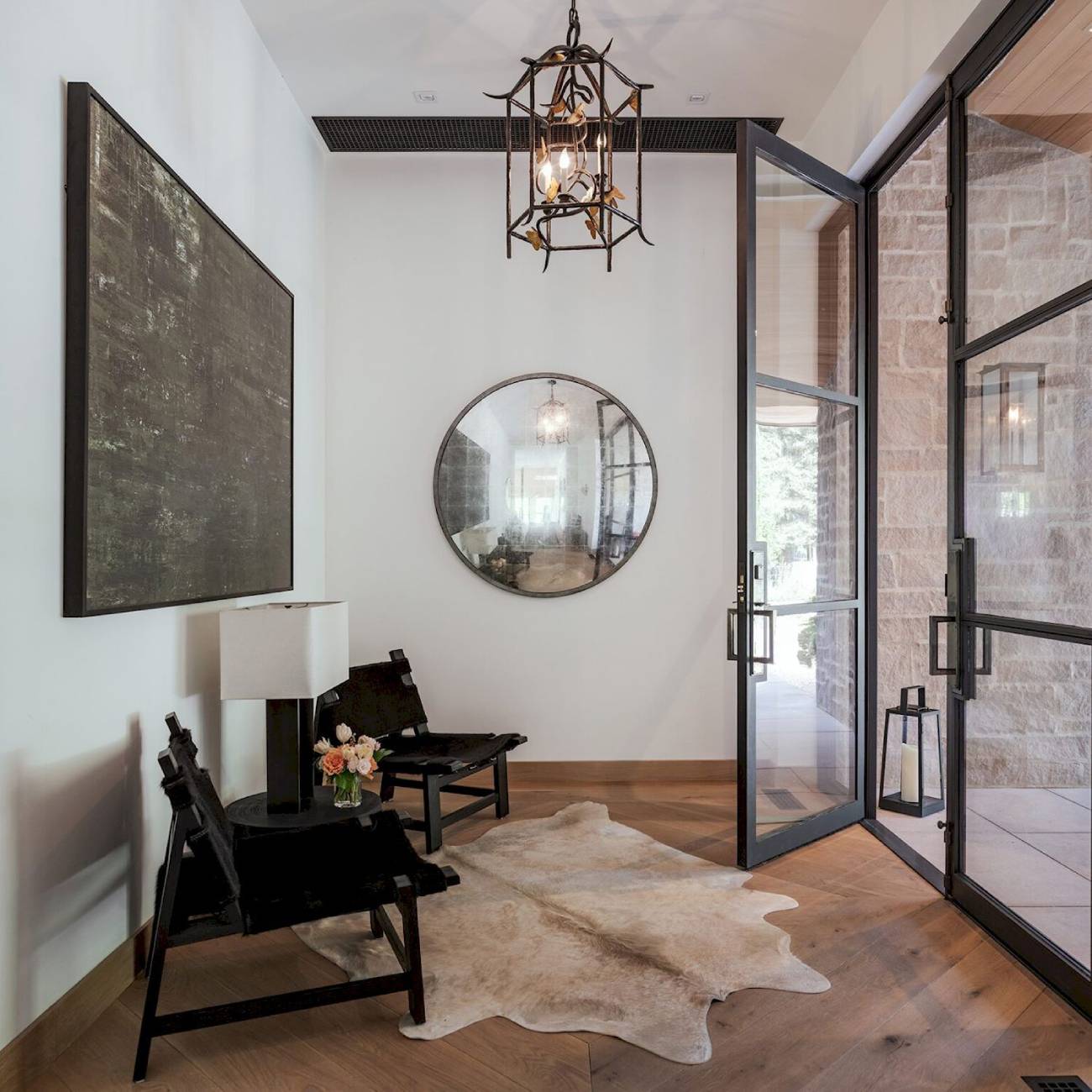
Different buildings have different demands. Here is how hardware types map to real projects.
Office and Workplace Buildings
Office hardware must balance security with convenience. Interior offices typically use Grade 2 cylindrical locks with keyed entry and passage functions. Conference rooms may require privacy locks. Main entrances often combine electronic access with heavy-duty mortise locks.
Spec levers that are comfortable for all-day use. Avoid sharp edges or overly aggressive styling.
Healthcare and Educational Facilities
Healthcare and education demand the highest durability. Doors open hundreds of times per day, often with aggressive use. Grade 1 hardware is standard. Continuous hinges reduce maintenance. Antimicrobial coatings matter in healthcare.
For schools, classroom security functions (locks that can lock from inside without opening the door) have become essential. Consult local codes, which vary significantly.
Luxury Retail and Mixed-Use Properties
Retail hardware is about first impressions. Shoppers judge quality by what they touch. Solid bronze or stainless steel pulls, mortise locks with designer trim, and concealed closers all contribute to a premium feel.
Security remains critical, especially after hours. Specify removable cores so that store managers can rekey easily between tenants.
Boutique Hotels and Hospitality
Hotel hardware must be quiet, reliable, and beautiful. Guests do not tolerate sticky locks or noisy levers. Electronic locks are standard, but the visible trim should feel substantial. Solid bronze levers and pulls align with high-end brand standards. French doors leading to balconies or between suites require coordinated hardware that maintains the guest room aesthetic while meeting commercial durability standards
Restaurants and Private Clubs
Restaurant hardware faces grease, moisture, and constant cleaning. Choose finishes that hold up to frequent wiping. Avoid complex shapes that trap grime. Back-of-house doors need heavier hardware than front-of-house, since staff are always moving through with trays or equipment.
Mistakes to Avoid When Specifying Commercial Door Hardware

Even experienced specifiers make these errors. It is important to understand the mistakes so that you can avoid them.
Choosing Residential-Grade Products for Commercial Use
Residential hardware is not built for commercial cycles. A residential lever may feel nice for six months. Then the spring fails, the finish wears, and the door sags. The cost savings disappear the first time you pay a locksmith to replace everything. Always check the ANSI/BHMA grade.
Overlooking Code Compliance
Code violations are expensive to fix. A door without the correct closer or panic hardware can fail inspection. Read the International Building Code and NFPA 101. When in doubt, hire a door hardware consultant.
Prioritizing Cost Over Lifetime Value
The cheapest bid is rarely the cheapest long-term. Grade 3 hardware fails faster. Grade 1 or solid bronze hardware lasts decades. Calculate the total cost of ownership, not just first cost.
Underestimating Lead Times for Custom Hardware
Custom bronze hardware takes time. Casting, finishing, and machining cannot be rushed. For large projects, order hardware early, sometimes 12 to 16 weeks before installation. Standard off-the-shelf items ship faster, but custom work requires patience.
Balancing Commercial Door Hardware Performance and Design
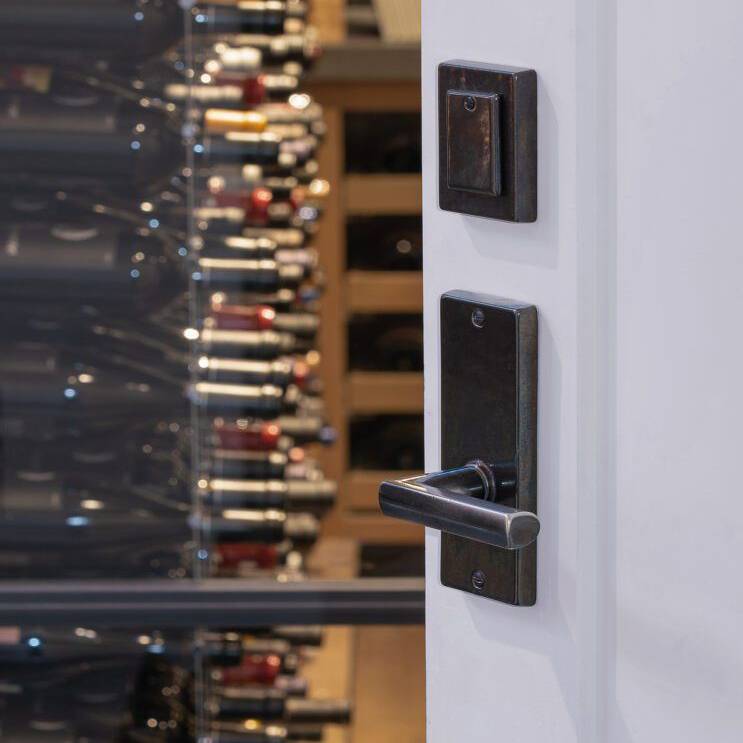
Commercial hardware no longer means ugly hardware. Architects and owners expect design attention on commercial projects as much as residential ones. Solid bronze hardware bridges the gap. It performs at Grade 1 levels but looks like it belongs in a high-end space.
To balance performance and design on your next project:
- Specify early. Bring hardware into the design process before the door schedule is finalized. Cutouts, reinforcements, and clearances can then be built into the doors rather than retrofitted later.
- Match grade to traffic, not budget. A Grade 1 lock on a main entrance. A Grade 2 lock on an interior office. Design means nothing if the hardware fails within a year.
- Choose materials that age well. Plated brass looks great on day one and declines. Solid bronze starts strong and develops character. Specify for year ten, not move-in day.
- Coordinate finishes across the opening. A bronze lever with matching push plates, hinges, and stops reads as intentional. Mismatched hardware reads as an afterthought.
- Consider the user’s hand. A lever that feels good in your hand will feel good to everyone. Sharp edges and thin profiles may look modern, but can be uncomfortable under daily use.
- Maintenance plan. Can the finish be cleaned without damage? Can the closer be adjusted without removing the door? Design choices have consequences for the people who will service the building.
When hardware is specified correctly, it disappears into the experience of using the building. That is what good hardware does. You can explore complete door sets that bundle compatible components, and find door accessories such as stops, holders, and coordinating pieces to finish the installation.
Commercial Door Hardware Types FAQ
What Are the Most Common Types of Commercial Door Locks?
Cylindrical and mortise locks are the most common. Cylindrical locks dominate interior office and classroom doors. Mortise locks appear on main entrances and high-end projects. Electronic locks are growing quickly in multi-tenant buildings and healthcare.
What Is the Best Material for Commercial Door Hardware?
For high-traffic settings, solid bronze or stainless steel. Bronze offers better aesthetics and patinas well. Stainless steel offers corrosion resistance at a lower price. Avoid plated brass or zinc alloys for any door that sees daily use.
Is Bronze Hardware Suitable for Commercial Applications?
Yes. Bronze is an architectural-grade material that outperforms most alternatives in high-traffic settings. It does not chip or flake. It develops character over time. The higher upfront cost is offset by decades of service.
How Long Does Commercial Door Hardware Last?
Grade 1 hardware is tested to 1 million cycles. Under average commercial use of 100 to 200 cycles per day, that translates to roughly 10 to 20 years of reliable service. Bronze hardware, due to its solid construction and corrosion resistance, can often last 50 years or longer with basic maintenance. Grade 3 hardware, rated to 200,000 cycles, may fail within 3 to 5 years in the same high-traffic conditions. Actual lifespan depends heavily on daily cycle count, environmental factors, and maintenance quality.
What Is the Difference Between Commercial and Residential Door Hardware?
The difference is durability, testing, and compliance. Commercial hardware carries ANSI/BHMA grades, meets fire and life safety codes, and is tested for hundreds of thousands of cycles. Residential hardware is not graded, does not meet commercial codes, and typically fails quickly in high-traffic settings.
Do Commercial Doors Require ADA-Compliant Hardware?
Yes, if the building is open to the public or serves employees. Lever handles are required. The operating force must be 5 pounds or less. Hardware cannot require tight grasping or twisting.
When Should You Choose Custom Commercial Door Hardware?
Choose custom hardware when standard catalog products do not fit the design vision. That may mean a unique pull length, a bespoke finish match, or a lever profile not available off the shelf. Custom hardware is for landmark buildings, luxury hospitality, and projects where hardware should feel specific to the space.