Pantry doors affect how your kitchen reads as a complete architectural space. They are not just secondary elements; think of them as integrated components that influence flow, sightlines, and material continuity. The door’s scale, placement, and finish also determine whether the pantry will feel concealed, emphasized, or fully embedded within the layout.
In contemporary kitchens, pantry doors must align with cabinetry systems, appliance panels, and wall treatments. Clean transitions, consistent reveals, and precise hardware placement are critical to maintaining cohesion across the kitchen envelope.
You can use bronze pulls, such as the 50-inch Lash Grip Pull, for large door panels, or bronze knobs like the Cottage Door Knob. Material selection and construction also matter, so use glass, wood, and metal to introduce different levels of transparency, weight, and texture; these help shape how the pantry connects to the kitchen environment.
This guide explores 8 modern pantry door ideas to elevate your kitchen design using architectural detail.
What Defines a Modern Pantry Door in Luxury Kitchens?
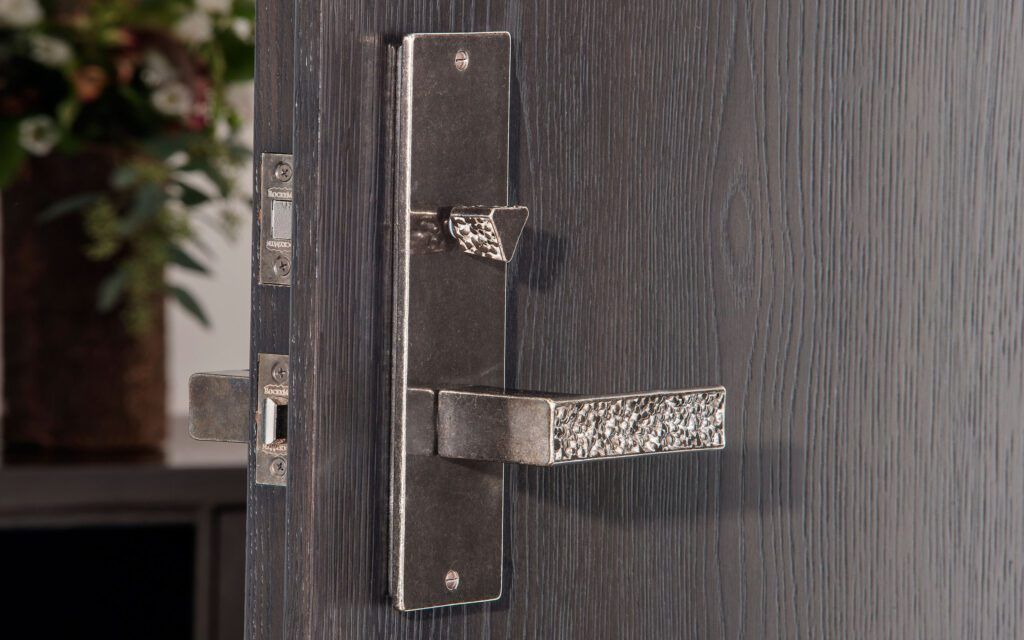
A modern pantry door reflects excellent integration, proportion, and material clarity. Ideally, it should align with surrounding cabinetry, maintain consistent lines, and avoid unnecessary ornamentation. The design prioritizes function but doesn’t forget the kitchen’s architectural framework and aesthetics.
In luxury kitchen designs, precision is critical, with door thickness, reveal spacing, and hardware placement controlled to create continuity. Materials, such as bronze pulls, knobs, and hinges, are selected for both durability and visual consistency, resulting in pantry doors that support the overall design.
8 Inspired Modern Pantry Door Designs for 2026
You’ll encounter numerous pantry door designs and ideas, all customizable to fit your space. These designs reflect current priorities in kitchen architecture, such as balancing spatial efficiency, material expression, and integration, as shown below:
Minimalist Glass & Metal Framed Doors
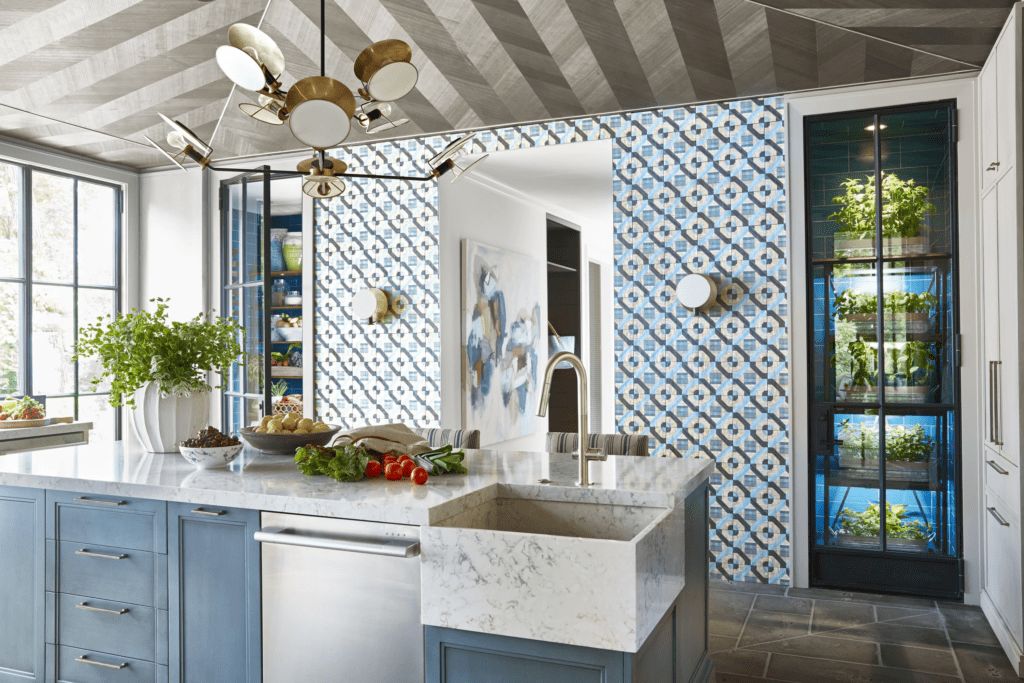
Glass and metal-framed pantry doors introduce transparency while maintaining structure. You can use slim metal profiles to define the frame, allowing glass panels to remain the dominant surface. This approach preserves visibility without compromising enclosure.
Clear glass increases openness, making the pantry feel like an extension of the kitchen. It works best when internal shelving is organized and visually consistent. Clutter becomes immediately visible, so storage planning must be deliberate.
Metal framing adds definition, with bronze-toned metals or matte finishes creating contrast against lighter cabinetry. The frame thickness should remain proportional to the surrounding elements to avoid visual imbalance.
Hardware selection must align with the frame geometry. Linear pulls, such as the Barre Grip Pull, or minimal levers, like the Cross Lever, help maintain continuity, while oversized or decorative hardware can disrupt the controlled aesthetic. Place hardware in such a way that it reinforces vertical or horizontal lines established by the door structure.
Seamless Hidden “Clandestine” Pantry Doors
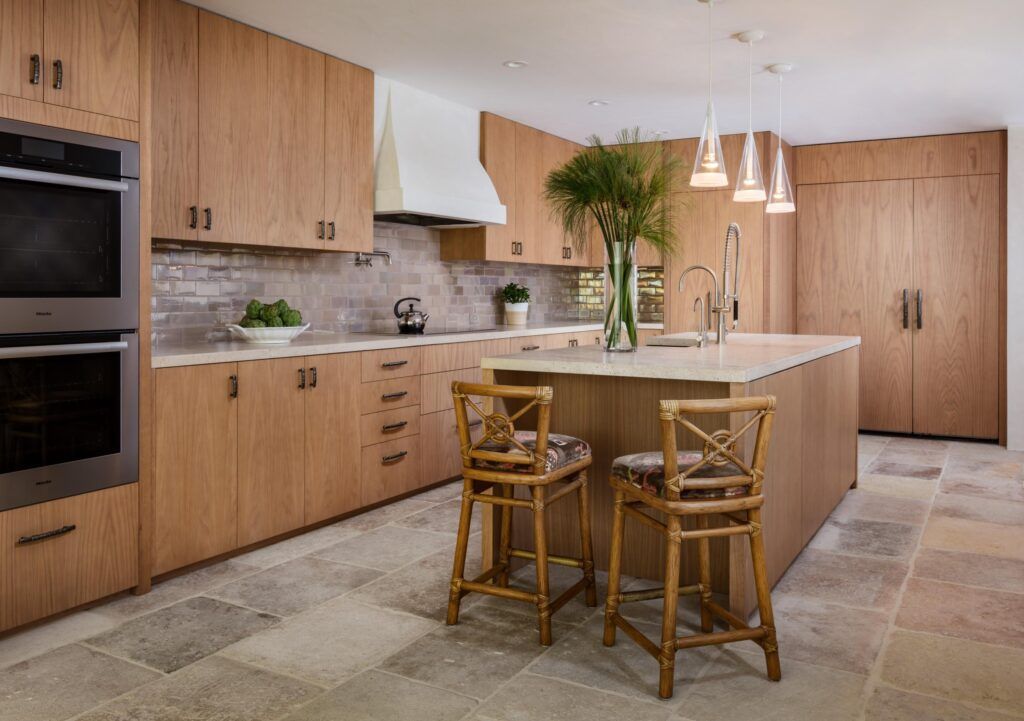
Hidden pantry doors are designed to disappear within the surrounding cabinetry or wall system. They rely on flush installation, concealed hinges, and continuous surface treatments that help eliminate visual breaks.
Paneling is aligned precisely with adjacent cabinetry and grain direction, paint finish, and joint spacing match exactly. Deviations are avoided to keep the door’s outline hidden and maintain the intended effect.
Push-to-open mechanisms or recessed pulls are often the pick when looking to maintain the clean surface. If visible hardware is required, it should be minimal and aligned with surrounding elements.
Clandestine doors work best in kitchens where visual continuity is the priority. These unique kitchen pantry doors reduce clutter and allow larger design features, such as islands or backsplashes, to take focus. Focus on precise execution, particularly in fabrication and installation, to maintain alignment over time.
Oversized Double Doors for Architectural Impact
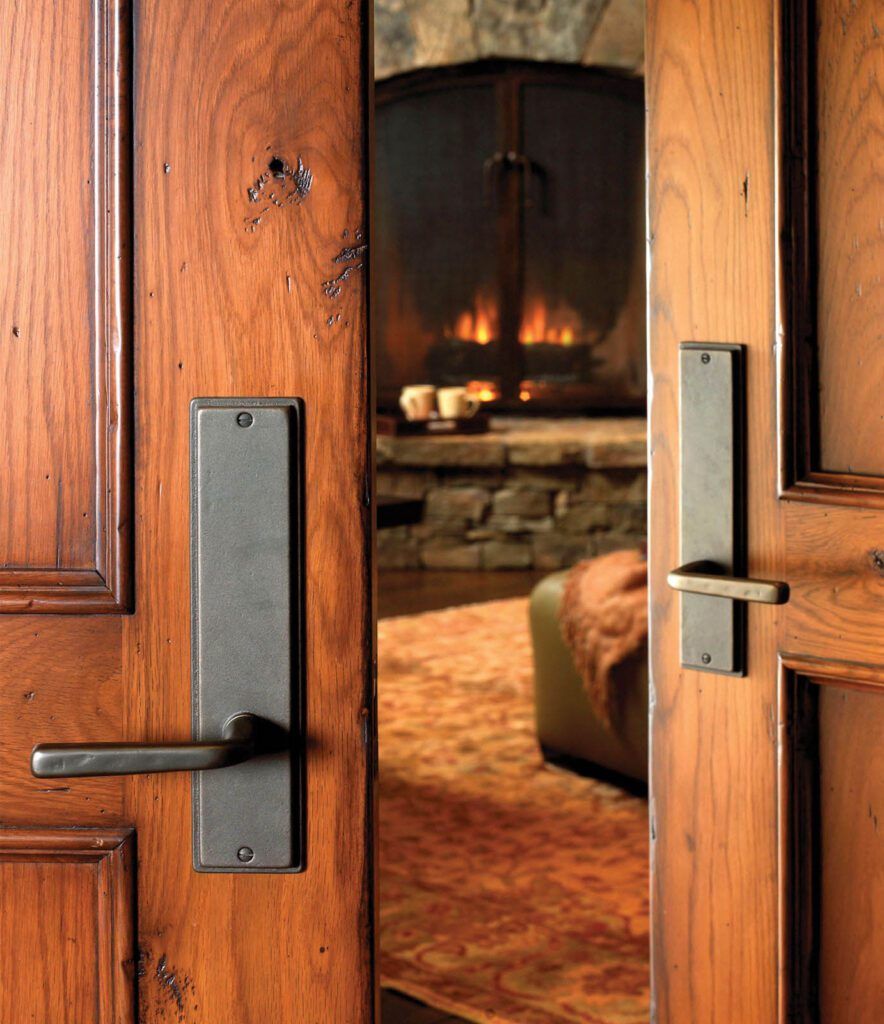
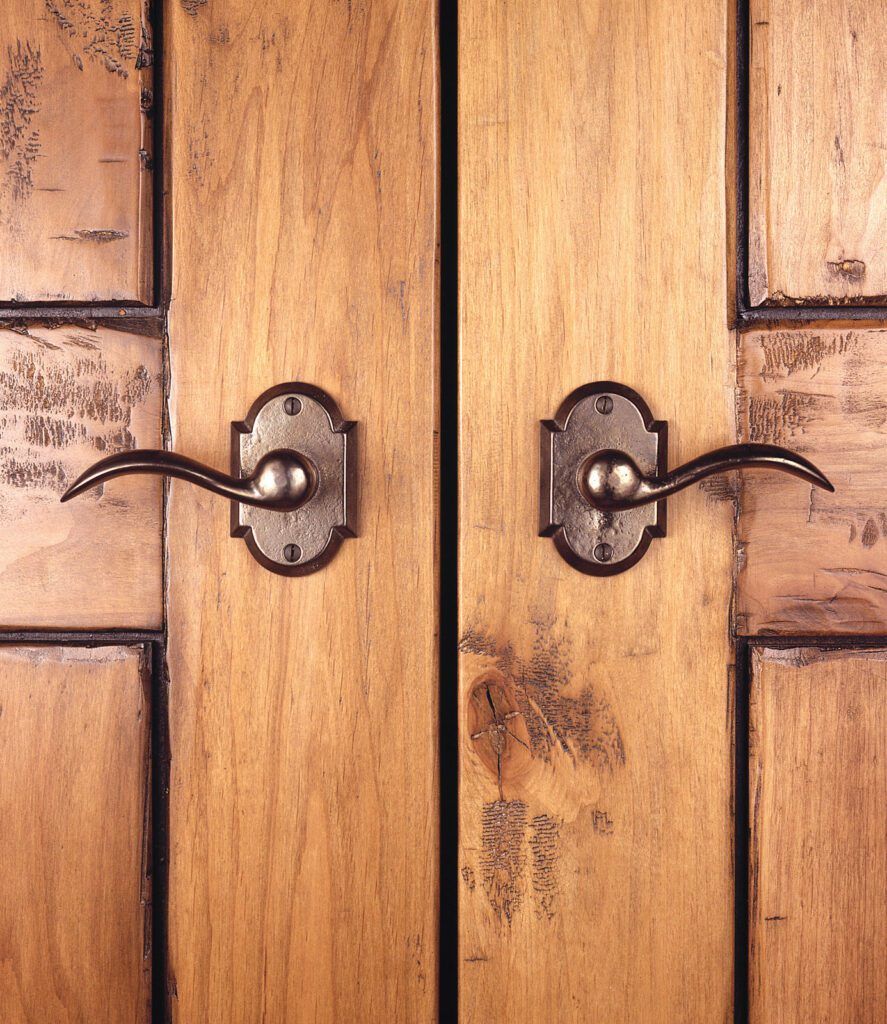
Double pantry doors serve as a strong visual anchor in your kitchen. The scale alone introduces symmetry and reinforces the pantry as a defined architectural feature rather than a secondary utility space.
Wider openings are even better; they improve access and allow for larger storage configurations inside. This is ideal in kitchens with high storage demand and is a common suggestion in walk-in pantry ideas and layouts.
Door proportions align with the ceiling height and the surrounding cabinetry. Use oversized panels that feel connected with the oversized doors, which require sufficient wall space to avoid crowding adjacent elements.
Select hardware carefully to support the structural role—long vertical pulls, such as Acorn Grip Pull, help emphasize height and guide movement, while consistent placement across doors reinforces symmetry. Plan hinges and clearances carefully to maintain smooth operation without interfering with nearby cabinetry or appliances.
Reclaimed Wood with Contemporary Bronze Accents
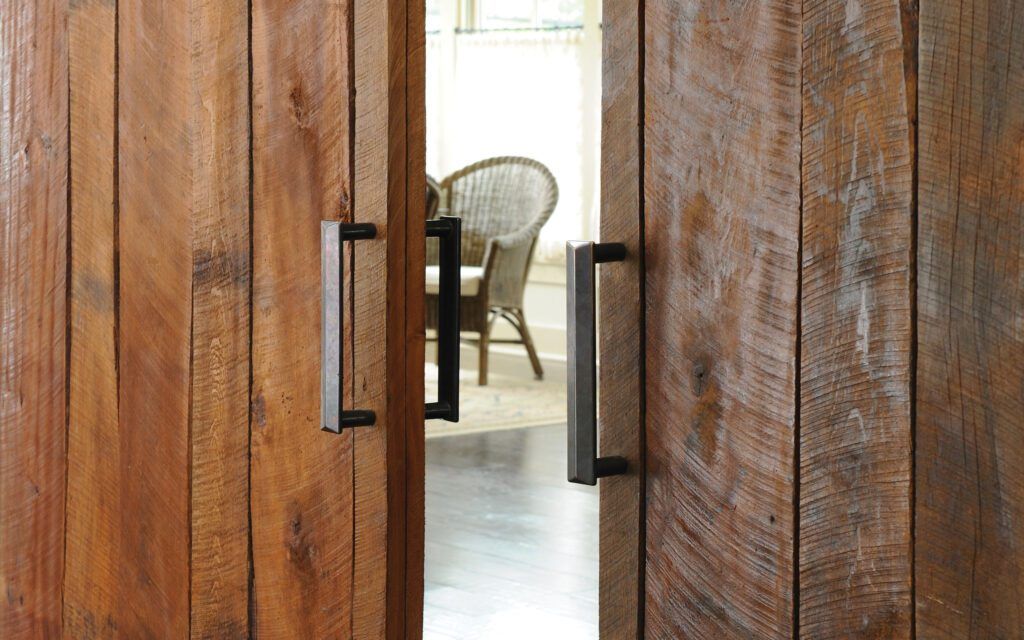
Reclaimed wood introduces its rustic texture and variation, contrasting with the controlled surfaces typical of modern kitchens. Each panel carries visible grain, knots, and tonal shifts, creating a surface that feels grounded, lived-in, and material-driven.
If you don’t want the design to appear overly rustic, keep the door structure clean and well-defined using flat panels, controlled edges, and consistent proportions to maintain alignment with contemporary cabinetry.
Bronze accents also provide contrast without disrupting cohesion. Keep the handles, hinges, and edge details restrained to keep the wood as the dominant element. For the finish, choose sealed surfaces to protect against humidity and preserve the wood’s character.
You can use a finish guide to find options with the same undertone as the bronze hardware and surrounding kitchen palettes. This combination works best if your kitchen balances natural materials with precise architectural detailing; the pantry door introduces variation without breaking the overall design language.
Frosted or Fluted Glass for Soft Privacy
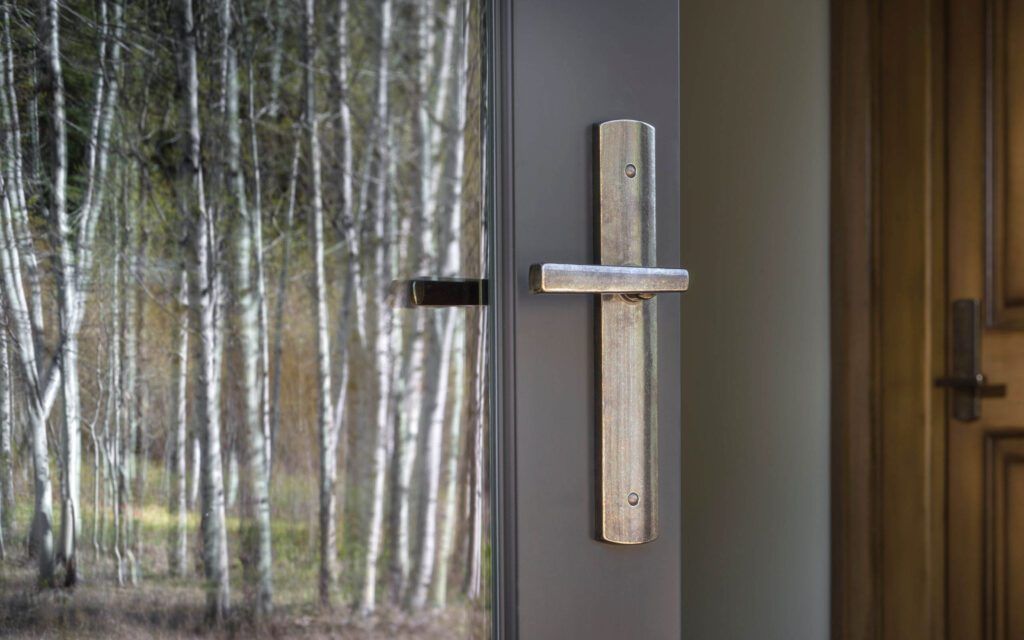
Frosted and fluted glass are often used to provide privacy without disrupting light transmission. They obscure direct visibility, allowing the pantry to remain partially concealed, and no solid barrier is necessary.
Fluted glass introduces vertical texture, reinforcing height and adding subtle movement across the surface. Meanwhile, frosted glass offers a more uniform appearance that diffuses light evenly. These pantry door design ideas need minimal framing that doesn’t compete with the glass texture. Use thin metal or wood frames to provide structure while keeping the focus on the panel surface.
Hardware should be simple and tactile, so go for smooth pulls, such as the 31-inch D Grip Pull, or understated levers like the Carriage Lever, to maintain usability while keeping the focus on the glass. This approach is the standard go-to in kitchens where light flow is important, without necessarily requiring full transparency; it offers a controlled balance between openness and concealment.
Pocket & Sliding Barn Doors for Space-Saving Elegance
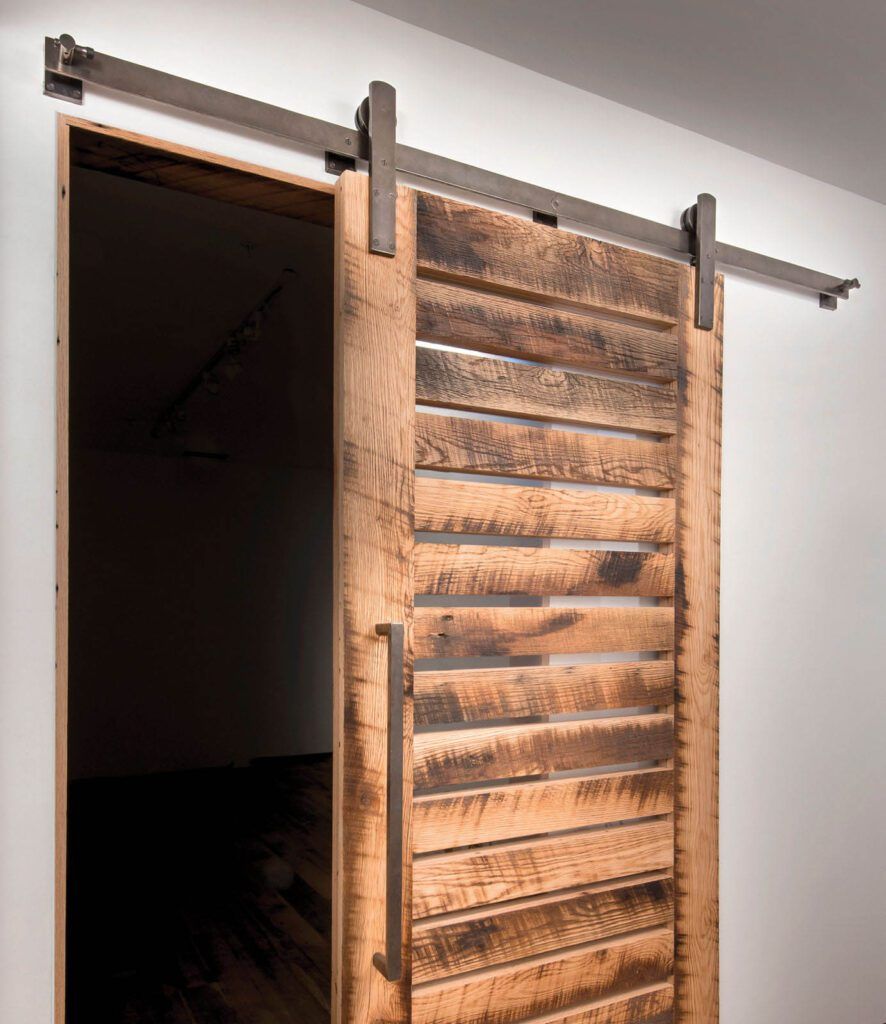
Sliding and pocket doors ideas reduce the clearance required for door operation, making them suitable for compact kitchens or tight layouts. You can use these pantry door designs to eliminate the swing radius, allowing adjacent cabinetry or appliances to remain unobstructed.
Pocket doors often disappear into the wall, creating a clean, uninterrupted opening when in use. As such, the planning begins during construction to accommodate wall cavities and track systems.
Sliding barn doors can remain visible, introducing a more defined design element. The track hardware is part of the visual composition and should align with the kitchen’s material palette to maintain flow and cohesion.
Movement should be smooth and controlled; use high-quality track systems that prevent noise and resistance. Place handles in alignment with the sliding motion to support accessibility without interfering with adjacent surfaces or structural elements.
The Walk-In Pantry: Creating a Room Within a Room
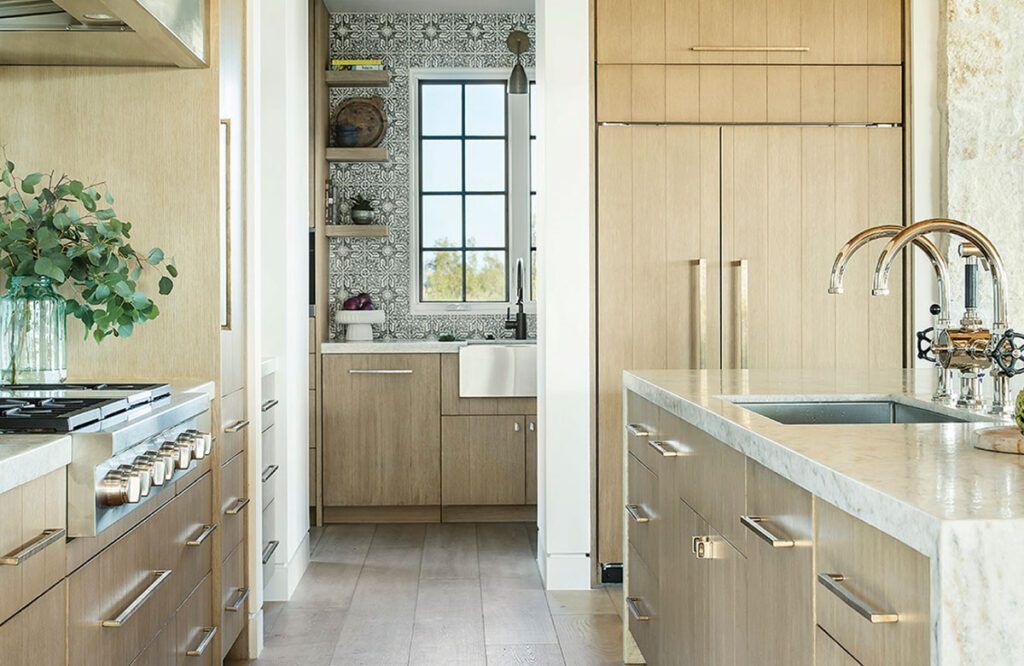
A walk-in pantry is an extension of your kitchen rather than a concealed storage area. The door serves as a threshold between two distinct but connected spaces; this design allows you to create a room within a room.
Walk-in pantry door ideas reflect transition and tend to avoid narrow or underscaled doors that make the space feel secondary. Instead, they use larger openings, consistent materials, and aligned finishes that help integrate the pantry into the overall layout.
Remember, interior planning influences door placement, so the shelving, lighting, and circulation paths should align with the entry point to optimize movement. Also, use hardware that supports frequent use, preferably bronze door hardware, which is known for its timeless, living patina.
Verify aspects, such as comfortable grip, durable materials, and consistent placement, to install doors and hardware that support usability. The door should open and close without resistance, maintaining flow between spaces while reinforcing the pantry’s role as a functional, accessible extension of the kitchen.
Bold Color-Drenched Doors with Contrasting Hardware
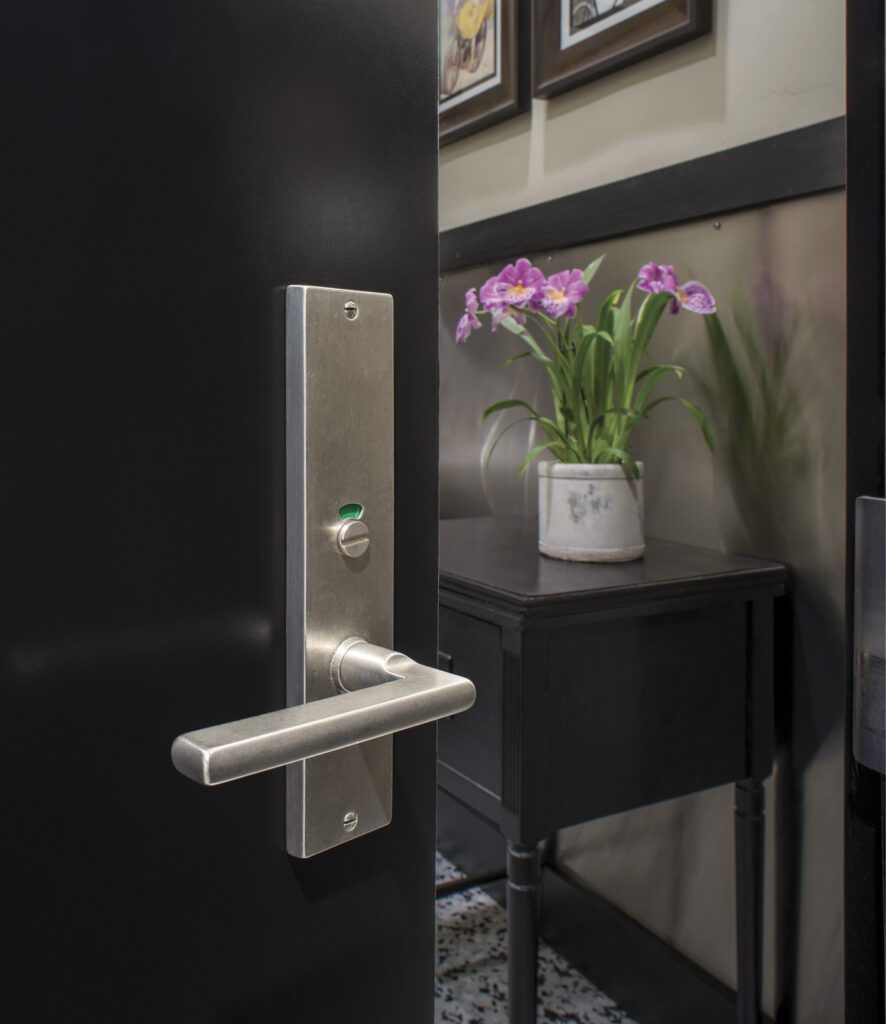
If you have a controlled kitchen palette, bold color-drenched pantry doors can help introduce contrast while blending in with the overall cohesive design. Deep tones such as charcoal, navy, or muted green create a focal point without relying on complex detailing.
The door surface should remain simple to allow color to dominate. Flat panels or minimal profiles prevent visual overload and maintain clarity, although subtle ornamentation won’t hurt the overall design.
Use contrasting hardware, such as the light bronze Ellis Grip Pulls with brown bronze Ellis Door Knobs, to define interaction points, but keep them within the same underlying palette. Lighter or darker finishes create separation, making handles and levers easy to locate and use.
Consistency is key, so choose door handles and hardware that relate to other elements in the kitchen, such as cabinetry accents or finishes, to avoid appearing isolated. Highlight the door intentionally to contribute to the overall composition without disrupting balance.
Choosing the Right Configuration for Your Layout
Pantry door configuration depends on space, traffic flow, and adjacent cabinetry, and often requires alignment between function, clearance, and overall kitchen layout, as shown below:
Sliding vs. Hinged: Aesthetic and Spatial Considerations
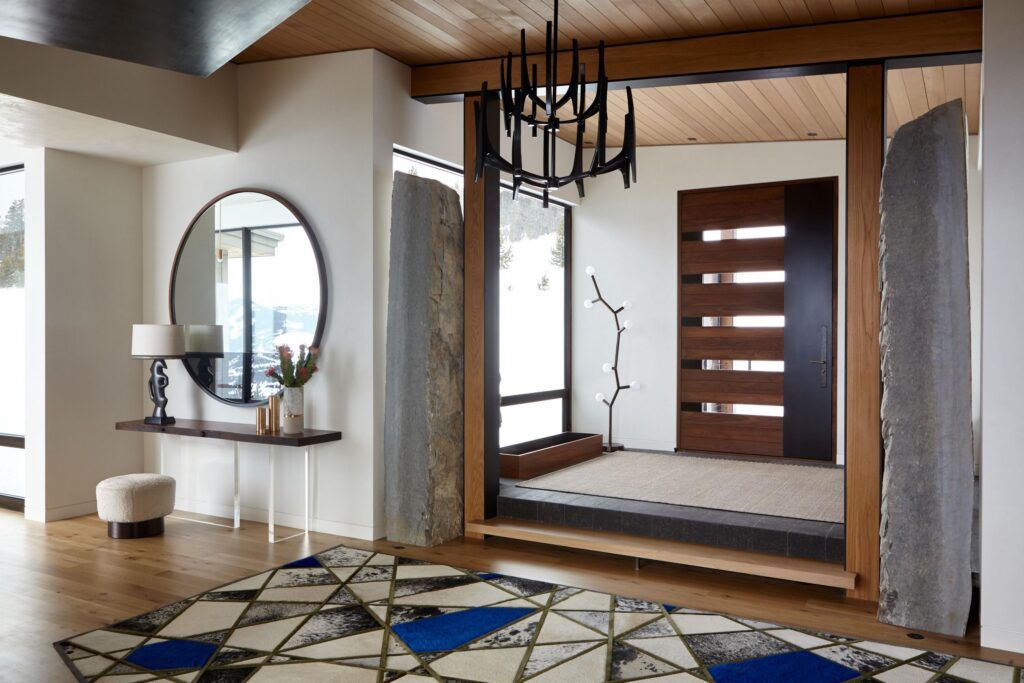
The choice between sliding and hinged configurations depends on layout constraints, frequency of use, and desired visual integration within the kitchen. Door hardware trends may also influence your decision. For instance, installing the latest hand-cast bronze hinges will push you to swing sets rather than sliding designs.
Sliding doors are the configuration to choose in narrow layouts or pantries where adjacent cabinetry limits movement. They help reduce spatial interference by eliminating swing clearance, and their visual presence depends on track exposure and panel design. Sliding doors may also open on both sides—left or right—which improves movement.
Conversely, hinged doors provide full access and a more traditional operation. They require adequate clearance but allow for wider openings and simpler installation. Use passage door hardware that doesn’t require locking mechanisms, unless privacy through locking is necessary.
When to Use a Single vs. Double Door Design
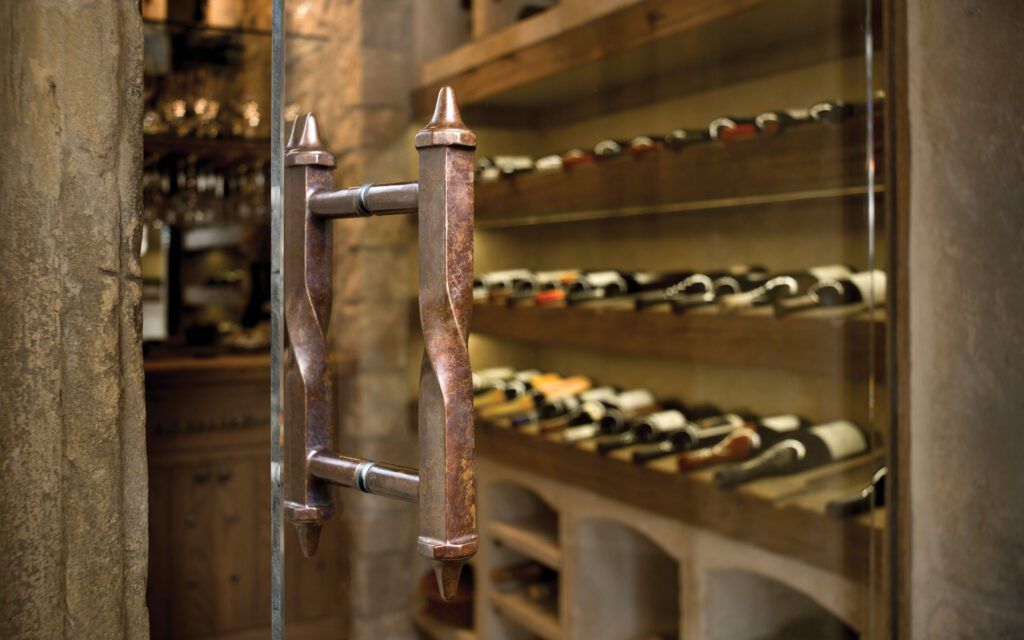
The best time to use single pantry door designs is when space is limited—think compact pantries and small kitchens without enough wall space. Single doors are easier to install and require less clearance, making them practical for smaller layouts.
Double doors, on the other hand, are more effective for larger openings or walk-in pantries. They improve access and create symmetry, especially in kitchens with higher ceilings. Before you decide, review wall proportions, storage needs, and how the door interacts with surrounding cabinetry.
Material Selection: Balancing Warmth and Modernity
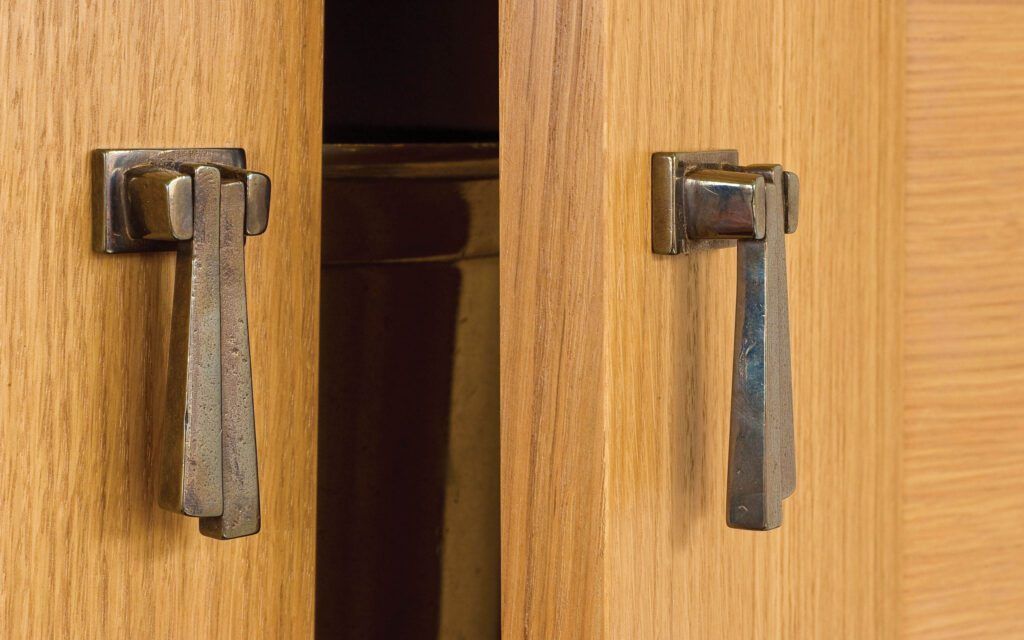
Material selection determines how the pantry door relates to the rest of the kitchen. Wood introduces warmth and texture, while metal and glass emphasize clarity and structure. Balancing these materials prevents extremes, so the space won’t feel too cold or overly heavy.
Use bronze pulls, such as the 18-inch Bamboo Grip Pull, to add warmth and complement natural wood tones. Combine materials that allow the door to contribute both contrast and continuity, depending on the surrounding palette and finishes. Glass panels and metal accents help introduce a modern oomph, but can be used in mixed or classic interior designs.
Solid Wood, Steel, and Glass Pairings
Combining wood, steel, and glass allows for controlled contrast. Wood provides mass and texture, while steel introduces structure and clean lines; glass adds light transmission and opens up the space. These materials should be proportioned carefully to avoid excessive contrast, which can fragment the design.
Balanced combinations reinforce cohesion and allow each material to contribute its strength without overwhelming the others or disrupting the overall kitchen composition. Steel and glass should be paired with the right hardware, such as light bronze pulls that blend in with the overall architectural shade. Solid wood can feature bronze hardware, such as Coupler Levers and Flute Knobs.
Durability Meets High-Design Aesthetics
Pantry doors are high-use elements and should be able to withstand frequent operation; materials and hardware should resist wear, humidity, and temperature variation. However, durability doesn’t mean compromising design intent.
Modern pantry door ideas utilize high-quality finishes, solid construction, and precise installation to achieve longevity and maintain visual clarity. Select materials that age well, such as bronze hardware, which allows the door to remain consistent with the kitchen over time.
The Soul of the Door: Why Hardware is the Ultimate Modern Upgrade
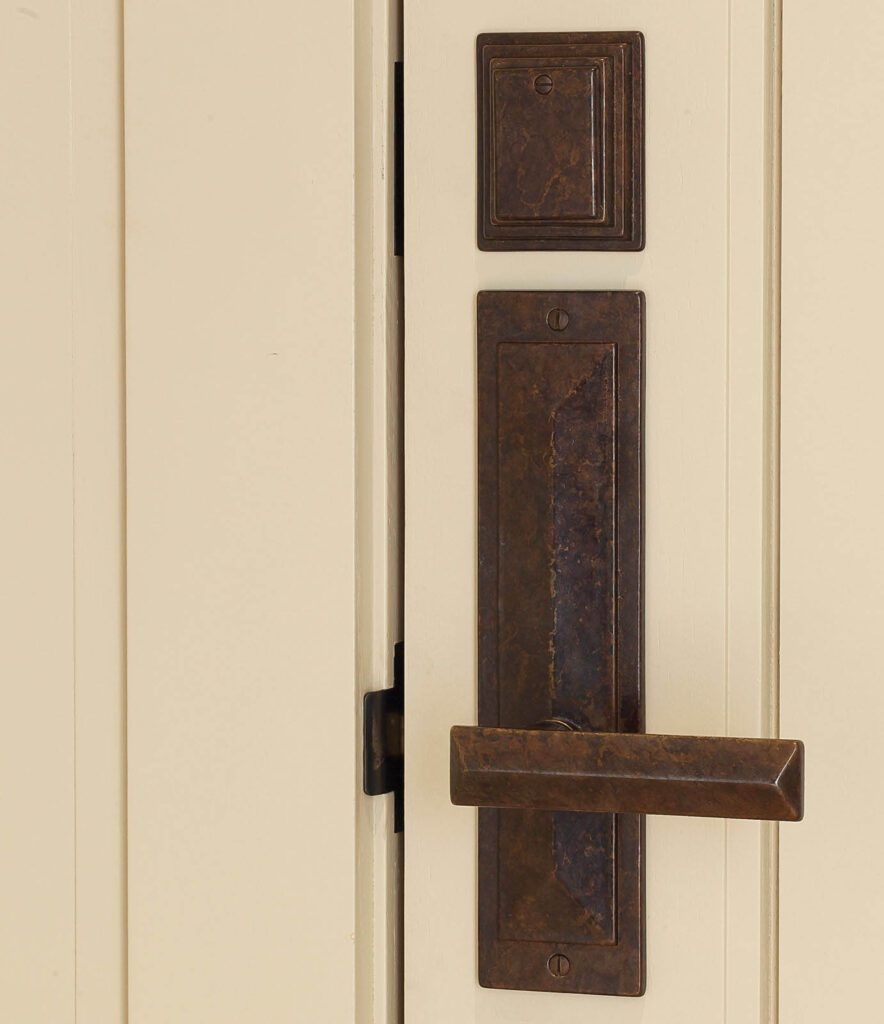
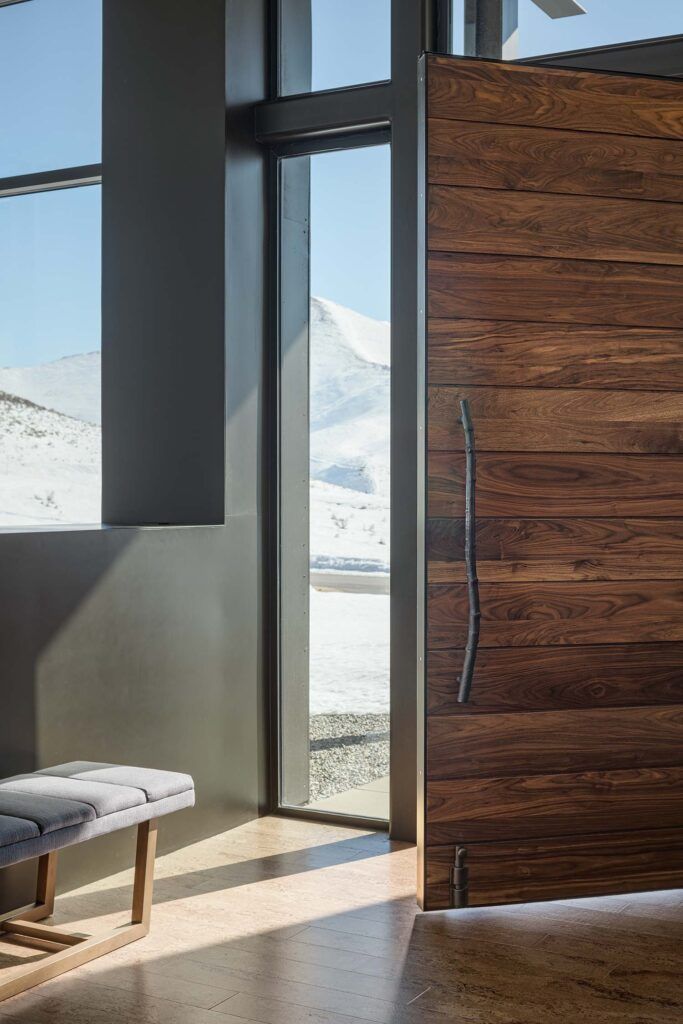
Hardware defines interaction, influences how the door feels in use, and reinforces material quality, proportion, and the overall architectural intent. As such, upgrading hardware is enough to give your pantry a whole new luxe look.
Hand-Cast Bronze: A Living Finish for Modern Spaces
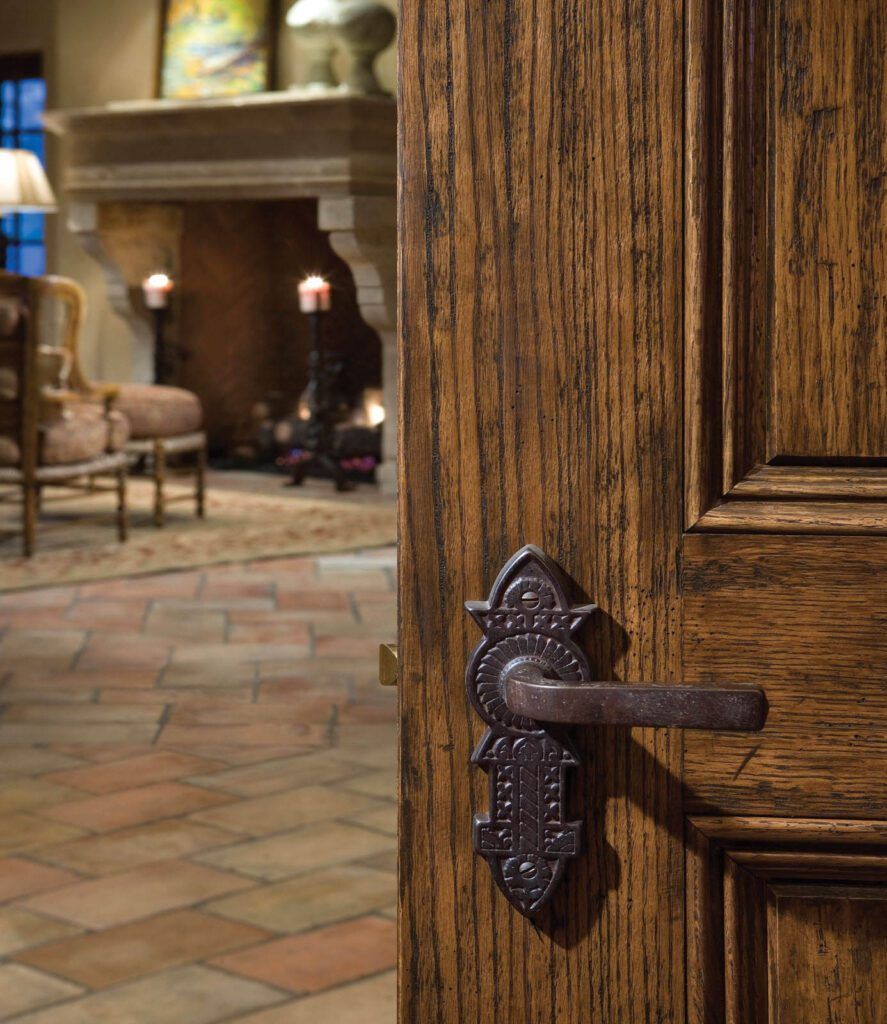
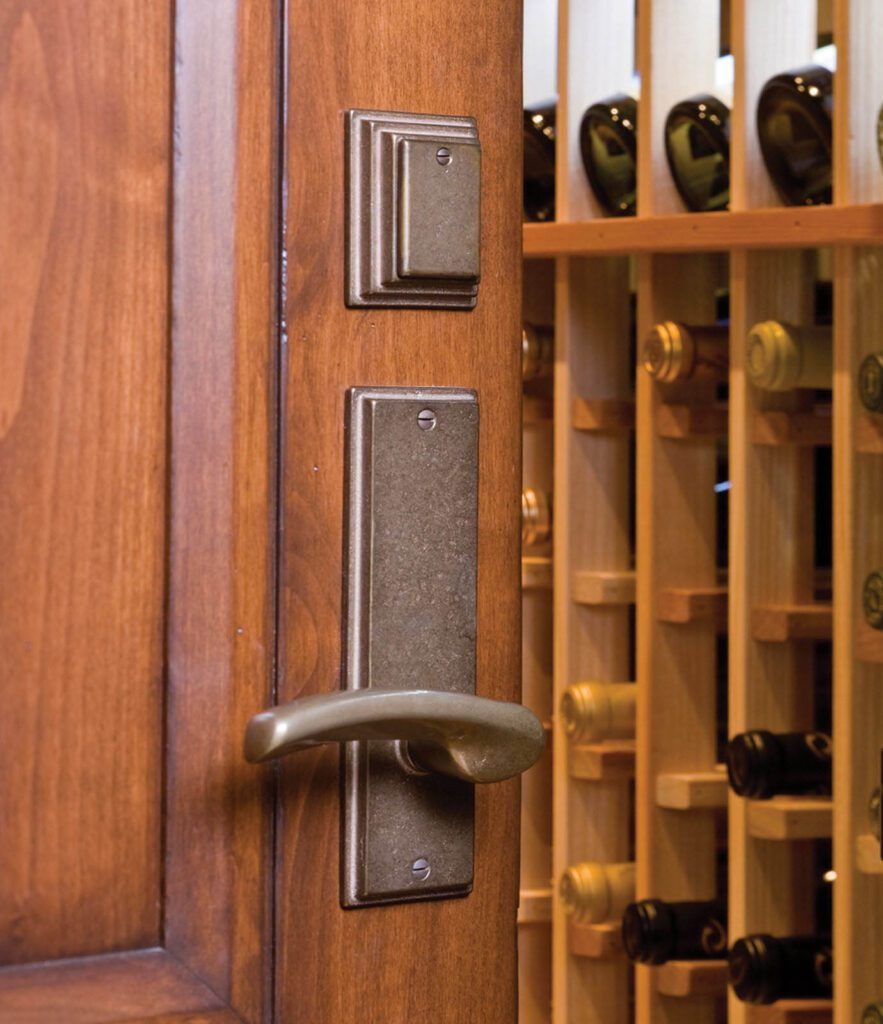
Hand-cast bronze introduces density and tactile depth that lighter, factory-produced materials cannot replicate. Each piece is formed through casting, creating subtle variations that distinguish it from the uniform, mass-produced hardware. These variations make each hardware unique and timeless—no two hand-cast items are ever the same.
The finish also evolves, thanks to bronze’s living patina. When exposed to touch and environment, bronze produces a patina, adding variation and depth rather than surface wear. This process allows the hardware to change gradually without compromising structural integrity.
Bronze works across pantry door ideas and material palettes, complementing wood, contrasting with glass, and integrating with metal elements. Its weight and resistance provide a consistent tactile experience that reinforces the sense of quality at every interaction point within your kitchen.
Statement Pulls vs. Understated Levers
Statement pulls, such as the 26-inch Branch Grip Pull, are effective on oversized panels where smaller hardware like 6-inch D Grips would feel disconnected.
Conversely, understated levers, such as Brigs or Baton, prioritize function with minimal visual impact. They are suited to designs where continuity and restraint are required.
The choice depends on the door’s role within your kitchen. Prominent doors can support larger hardware, while integrated designs benefit from reduced visibility.
Maintain consistency across similar elements to allow the hardware to contribute to a unified system rather than appearing randomly selected.
Creating Cohesion Between Pantry and Cabinetry Hardware
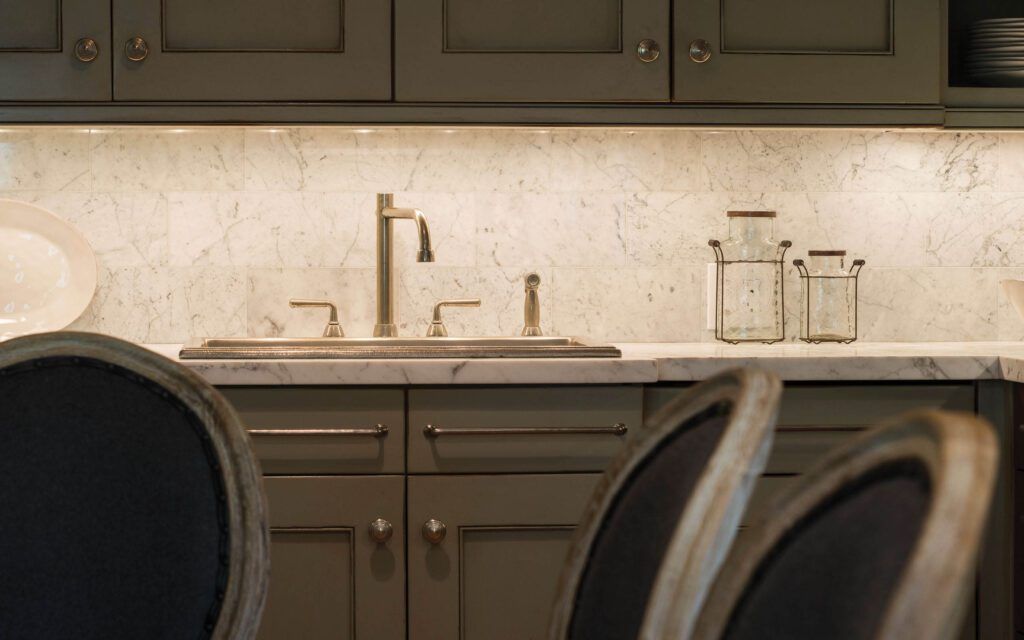
Pantry hardware should align with cabinetry hardware to maintain consistency. For instance, you can pair bronze door handles with bronze cabinet door knobs. This does not necessarily call for identical pieces. However, finishes, proportions, and design language should relate.
Variation can be introduced through scale, with larger doors using longer pulls, such as the 42-inch Brut Grip Pull. Cabinets may use smaller versions of the same design, such as silicon bronze Brut Cabinet Pulls. This approach helps maintain continuity without repetition.
Placement and alignment are key, so the hardware should follow consistent heights and orientations across the kitchen. When coordinated correctly, kitchen cabinet hardware ideas and pantry designs function as part of a unified system, reinforcing order and visual clarity throughout your space.
Conclusion: Refining Your Kitchen with Rocky Mountain Hardware
The right pantry doors improve the overall structure and function of your kitchen since their design affects movement, storage access, and visual continuity across cabinetry systems. Hardware also plays a central role in this integration.
Material quality, placement, and proportion determine how the door performs and how it is perceived within the space; these aspects must be carefully coordinated and optimized.
Rocky Mountain Hardware gives you access to quality, precision, material integrity, and long-term performance. From hand-cast bronze pieces that provide timelessness to professional finishes that evolve with use and time, these accessories are designed to last.
RMH supports various types of luxury kitchens and home plans designed for sustained use and consistent visual clarity. Each piece is customized to fit your project’s vision and needs.
Frequently Asked Questions About Pantry Door Ideas
How Can I Make My Pantry Door Look More Expensive?
An effective way to make your pantry doo look more expensive is to use high-quality materials, preferably bronze hardware. Precise alignment and well-scaled proportions also lead to a professional appeal that exudes luxury. Use consistent finishes and clean installation to improve appearance without requiring excessive ornamentation or unnecessary design complexity.
Should a Pantry Door Match the Kitchen Cabinets?
Yes, although this is nuanced. The pantry door should align in material, finish, or proportion to create cohesion and integrate it within the overall kitchen design and aesthetic. However, exact matching is not required; what you need is consistency that harmonizes everything together. You can use colors and finishes within the same undertone with slight variations.
What Is the Most Space-Efficient Pantry Door?
Many pantry door design ideas offer space-saving benefits, but sliding and pocket doors are probably the most space-efficient. These designs eliminate swing clearance, allowing you to fully use the space surrounding the door without obstructing nearby cabinetry or kitchen appliances.