The finish you choose in your home affects light reflection, tactile experience, durability, and long-term maintenance. In bathrooms, selecting the right bathroom finishes is all about striking architectural coherence.
Besides fitting within the existing color palette, hardware finishes should help unify your spaces. These high-humidity spaces also require materials that can withstand exposure to moisture, oils, and temperature fluctuations.
Choose your finishes thoughtfully to reinforce the hierarchy of the space. Faucets should anchor the vanity, while shower fittings help define wet zones. Cabinet hardware, such as silicon bronze Cut Cabinet Pulls, punctuates the millwork.
Aim for visual rhythm and spatial balance. Instead of going for fashionable trends, look for bathroom finishes that align with your home’s architecture and the tone of adjacent rooms. More importantly, use high-quality materials that age gracefully, like bronze.
This guide explores how to choose bathroom hardware finishes and achieve a timeless design that feels grounded, cohesive, and enduring.
Beyond Color: Understanding Materiality in Bathroom Finishes
Color is the first thing most people think about when discussing hardware finish options. However, color is only the surface expression of a deeper material story. True design integrity lies beneath the finish.
Solid Bronze vs. Plated Metals: What is the Difference?
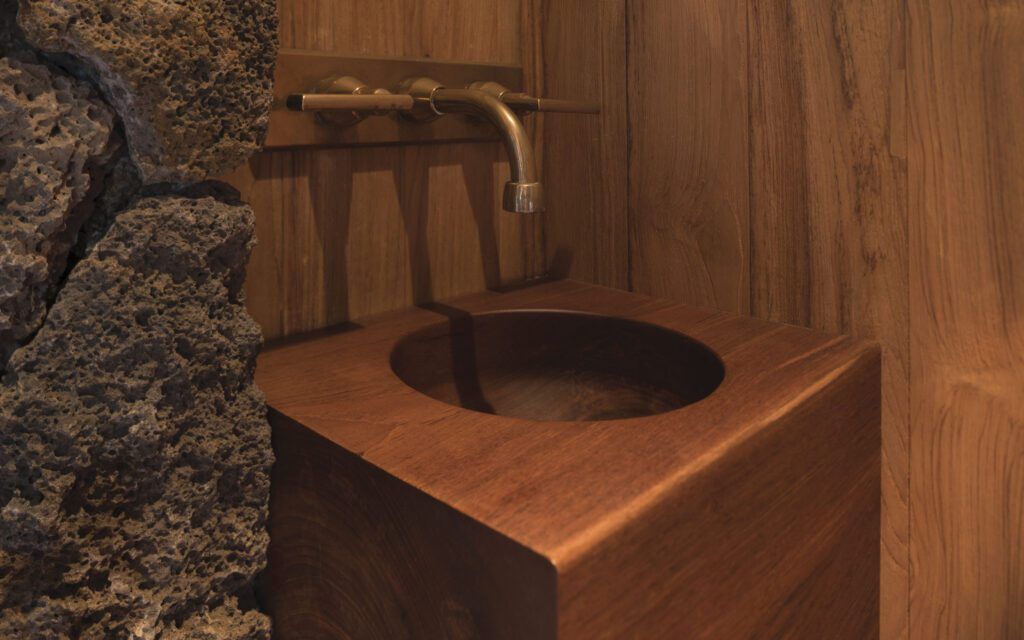
Solid metal hardware, such as bronze, is known to perform better than plated zinc, stainless steel, polished nickel, brushed brass, and composite alloys. That’s because solid bronze hardware is cast from a copper-based alloy throughout its entire form.
Bronze’s weight is substantial, its durability inherent, and its surface can be refinished without compromising structural integrity.
Plated metals typically consist of zinc or brass cores coated with a thin decorative layer. While initially attractive, plated finishes rarely remain intact over time, especially in humid bathrooms. They wear at high-touch points, exposing the base material beneath. Solid bronze offers structural strength and natural resilience that coatings alone cannot replicate.
Materiality also influences how finishes interact with light. A plated sheen may appear uniform but lacks depth. Solid metal kitchen and bath hardware develops character as it oxidizes and responds to touch.
Bronze, for instance, develops a living patina rather than deterioration. As it oxidizes, the surface deepens in tone and texture, creating a patina unique to the environment and user interaction.
Plated finishes offer visual consistency in the beginning, while solid bronze offers authenticity and longevity. In bathrooms, where conditions are demanding, the authenticity of the material is the foundation of a lasting design.
The Beauty of “Living Finishes” and Natural Patina
Lacquered or sealed surfaces are usually designed to resist change. Living finishes offer the opposite—they respond to touch, humidity, and air exposure, developing unique tones over time. The tonal variation gives bathroom and kitchen hardware depth and individuality.
In a bathroom, where moisture and handling are constant, this evolution is part of the design narrative. Areas frequently touched often darken or polish slightly, while less-used surfaces retain softer oxidation. The result is a finish that feels integrated and lived in rather than static.
A natural patina is not deterioration. It’s a reflection of authenticity. High-quality bronze hardware, in particular, offers structural resilience, making it suited to environments where longevity matters.
Bronze also offers warmth and pairs well with natural materials and bathroom fixture finishes, making it a timeless alternative to finishes that freeze materials in a single moment.
Selecting Finishes for Key Bathroom Zones
Luxury bathrooms function in zones, each with distinct moisture levels, frequency of use, and visual prominence. Instead of a uniform finish, choose an option that responds to these differences, as shown below:
Faucet and Fixture Finishes
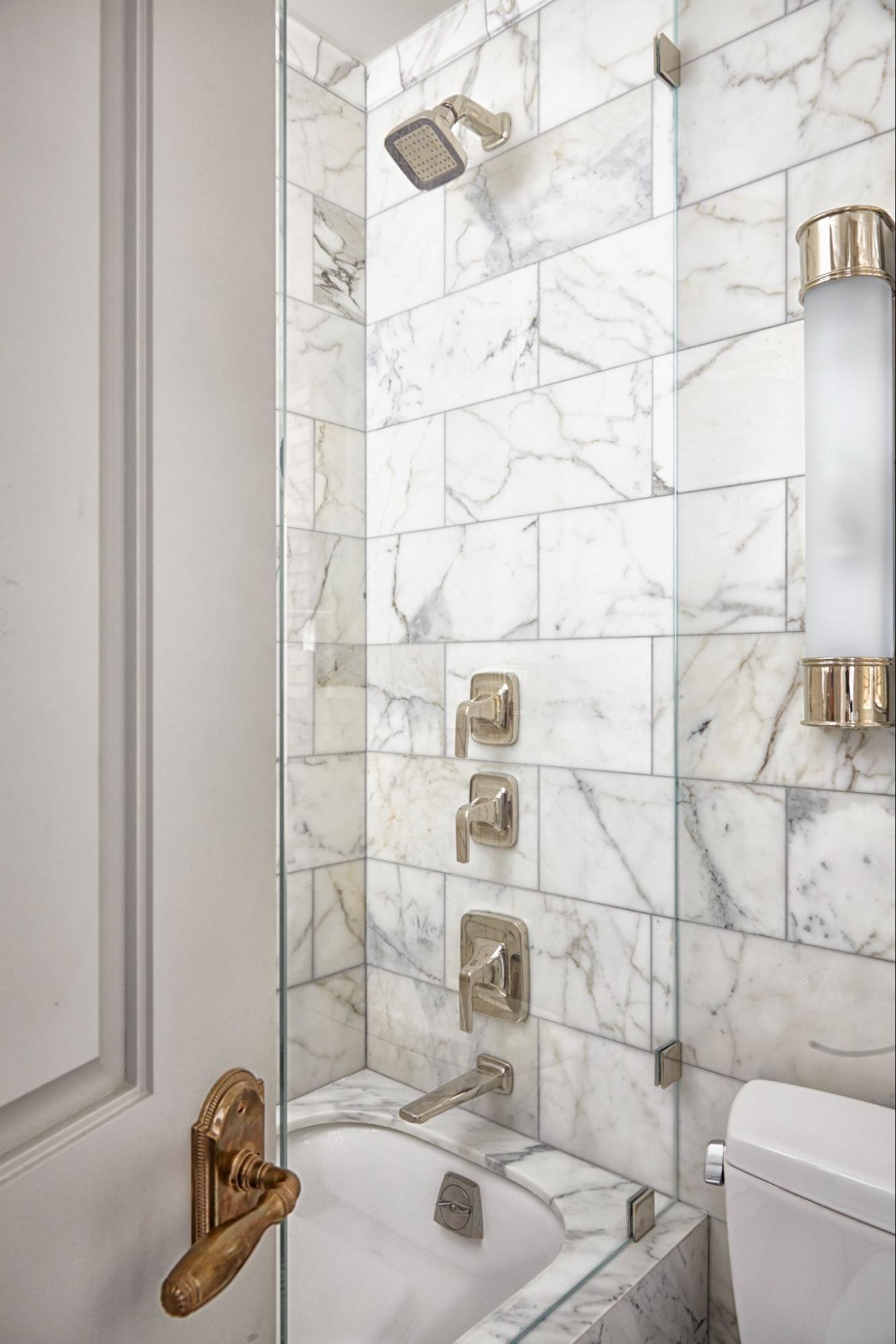
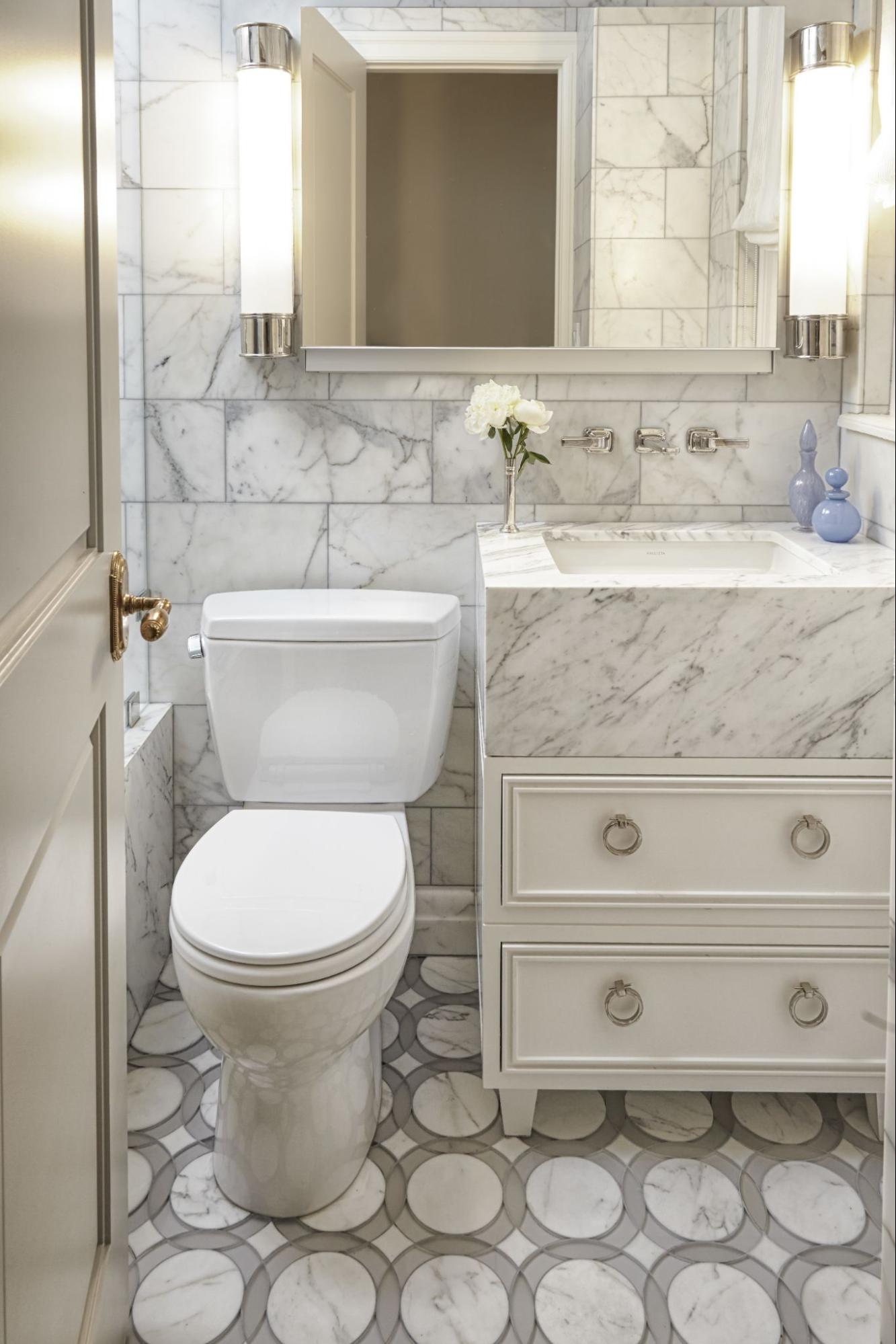
Choosing the right bathroom faucet finishes allows you to establish the focal points in vanities. Faucets and primary fixtures require a dominant finish. Daily exposure to water also calls for resistance to spotting, corrosion, and mineral buildup.
Choose bronze faucets and fixtures, such as the Alturas Apron Front Sink paired with Goose Neck Lavatory Deck Mount Faucets. You can find brushed or matte textures that help diffuse light and conceal minor spotting.
Solid bronze provides structural durability and develops depth over time. It also complements warm-toned bathrooms with natural stone or wood accents. If you have oversized statement faucets, choose finishes with visual weight. For minimalist forms, go with subtle, refined textures.
Evaluate your maintenance expectations and how the finish interacts with countertop materials. Aim to achieve balance and anchor the vanity without overpowering surrounding elements.
Cabinet Hardware and Architectural Details
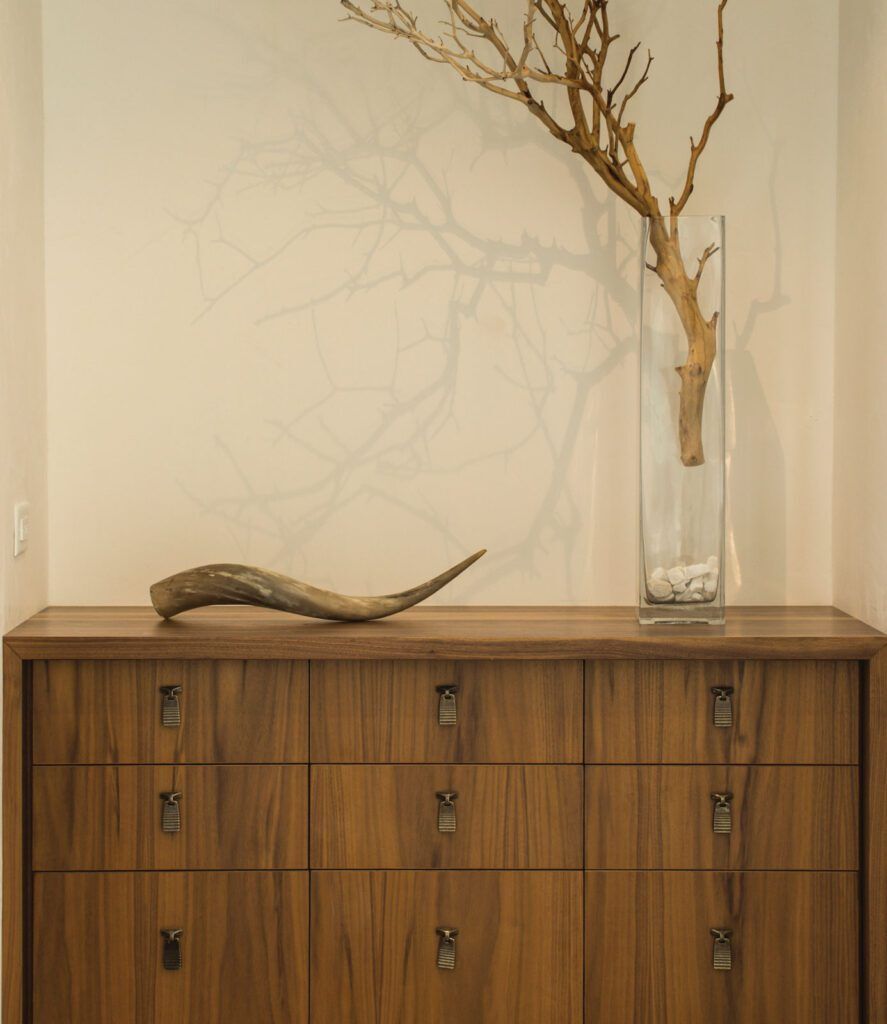
Drawer pulls and knobs are handled multiple times each day, making durability and comfort the top priorities when choosing cabinet hardware. The tactile operation also calls for quality finishes that withstand daily use.
Look for bathroom cabinet finishes that complement primary fixtures while offering subtle visual punctuation across millwork surfaces. If you have painted cabinetry, go for warm metals to add contrast and dimension.
Align the tone with natural wood to create a cohesive, grounded feel. You can also choose a lightly brushed finish to introduce softness, or a darker patina to emphasize craftsmanship and form. These additions also influence texture and feel.
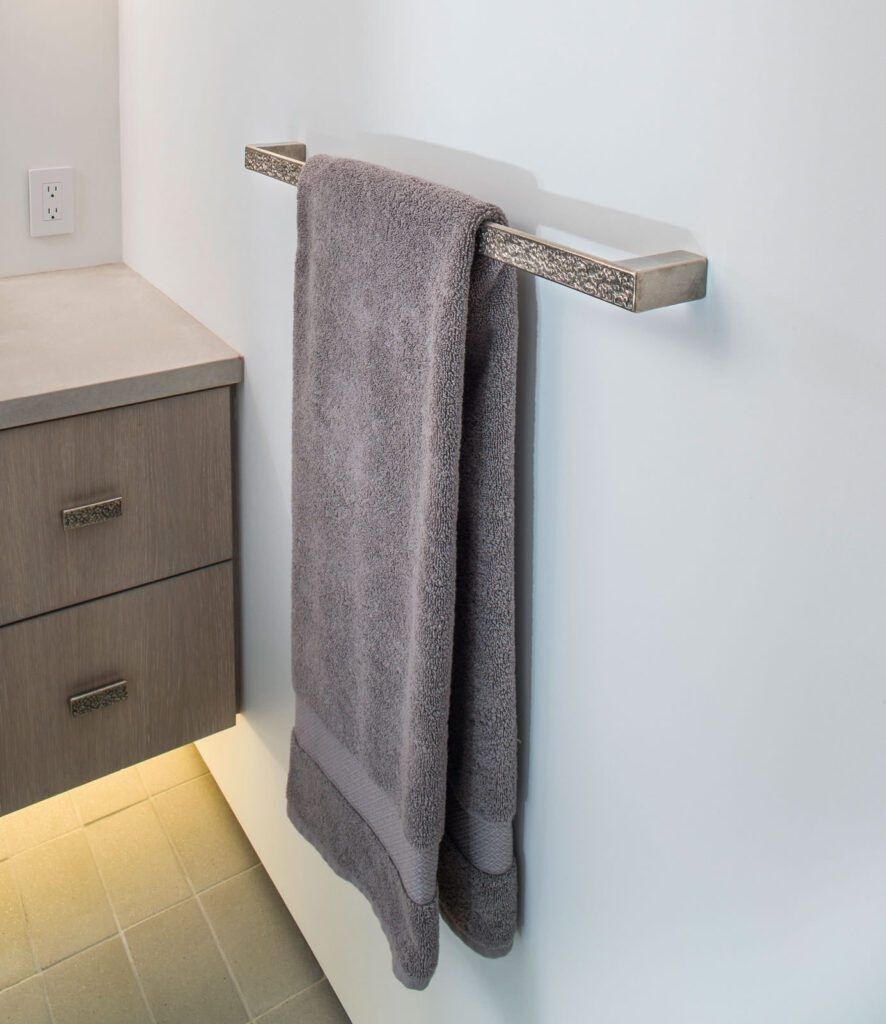
Coordinate the finishes across architectural details, such as bronze towel bars, robe hooks, framing, and hinges, to make the space feel intentional rather than incidental.
Shower Enclosures and Tub Fillers
These moisture-intensive zones expose your bathroom hardware to steam and direct water, demanding finishes that resist corrosion. Framed shower enclosures introduce linear metal elements that influence visual rhythm. You can use a thin bronze frame to define the shower elegantly.
Choose heavier profiles if you want to create bold architectural statements. Tub fillers, particularly freestanding models, can function as sculptural elements with finishes that highlight their form.
Because shower enclosures and tub fillers are highly visible, keep the finish consistent with vanity hardware to strengthen cohesion. Add subtle variation by pairing a brushed faucet with a lightly textured shower finish.
Lighting and Accessory Coordination
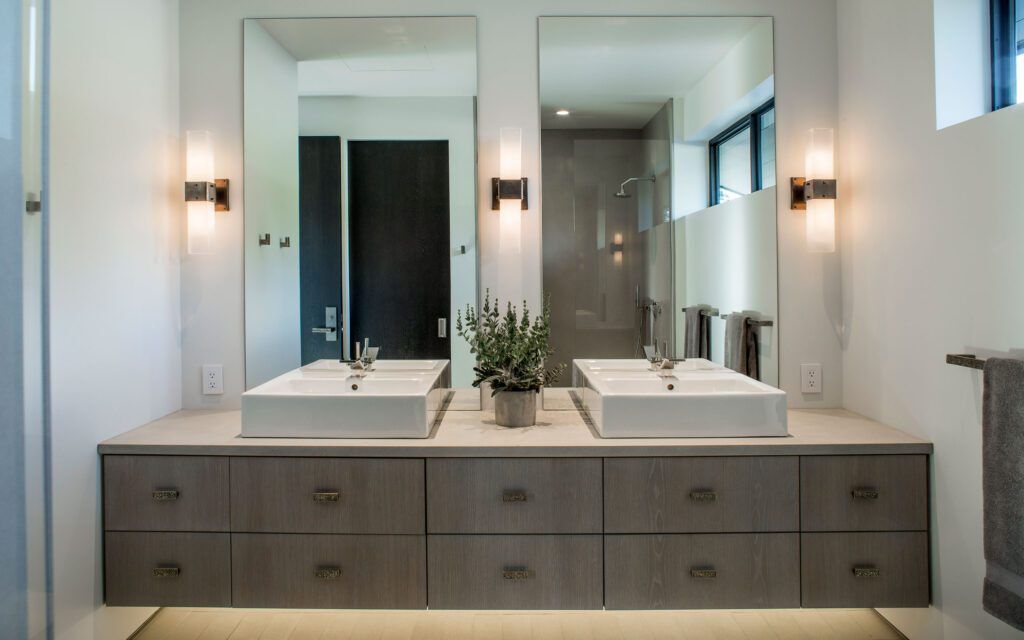
Lighting alters how finishes appear, so you should coordinate lighting fixtures with hardware to keep metal finishes consistent throughout the day. A polished surface may sparkle under warm bulbs yet feel stark under cooler tones.
Use elegant wall sconces to flank the vanity and echo or complement faucet finishes, creating a unified visual field. Reinforce the finish or introduce subtle contrast using towel bars, mirrors, and smaller accessories.
Layer lighting with ambient, task, and accent fixtures to reveal form and texture. Brushed finishes absorb light softly, while polished surfaces reflect it sharply—remember this interplay to choose matching and prevent glare.
Use slight tonal variations to enrich the design after anchoring it with a primary finish. Lighting and hardware should work in concert to shape the functional and emotional atmosphere of the bathroom.
Bathroom Finish Comparison Guide
Bathroom surfaces endure unique demands—understanding these differences allows you to select the right finishes for each fixture. Evaluate aspects like touch frequency, environmental exposure, and maintenance requirements.
Comparing High-Touch vs. Low-Touch Areas
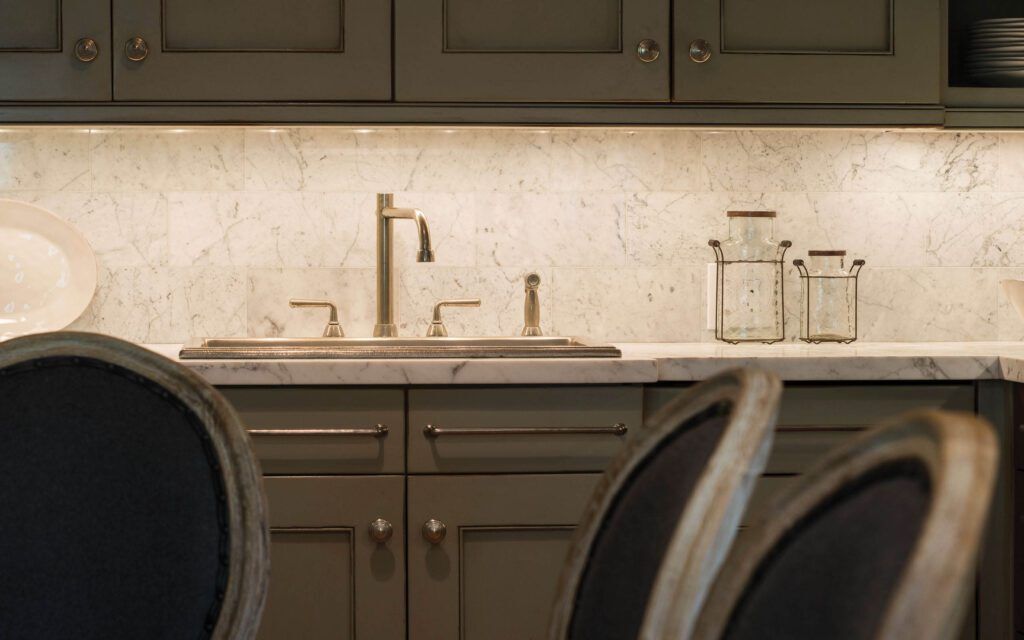
High-touch areas, such as faucet handles, drawer pulls, and door levers, accumulate oils and wear patterns rapidly. Choose finishes that disguise fingerprints or develop attractive patina.
Low-touch elements include mirror frames or decorative lighting arms that experience less physical interaction. Here, more delicate finishes may be suitable due to the minimal abrasion expected.
Distinguishing between these categories allows for thoughtful material allocation. For example, a living patina thrives on bronze cabinet pulls but requires occasional polishing on a rarely touched decorative bracket.
Maintenance Expectations: Lacquered vs. Living Finishes
Choosing between lacquered and living finishes for bathroom fixtures comes down to personal preferences. They’re fundamentally different in all aspects—lacquered finishes are sealed to preserve a consistent appearance.
Even though lacquered finishes resist oxidation and require minimal maintenance beyond routine cleaning, repairs can be difficult once the protective layer is compromised.
Living finishes are intentionally unsealed. They respond to touch and environment, developing variation over time. Maintenance may involve occasional waxing or gentle cleaning, but surface evolution is expected rather than prevented.
If you value character and depth, choose living finishes that offer richness— lacquered surfaces are generally an alternative where uniformity is essential.
Durability in Humid Environments
Bathrooms expose metals to persistent humidity, temperature swings, and water contact. Durability in this environment requires resilient materials and finishes.
Solid metals such as bronze resist corrosion naturally due to their alloy structure. Stainless steel also offers strength but lacks warmth in tone. Plated substrates degrade fast when the coating is compromised.
This leaves you with bronze and aged metals as the ideal bathroom hardware—they can withstand routine exposure and natural changes enhance the aesthetics. Use proper ventilation to mitigate moisture accumulation and reduce the risk of pitting, discoloration, or structural weakness.
Designing with Texture and Tone
Texture and tone, just like color, affect how you perceive a space. A brushed finish will soften light and create warmth, while a highly polished surface amplifies brightness and contrast. This interplay influences how your bathroom feels and looks, as discussed below:
Traditional vs. Modern: Matching Finish to Architecture
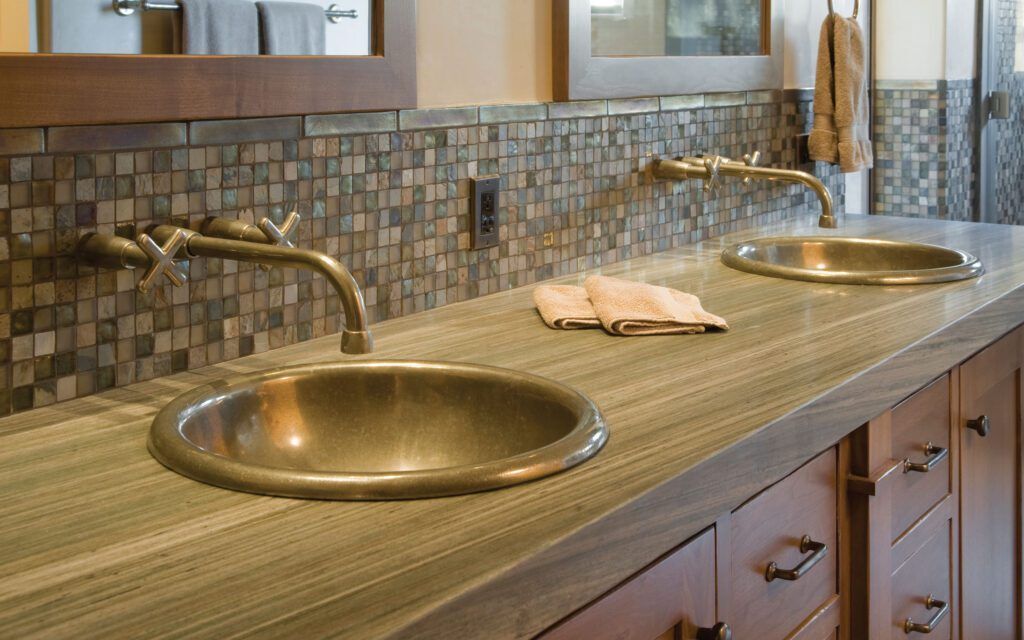
In traditional bathrooms, finishes with warmth and depth reinforce the architectural narrative. You can use warm metals, such as the Edge Bow Cabinet Pull, to complement traditional detailing and natural materials like stone and wood.
Go for oil-rubbed bronze, aged brass, and lightly textured hardware that echo the classical craftsmanship—layered moldings, inset cabinetry, framed mirrors, and natural stone. The finishes should soften edges and add visual weight appropriate to historically influenced interiors.
Modern bathrooms emphasize restraint, so think clean lines, slab cabinetry, and minimal ornamentation. Choose finishes that reinforce clarity, such as polished chrome, satin nickel, or matte black, but pair them with warm metal to temper sterility and add dimension.
Instead of strict adherence to a style, prioritize alignment with the architectural language of the room. The hardware and finishes should feel integrated and amplify the structure.
The Impact of Texture (Brushed, Wire, and High-Polished)
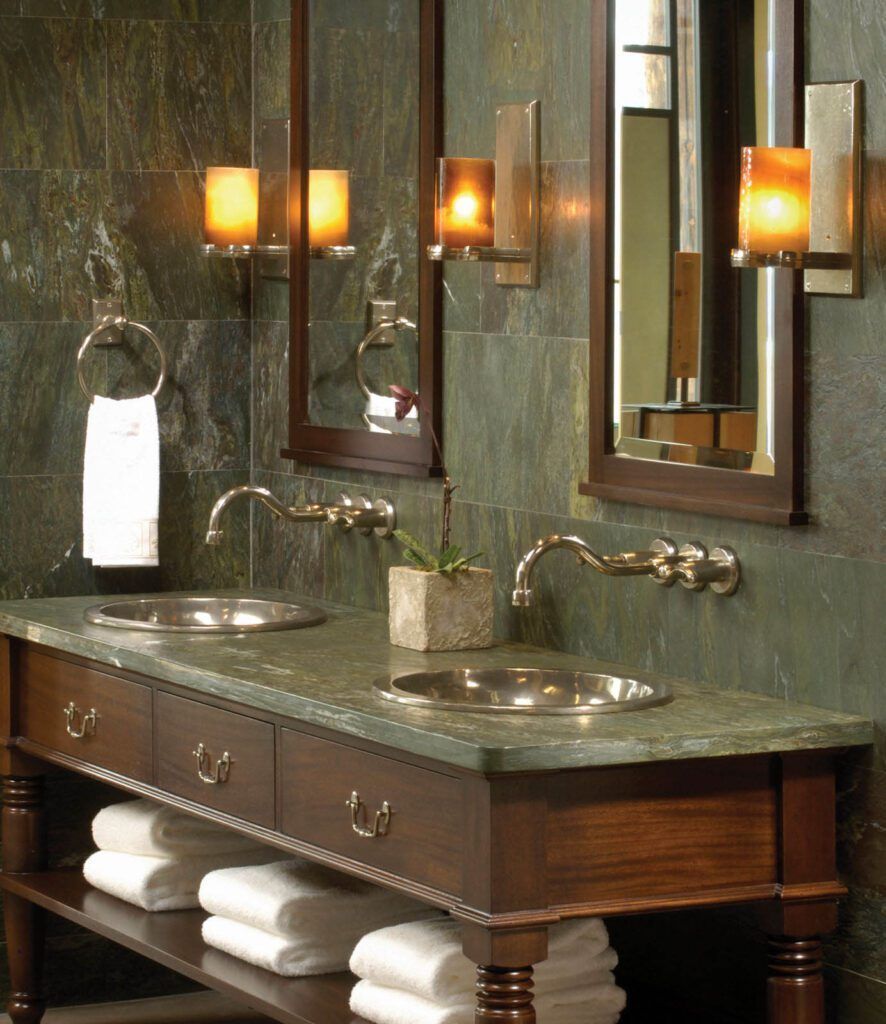
Texture changes how metal performs visually and physically.
A brushed finish diffuses light, softens reflections, and minimizes glare, making it effective in bathrooms with strong natural light or layered illumination.
Wire-brushed surfaces introduce subtle directional grain, adding depth and tactile interest to faucets and fixtures without overwhelming the composition.
High-polished finishes reflect their surroundings sharply, amplifying contrast and brightness. In smaller bathrooms, this can create a sense of expansion. In larger spaces, they become dramatic focal points. However, highly polished surfaces reveal fingerprints and water spotting more readily, requiring consistent maintenance.
Texture also influences perceived weight. Heavily brushed metals feel grounded and substantial, while polished finishes appear lighter and more formal.
Warm vs. Cool Tones: Setting the Mood
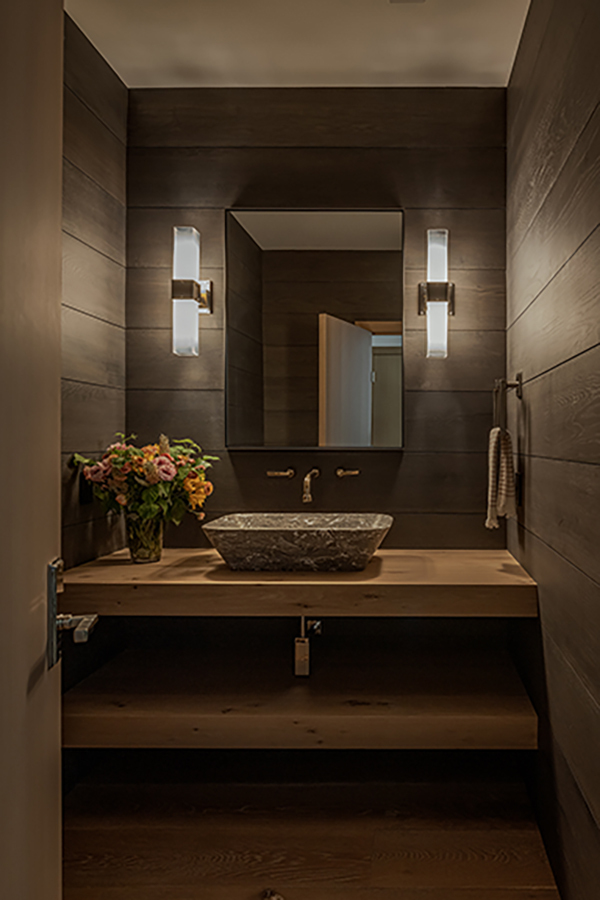
Warm metals such as bronze and champagne finishes introduce richness and intimacy. They pair naturally with wood vanities, travertine, limestone, and other earth-driven materials. Warm tones also soften the bathroom environment, creating a sense of comfort and permanence.
Cool metals like chrome, polished nickel, and stainless steel complement marble with blue or gray veining, crisp white tile, and contemporary cabinetry. They feel fresh and streamlined, reinforcing minimalism.
Use the surrounding palette from tile undertones, paint color, countertop material, and lighting temperature to dictate tonal direction. You can have a bronze finish under warm LED lighting to prevent tonal discord—using cool lighting in such a setup may appear muted or muddy. Similarly, cool metals under warm lighting can soften unexpectedly.
The Art of Mixing Bathroom Finishes
Can you mix finishes in bathroom hardware? The quick answer is yes. Mixing bathroom hardware finishes is all about hierarchy and repetition. Aim to add depth and refinement, and prevent chaos.
Rules for Mixing Metals and Organic Materials
No strict rules exist here, just some brilliant interior design tips for mixing metals. Having a guideline can help result in a refined outcome. Limit the palette to two or three finishes maximum to maintain visual cohesion. One finish should dominate, while others act as supportive accents.
Organic materials, such as wood cabinetry, can temper cool metals if you already have cold chrome-heavy spaces. Otherwise, pair them with matching warm metals like bronze.
Use marble with complex veining or bronze painted tiles to connect polished and brushed finishes through shared undertones. Textiles like woven rugs or linen window treatments also help soften metallic contrast.
Larger fixtures should carry the dominant finish, while smaller accents can introduce variation. Use repetition to make each finish deliberate rather than isolated. Avoid mixing metals that conflict in undertone without transitional materials.
Anchoring the Room with a Dominant Finish
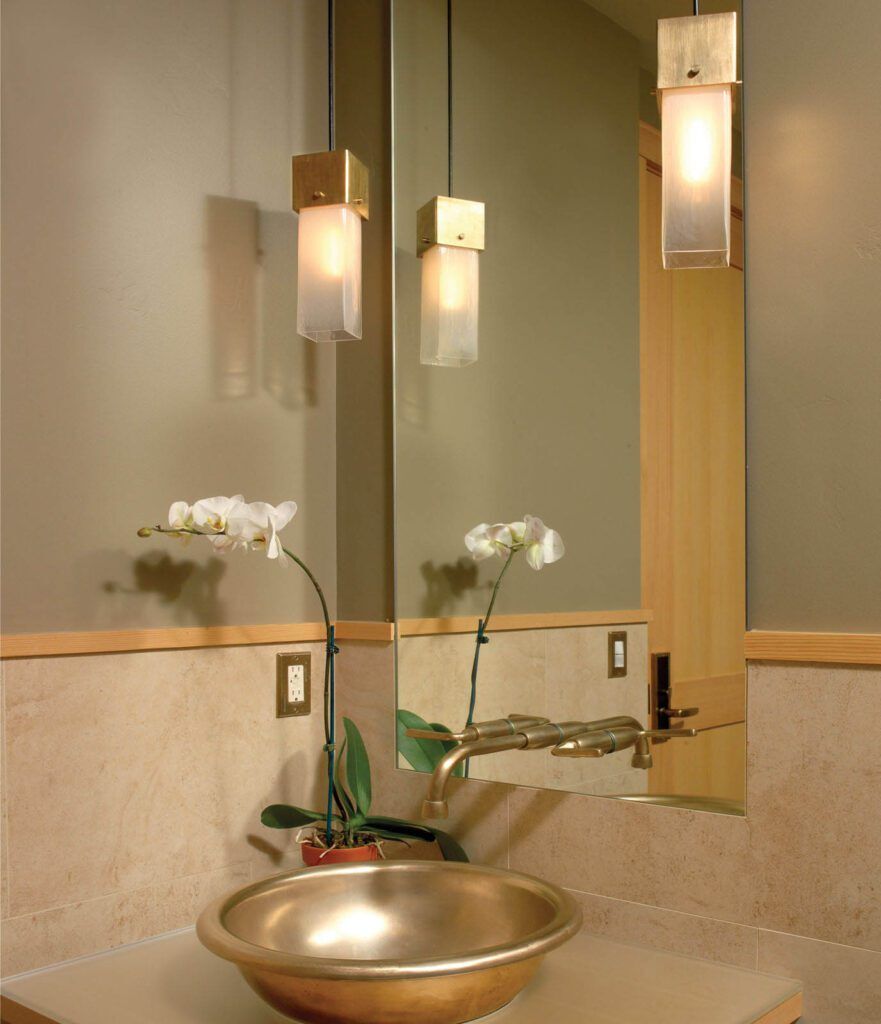
When mixing finishes in bathroom hardware, always start with a dominant finish that establishes order and focal hierarchy. Use it on faucets, primary shower fittings, and visible structural hardware. The dominant finish is the reference point for secondary choices.
Use lighting, cabinet pulls, and accessories to echo or contrast without competing for prominence. The dominant finish should carry the greatest visual weight and surface area. Variation can exist, but it should orbit around the primary material.
High-Contrast Combinations That Work
Looking to introduce drama? Choose high-contrast combinations, like pairing matte black with warm bronze to create depth—both finishes possess visual weight and different tones. The contrast feels deliberate rather than jarring.
Polished chrome combined with aged bronze can also succeed when lighting and surrounding materials unify them. For example, marble with mixed veining can bridge tonal differences.
Contrast should highlight architectural features. A dark shower frame against light tile emphasizes geometry, while a warm cabinet hardware against painted millwork adds definition. Keep the undertones consistent to avoid fragmenting the space.
Even with high-contrast combinations, one finish should remain dominant, while the contrasting metal serves as punctuation.
Why Bronze Remains the Ultimate Choice for Luxury Bathrooms
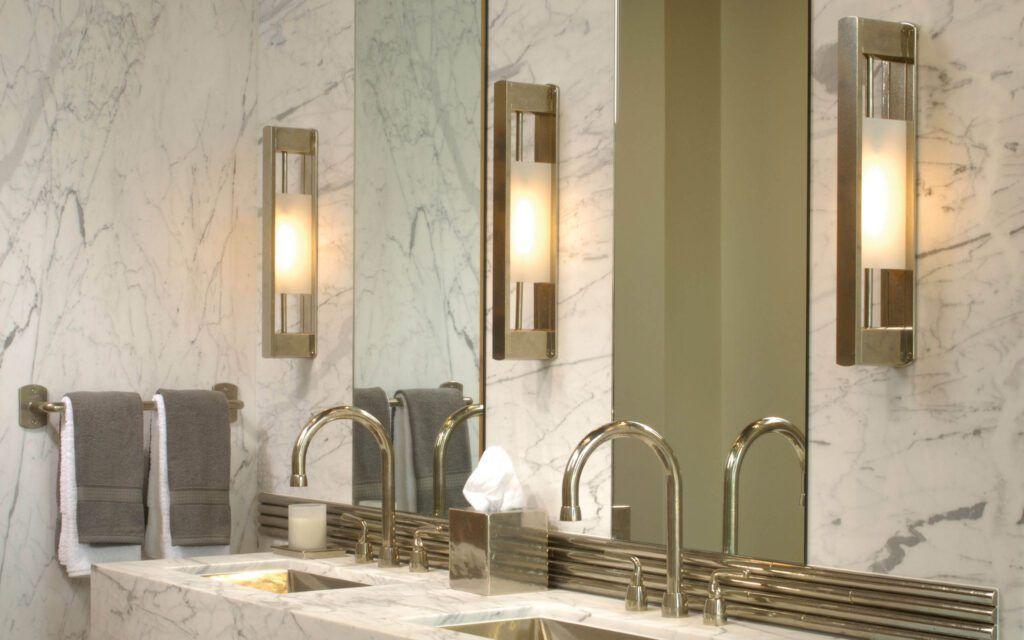
Bronze has remained relevant for centuries, but its resurgence in modern interiors is powered by the search for durable, aesthetic, and authentic materials. Unlike plated hardware, bronze-first interiors maintain longevity and structural integrity throughout use—they don’t depend on surface coatings.
Sustainability and Antibacterial Properties of Bronze
Bronze is inherently sustainable because of its durability and recyclability. Pated hardware may require replacement when coatings fail, while solid bronze can be refinished, restored, and maintained for decades.
Bronze’s durability reduces material waste and long-term consumption. Additionally, bronze contains copper, which possesses natural antimicrobial properties.
In high-touch bathroom surfaces, such as faucet handles, pulls, and levers, this characteristic is a functional benefit beyond aesthetics. The material actively resists bacterial growth on its surface.
Customization: Creating a Bespoke Look
Choosing bronze gives you exceptional flexibility in finish, texture, and form. The material can be hand-cast and finished in small batches, allowing the designer to specify patina depth, brushing techniques, edge profiles, and proportions based on your project needs.
This level of customization results in curated hardware, such as Prong Antler Hooks, that aligns with style, millwork details, stone selections, and architectural designs. You can introduce subtle variations in tone or texture to create dimensions that mass-produced pieces cannot replicate.
Bespoke bronze hardware also transforms functional elements into custom architectural features. Instead of limited factory finishes, you can curate a material expression unique to your space, reinforcing individuality.
How Bronze Hardware Increases Home Value
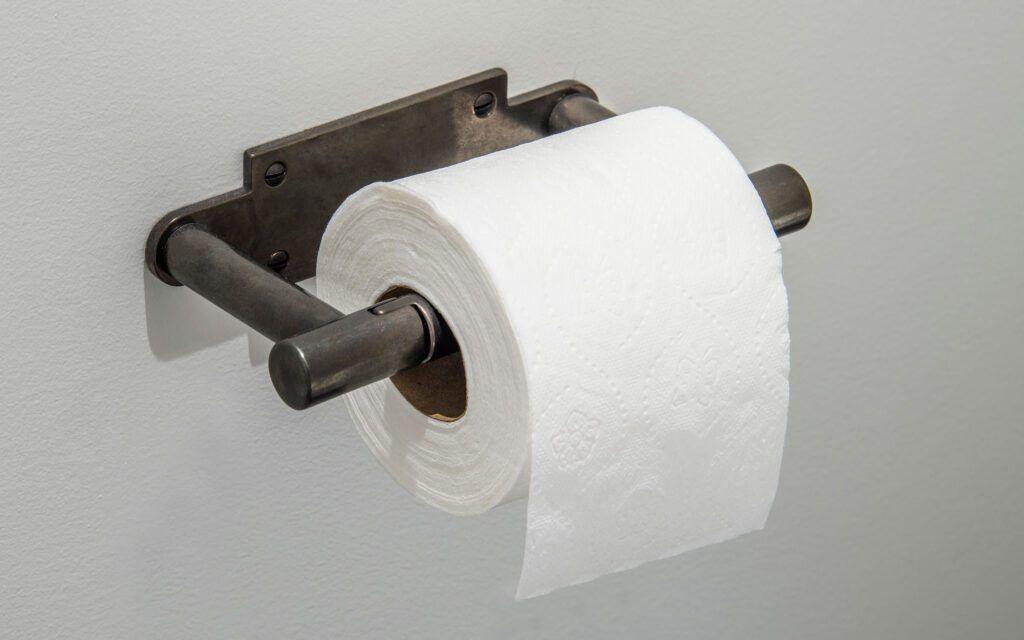
Using high-quality materials is one way to increase home value, and bronze reinforces quality and communicates craftsmanship and permanence. In luxury markets, material authenticity contributes to perceived value.
Prospective buyers and appraisers will recognize the difference between lightweight plated hardware and solid bronze—both appearance and tactile weight vary. Bronze also ages gracefully instead of deteriorating, offering long-term durability and reduced replacement costs.
Bronze hardware complements premium finishes such as natural stone and custom cabinetry, reinforcing the overall quality of the home. Even though hardware is just a small detail, cohesive, high-end materials enhance the overall impression.
Final Considerations for Your Project
Lighting temperature, tile undertones, and surrounding materials can subtly influence how a patina reads. Before finalizing bronze finishes, review ventilation levels, daily usage patterns, and maintenance preferences, aligning expectations early to avoid surprises as the finish evolves.
Matching New Hardware to Existing Fixtures
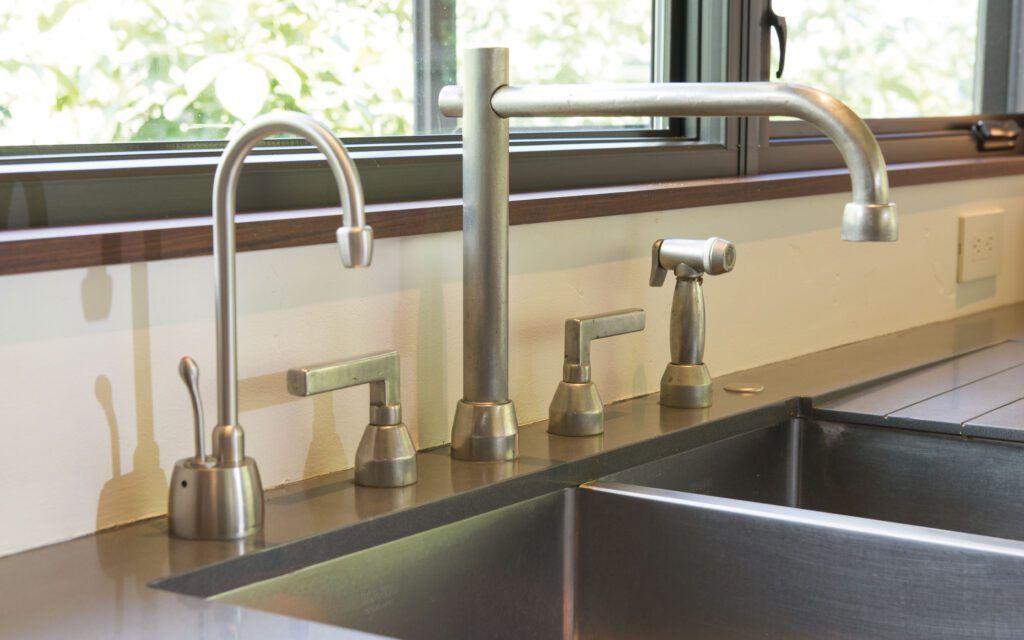
Undertone analysis is part of integrating bronze into an existing bathroom. Determine whether the current fixtures lean warm or cool, polished or matte. A deeply patinated bronze may clash with bright chrome unless transitional materials bridge the contrast.
You can introduce bronze through cabinet hardware or lighting to ease the shift. Start by sampling finishes under the room’s lighting conditions to confirm compatibility. Replace a few key fixtures, such as faucets, to establish a dominant material and create greater harmony.
The Value of “Made to Order” Craftsmanship
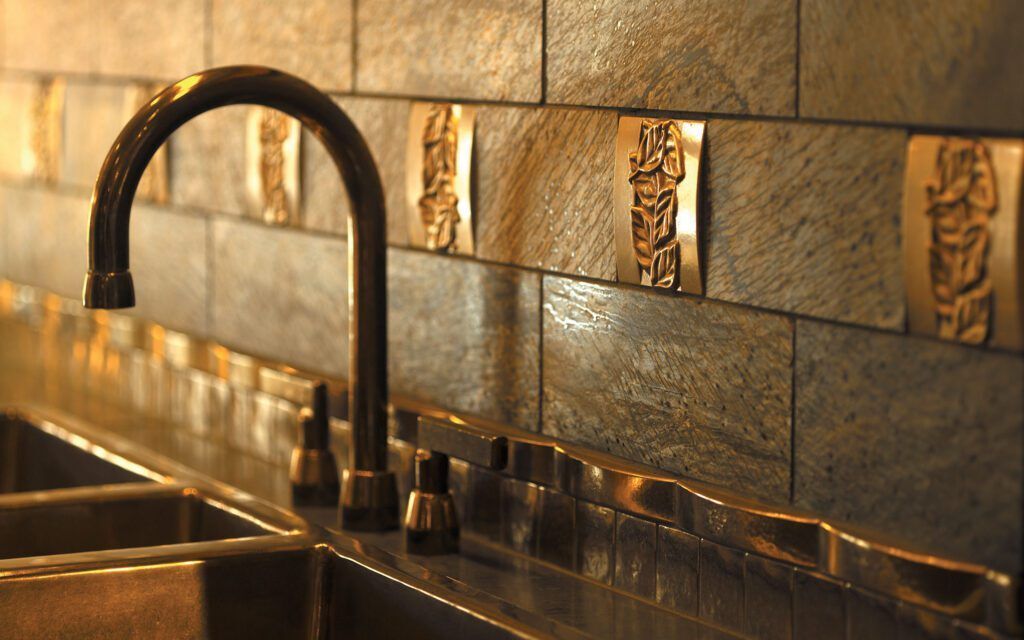
Custom, made-to-order bronze hardware offers precision that off-the-shelf products won’t achieve. The dimensions are designed to suit custom cabinetry, door thickness, or unique spatial requirements.
Finishes are also calibrated for consistency across large projects, resulting in visual continuity from vanity to shower enclosure. You can request hand-finishing techniques to introduce depth and subtle variation that enhance authenticity.
Made-to-order pieces support skilled artisans and result in hardware that feels intentional and enduring. In today’s luxury bathroom trends, this tailored detailing is the distinction between standard construction and bespoke designs.
FAQ About Bathroom Finishes
What Is the Most Durable Finish for a Bathroom?
Solid bronze probably fits this definition best because it is not only durable, but also develops attractive changes. Instead of deteriorating, it gains a living patina and doesn’t rust.
Can You Mix Chrome Fixtures With Bronze Hardware?
Yes, if undertones are balanced and one finish remains dominant, chrome and bronze hardware will complement each other. Use repetition, thoughtful placement, and transitions to prevent visual discord.
Does All Bathroom Hardware Need to Match Exactly?
No. Achieving visual cohesion doesn’t require exact matching for all bathroom hardware. Simply establish a dominant finish with controlled variation that creates depth and harmony.