Farmhouse sinks are known for their timeless appeal and have remained popular for decades, but they offer more than mere appearance. From the exposed apron front to the generous basin and practical design, these sinks provide a functional option for many kitchens. All you need is genuine quality materials, preferably bronze, such as a Lago Sink. You should also get professional installation and insight during selection to achieve durability and units that match cabinet doors knobs or other kitchen or bathroom fixtures.
Unlike standard sink styles, farmhouse sinks offer a visible architectural feature, and materials, size, and finish options influence both performance and how the sink integrates with the surrounding and hardware.
Before choosing one, it is worth weighing the benefits and limitations. This guide examines farmhouse sink pros and cons, compares common materials, and outlines the factors that matter most when selecting a sink designed for long-term daily use.
What Is a Farmhouse Sink?
A farmhouse sink or an apron-front sink usually has a large basin and an exposed front panel that extends slightly beyond surrounding cabinetry. You can distinguish it from undermount or drop-in sinks because the front of the sink remains visible, making it a prominent design element within your kitchen.
The style began with working kitchens where large basins were needed for washing cookware, food preparation, and cleaning tasks. Modern farmhouse sink designers have maintained that functional capacity; they also offer a wide range of materials, including bronze and copper. The mix of utility and visibility, paired with the inherent advantages of farmhouse sink designs, continues to be a key attraction for homeowners.
Farmhouse Sink Pros and Cons at a Glance
| PROS | CONS |
| Large basin accommodates oversized cookware | May reduce under-sink storage |
| Reduced reach improves comfort | May require cabinet modifications |
| Distinct architectural appearance | |
| Available in bronze and many other materials | |
| Works across multiple kitchen styles | |
| Highly durable and functional for daily use |
Advantages of a Farmhouse Sink
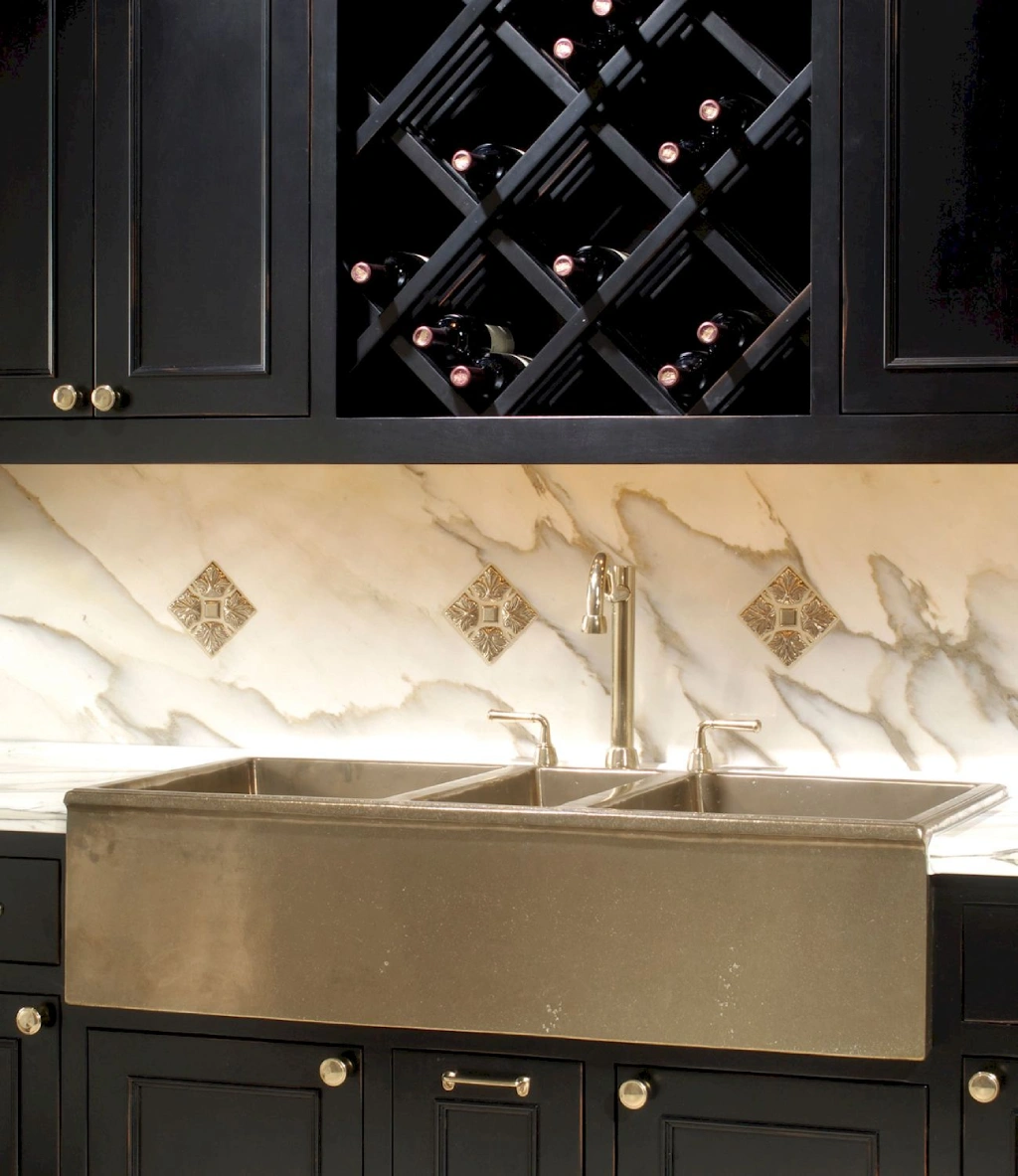
Farmhouse kitchen sinks offer practical benefits that go beyond appearance; they’re ideal for improving capacity, accessibility, workflow efficiency, and design flexibility.
Extra Capacity for Large Pots and Pans
One of the most cited advantages of farmhouse sink installations is the large basin capacity. If you fancy wide, deep bowls that can accommodate oversized cookware, baking sheets, stockpots, and serving trays that don’t fit comfortably in standard sinks, go with the farmhouse design.
The uninterrupted interior also improves workflow during food preparation and cleanup. You can wash large items with ease, reducing splashing and improving efficiency. The additional space is also perfect if you cook frequently or entertain often; it helps make daily kitchen tasks more manageable while reducing clutter around the sink area.
Easier Access and Ergonomic Design
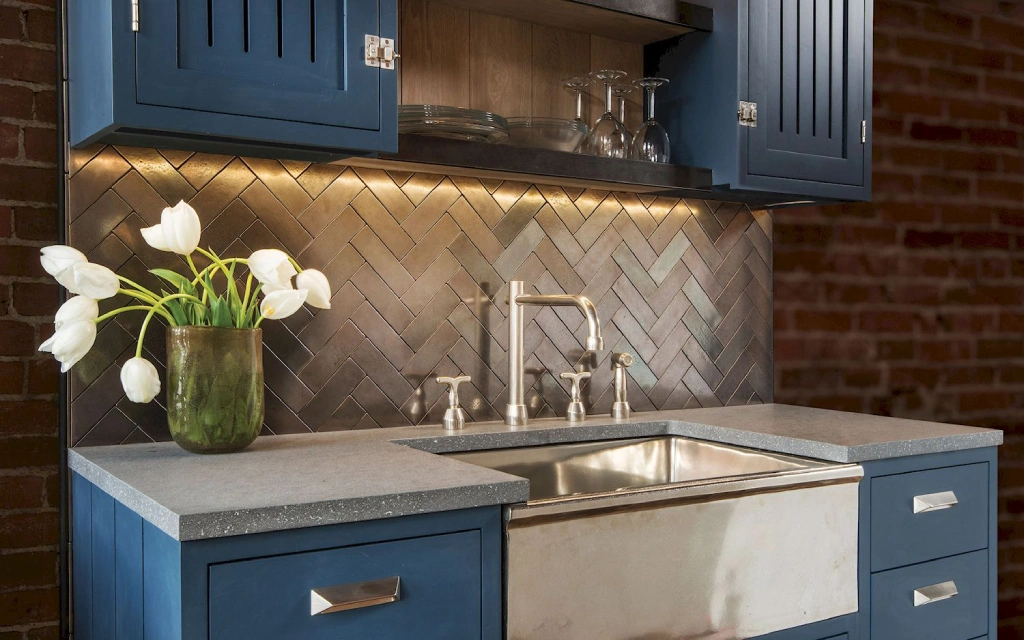
The apron-front design, such as the one in Lago Cove Lago Combo, places the basin closer to you than many traditional sink configurations. Because the front panel eliminates part of the countertop between you and the basin, reaching into the sink involves less leaning.
This helps reduce strain on your back, shoulders, and arms during repetitive tasks such as washing dishes or preparing food. The ergonomic advantage is even more noticeable during extended periods of use. While the difference may appear minor when you first install the sink, the improved accessibility contributes to comfort and usability over the long term.
Timeless Style That Works in Many Kitchens
You can’t exhaust the benefits of farmhouse sink installations without covering the timeless appeal. While farmhouse sinks are often associated with traditional interiors, they adapt to a wide range of kitchen styles. Their simple form allows them to work within farmhouse, transitional, contemporary, industrial, and even minimalist spaces, depending on material selection.
A bronze or copper apron front, such as the Oasis Sink, may reinforce a classic aesthetic, while stainless steel supports a more modern approach. Bonze introduces warmth and texture, creating a stronger architectural presence; its natural patina also produces an aged, lived-in feel without appearing deteriorated.
Because the design itself remains relatively straightforward, farmhouse sinks continue to integrate successfully into evolving kitchen trends without feeling tied to a specific period or style.
Farmhouse Sink Drawbacks to Consider
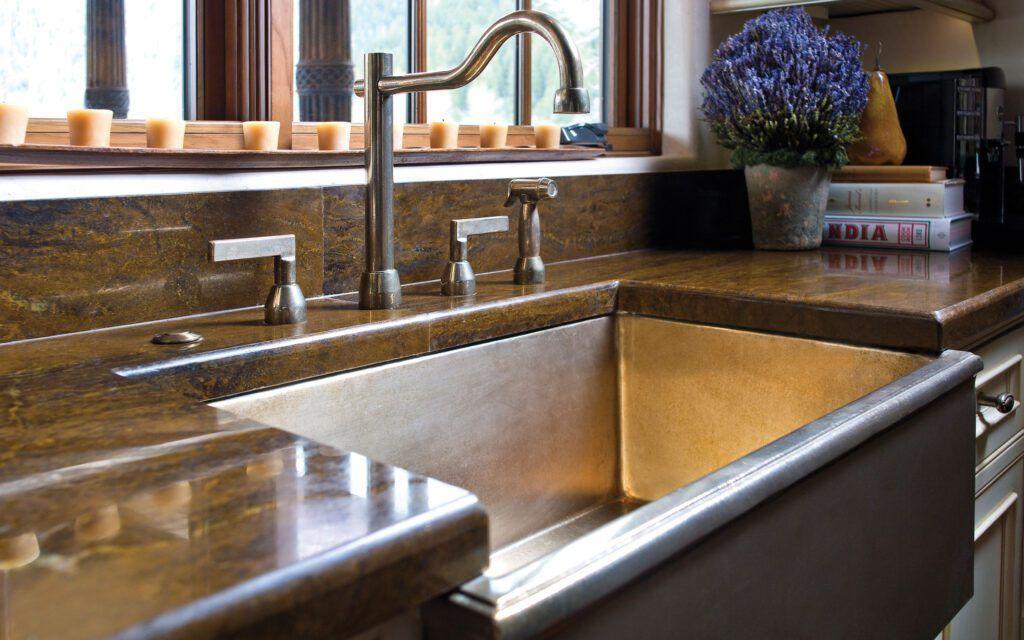
Comparing the pros and cons of farmhouse sink designs will reveal more substantial benefits. However, installation, maintenance, and structural requirements require thorough evaluation before making a decision.
Higher Upfront and Installation Costs
Farmhouse sinks generally cost more than standard undermount or drop-in models. The sink itself is often larger, uses more material, and requires specialized manufacturing processes depending on the material selected.
Installation costs can also increase if cabinetry requires modification to accommodate the apron front. In some cases, countertops are fabricated differently, and additional labor is required to provide proper support.
These expenses vary by material and kitchen layout, but homeowners should budget for both the fixture and the structural adjustments needed to install it correctly. Nonetheless, the timeless design and appeal are totally worth the investment, especially for bronze farmhouse sinks.
Potential Loss of Under-Sink Storage
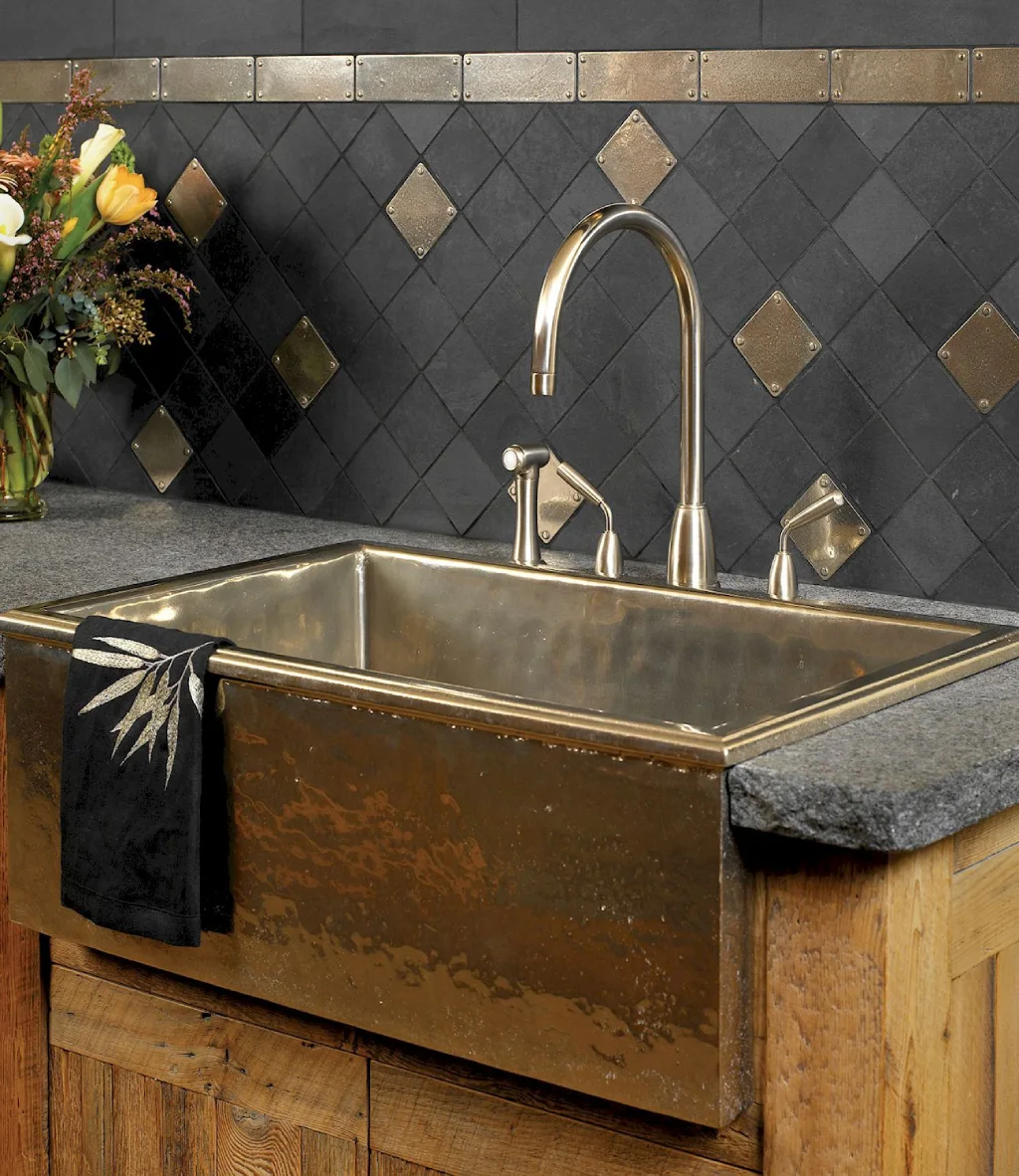
The deep basin that makes farmhouse sinks attractive also occupies more cabinet space beneath the countertop. This can reduce available storage for cleaning supplies, waste bins, and other kitchen essentials.
Apron-front sinks often extend farther into the cabinet than standard sink configurations, but installers can easily adjust internal shelving. Thoughtful cabinet design can recover some functionality, even if storage capacity is slightly reduced compared to shallower sink styles. The tradeoff is something homeowners are comfortable with, provided you factor it in when planning kitchen layouts where storage is already limited.
Weight and Cabinet Support Requirements
Many farmhouse sink materials are significantly heavier than standard sink options. Fireclay, cast iron, bronze, and copper models often require reinforced cabinetry to support their weight safely.
The sink should feature dedicated brackets, support frames, or strengthened cabinet structures to distribute the load properly instead of relying solely on countertop materials. Failing to provide adequate support can lead to shifting or stress on plumbing connections, so weight considerations should be addressed early in the planning process, especially if the renovation involves existing cabinetry.
Maintenance, Scratches, and Staining
Maintenance requirements vary depending on the material you choose. Stainless steel may develop scratches over time, while fireclay can show marks from metal cookware. Bronze develops a patina that gradually evolves, changing the appearance of the surface through regular use, making it the ideal material in luxury kitchens and bathrooms.
Are Farmhouse Sinks Out of Style?
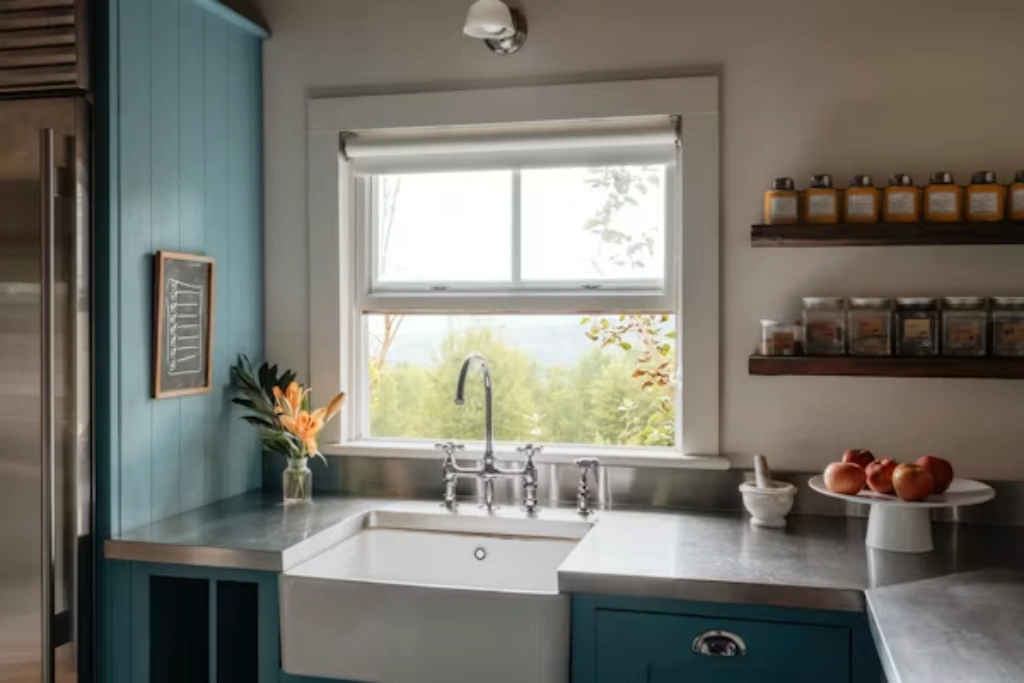
Farmhouse sinks might never go out of style as they remain widely specified because of their functionality and architectural presence that extend beyond short-term design trends.
Why Farmhouse Sinks Remain Popular
Farmhouse sinks like Harbor are everywhere; they continue to appear in new construction and renovation projects because they solve practical problems and contribute to visual character. The large basins support modern cooking habits, and the apron front creates a focal point without requiring excessive ornamentation.
These core benefits of farmhouse sink designs make trends evolve around the style rather than replacing it. Materials, finishes, and surrounding cabinetry styles change, allowing farmhouse sinks to adapt to contemporary preferences, but their ongoing popularity stems less from trend cycles and more from the combination of utility, comfort, and design flexibility that homeowners always value.
Kitchen Styles That Pair Best With Farmhouse Sinks
Farmhouse sinks, such as Reservoir Apron Front, naturally complement traditional, farmhouse, and cottage-inspired kitchens, but their versatility goes beyond these classic choices. Transitional kitchens can use them to bridge classic detailing with contemporary simplicity.
Modern kitchens also frequently incorporate apron-front sinks in bronze or darker metals to create contrast against streamlined cabinetry. Industrial spaces benefit from metal finishes and exposed materials, while rustic farmhouse kitchens emphasize handcrafted textures and natural surfaces. The sink can work across multiple architectural styles, which is why it remains relevant despite changing design preferences.
Farmhouse Sinks vs. Undermount Sinks: Key Differences
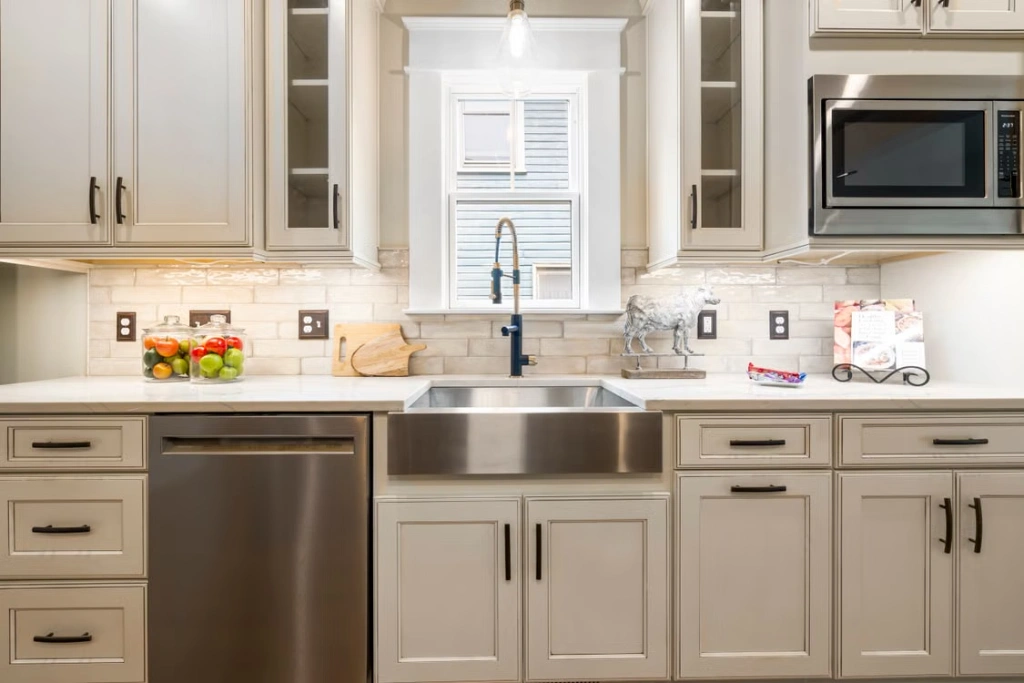
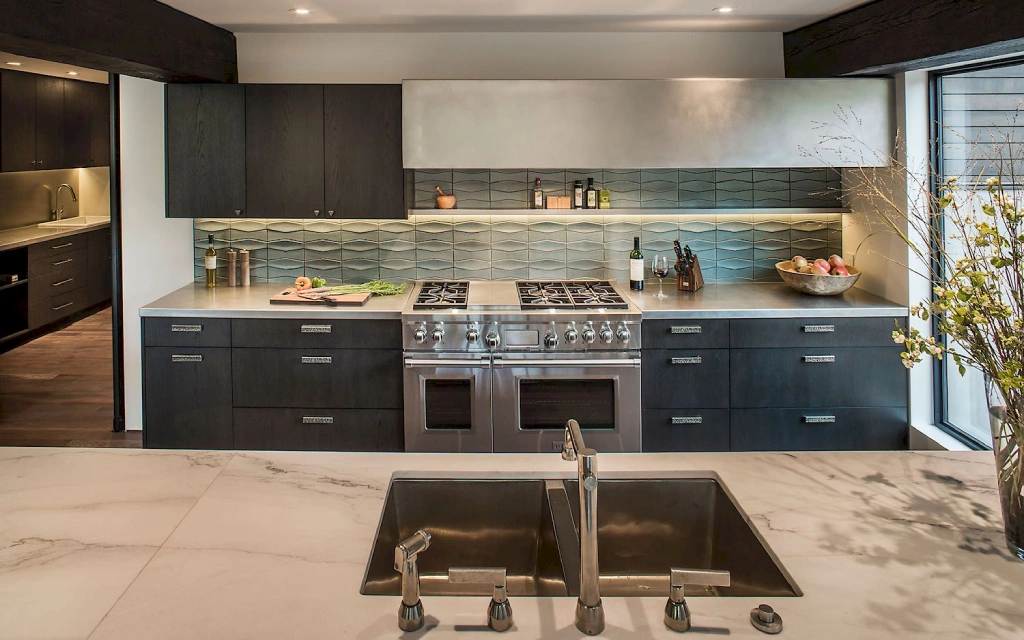
Farmhouse and undermount sinks differ in appearance, installation steps, and user experience. Most farmhouse sinks have an exposed apron front and deeper basins, while undermount sinks remain concealed beneath the countertop giving them a minimal appearance.
The farmhouse design also provides easier access and often accommodates larger cookware. Undermount sinks preserve more cabinet space below and integrate seamlessly into modern kitchen designs. In terms of installation requirements, farmhouse sinks usually involve cabinet modifications and additional structural support, while undermount sinks don’t.
Neither option is necessarily better than the other; the choice depends on personal preferences and priorities, such as storage, aesthetics, maintenance, and workflow. RMH’s farmhouse versus undermount sink comparison guide offers a more detailed evaluation of installation, performance, and design considerations for both designs.
Farmhouse Sink Materials Compared
| MATERIAL | STRENGTH | CONSIDERATION |
| Bronze and Copper | Exceptional durability with rich patina and architectural character | High upfront commitment and acceptance of surface changes |
| Stainless Steel | Lightweight and durable with modern aesthetic | Few finish options and easily develops scratches |
| Cast Iron | Extremely durable with enamel coating | Very heavy, and the coating may chip with use |
| Composite | Resistant to scratches and stains | Mass produced uniformity and manufacturer-limited variety |
| Fireclay | Durable, classic, and stain-resistant | Heavy and may chip if impacted |
Fireclay Farmhouse Sinks
Fireclay sinks are manufactured by molding clay and firing it at extremely high temperatures. This process creates a dense, non-porous surface that performs well against staining and everyday wear.
The sinks have a bright appearance and smooth finish, making them popular in traditional and transitional kitchens. However, fireclay sinks remain susceptible to chipping if heavy cookware is dropped directly onto the surface. They are also substantial in weight and need reinforced cabinet support. Still, people prefer them because of their durability and timeless appearance, especially in residential kitchens.
Stainless Steel Farmhouse Sinks
Stainless steel farmhouse sinks offer a more contemporary interpretation of the apron-front design. The material is lighter than fireclay or cast iron, simplifying installation while maintaining durability. Stainless steel also resists cracking and handles temperature fluctuations well.
However, surface scratches and water spots become visible over time, particularly in highly polished finishes, even though brushed finishes tend to conceal everyday wear more effectively. Stainless steel works well in modern kitchens where clean lines, commercial influences, and practical maintenance requirements take priority; they’re not the most decorative of the lot.
Copper and Bronze Farmhouse Sinks
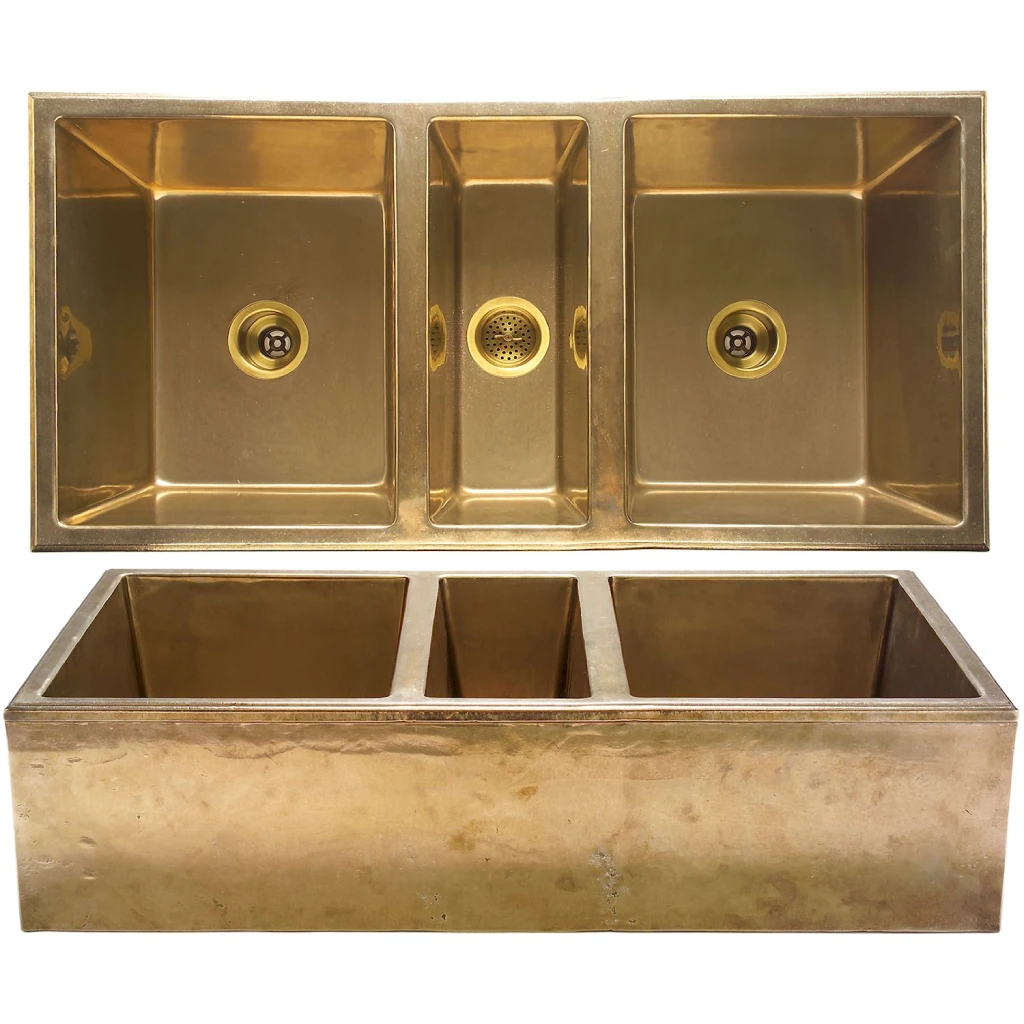
Copper and bronze farmhouse sinks, such as the Cascade Sink, are highlights of luxury kitchens and bathrooms. They introduce warmth, depth, and material character that distinguish them from more conventional options. Both metals develop living finishes that evolve through exposure to touch, moisture, and everyday use.
Rather than maintaining the same factory appearance, the surface gradually acquires variation and patina. This process creates visual complexity and a lived-in feel while preserving structural integrity. The materials also offer natural antimicrobial properties, and bronze provides exceptional durability and a substantial feel. If you want a sink that becomes more distinctive over time rather than remaining visually unchanged throughout its lifespan, choose bronze and copper designs.
Cast Iron and Composite Farmhouse Sinks
Cast iron farmhouse sinks are coated with enamel that provides a smooth, durable surface; this material withstands heavy use and maintains its appearance for decades when properly maintained. Composite sinks are manufactured from blends of natural stone and resin, and can resist scratching, staining, or impact damage.
They also offer a broad range of colors and finishes. Cast iron carries more visual weight and traditional appeal, whereas composite materials suit contemporary kitchens. Both options provide durability, but their appearance, weight, and maintenance requirements differ depending on the intended application.
Best Farmhouse Sink Material by Kitchen Use
The best sink material depends on how your kitchen functions daily. Whether you prefer the classic French farmhouse style or modern renditions and mixed designs, aesthetic and functionality priorities dictate the material choice. Fireclay sinks are worth a shot if you prefer a classic appearance and strong stain resistance, while stainless steel works well in high-use kitchens where durability and ease of maintenance are priorities. Copper and bronze are perfect if you appreciate evolving finishes and distinctive craftsmanship.
Cast iron performs well in traditional kitchens where longevity is valued, while composite offers a practical balance of durability and design flexibility. Matching the material to your cooking habits, maintenance preferences, and architectural goals produces better long-term results than selecting solely on appearance. However, if you are to pick one option that never misses, it would be bronze. You get structural integrity, durability, low maintenance, aesthetic appeal, and more.
How to Choose a Farmhouse Sink Built to Last
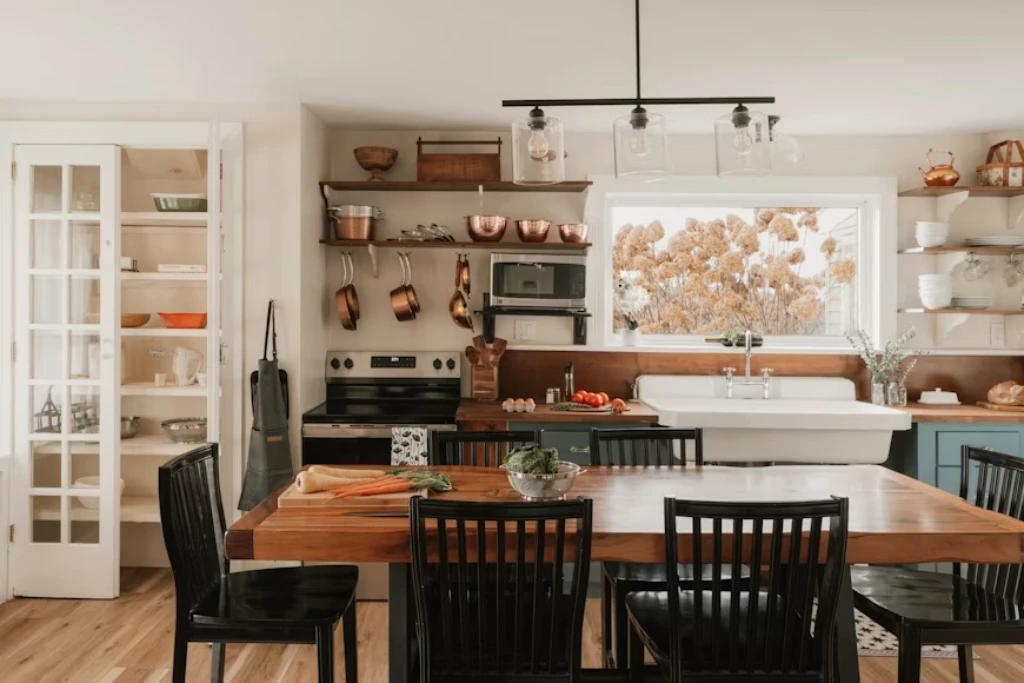
Are farmhouse sinks worth it? Do they last for decades? Which material lasts longer? The long-term performance of any sink depends on the materials, dimensions, support systems, and finishes. If the products, installation, usage habits, and maintenance are up to par, the sink should last to its natural lifespan.
The Value of Handcrafted Materials and Finishes
Handcrafted sinks, such as the Square Bar Sink, often exhibit greater attention to material quality and fabrication detail than mass-produced alternatives. Skilled fabrication methods create products with stronger visual character and more refined finishing.
Materials such as hand-worked bronze and copper also develop unique surface variation over time. Instead of hiding natural aging, these materials incorporate it into their long-term appearance. The result is a fixture that continues evolving while maintaining structural performance.
Choosing the Right Size and Configuration
Learning how to choose a kitchen faucet and sink begins and ends with finding the ideal size and configuration. Sink size and dimension should correspond to cabinet size and daily workflow. An oversized sink will dominate the space unnecessarily, while a smaller basin limits functionality when washing large cookware. Single-bowl configurations maximize uninterrupted workspace and accommodate larger items, while double-bowl designs support multitasking by separating cleaning, rinsing, and food preparation activities.
Depth also influences usability and affects comfort and available storage beneath the sink. To select the correct configuration, balance capacity, and ergonomics, you should also weigh the constraints of the surrounding cabinetry.
Planning for Installation Requirements
Farmhouse apron fronts like the Alturas Apron Front require detailed planning because they may involve cabinet modifications; support structures and countertop fabrication should also be considered before purchasing. Retrofitting an existing kitchen often requires additional adjustments to accommodate the apron front and sink dimensions.
Plumbing locations should be reviewed to maintain compatibility with the new configuration, and early coordination of requirements is necessary to help reduce installation challenges and prevent unexpected costs later in the project. Plan properly and meticulously to allow the sink to perform as intended while preserving surrounding cabinetry and finishes You can also research the cost of installing a sink to determine design options that align with your budget.
Questions to Ask Before Buying
There are many questions you may ask before committing to this classic design choice. Are farmhouse sinks out of style? Do I have enough space for installation? Can I find finishes that match existing hardware? What level of upkeep should I expect?
Before selecting a farmhouse sink, determine whether existing cabinetry can support the weight and dimensions of the chosen model. If you’re planning to incorporate fresh kitchen cabinet remodeling ideas, map out the installation ahead of any purchase. Confirm installation requirements and identify any necessary structural modifications. Review how the material will age and whether its maintenance requirements align with your preferences.
You can evaluate basin size, bowl configuration, and overall workflow compatibility. It is also worth reviewing warranty coverage and manufacturer specifications. Ask your sink supplier and installer any questions before purchasing to help narrow options and increase the likelihood of selecting a sink that performs well within the intended space.
Final Thoughts: Is a Farmhouse Sink Right for Your Kitchen?
Farmhouse sinks are practical and offer a strong architectural presence. Their generous capacity, ergonomic access, and material variety are other reasons why they remain a popular choice across multiple kitchen styles. You can use it to refresh your kitchen this spring and achieve a timeless aesthetic that works throughout the year. However, remember to review installation requirements, weight considerations, maintenance expectations, and storage implications alongside aesthetic preferences.
The goal is to identify thoughtful designs that match your kitchen’s or bathroom’s layout and usage patterns. A bronze farmhouse sink, can provide decades of reliable performance while contributing lasting visual character to the space.
Frequently Asked Questions
Do Farmhouse Sinks Require Special Cabinets?
Most farmhouse sinks require cabinet modifications because the apron front replaces part of the cabinet face. Heavier materials may also require reinforced support structures beneath the sink, but it all depends on the existing configuration. Like-for-like replacements won’t require much adjustment.
Are Farmhouse Sinks Difficult to Maintain?
No, maintenance depends on the material, but regular cleaning is usually enough. Copper and bronze develop patinas, but some surfaces require protection from scratches or stains.
Which Farmhouse Sink Material Is Most Durable?
Durability depends on application, and fireclay, stainless steel, bronze, and cast iron all perform exceptionally well when properly installed, maintained, and matched to use. However,bronze outperforms all due to its weight, strength, and aesthetic evolution.
Can You Install a Farmhouse Sink in an Existing Kitchen?
Yes, as long as you do the necessary preparations or modifications. Cabinetry, structural support, plumbing, and countertops must all be evaluated for compatibility before beginning the installation process.
Can You Pour Boiling Water in a Farmhouse Sink?
Some farmhouse sink materials tolerate boiling water, so you can use them to drain away oils and grease. Always review manufacturer recommendations, particularly for composite materials, to avoid thermal shock or unnecessary surface stress.
