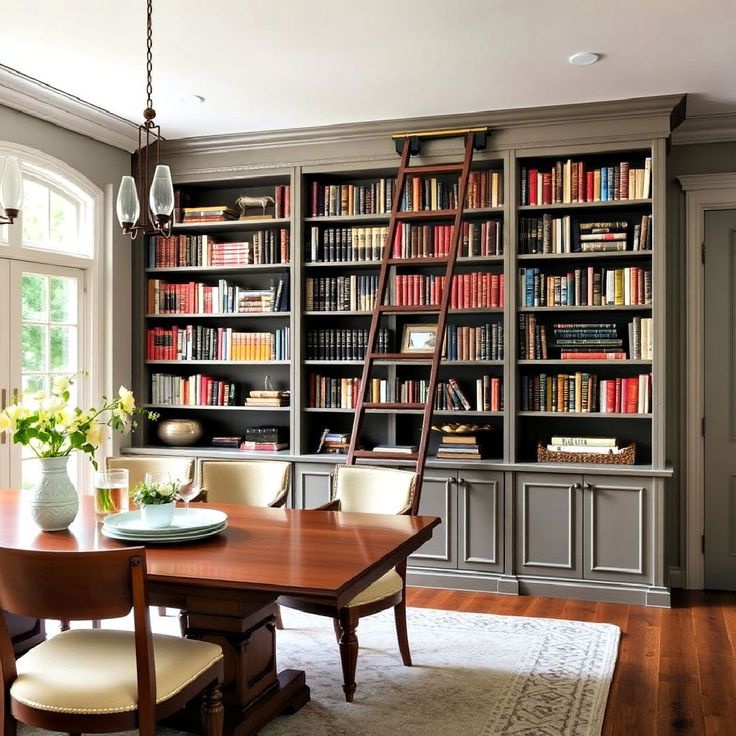
Home libraries offer a safe, laid-back space where you can read, relax, and reflect. While most people think of a dedicated room, you can build your library in various places, including a small alcove. Some libraries even serve multiple roles, doubling as dining areas or home offices.
When designing your home library, make each decision intentional. Materials and finishes are the usual starting point. However, everything counts, from architecture to biophilic additions and decor pieces. These things must work together to fit into the overall aesthetic.
Here are 15 home library ideas to help you create an intimate, personalized, high-end reading nook:
What Defines a Luxury Home Library?
Luxury home libraries feature a purposeful design and bespoke craftsmanship. They balance aesthetics and functionality to create an intimate, enduring environment that enhances your reading experience.
The Architecture of the Room: Built-ins vs. Freestanding
The home library design you choose will determine how you integrate storage. If you prefer a permanent solution, go with built-in shelving. This choice offers visual continuity and can extend from the floor to the ceiling. However, you’ll be sacrificing flexibility.
Freestanding bookcases are the ideal choice for evolving designs and shared spaces. You can reposition them as needed or even move them to a new room. When choosing an architecture, review how you plan to use the room, the vertical space (ceiling height), and the features.
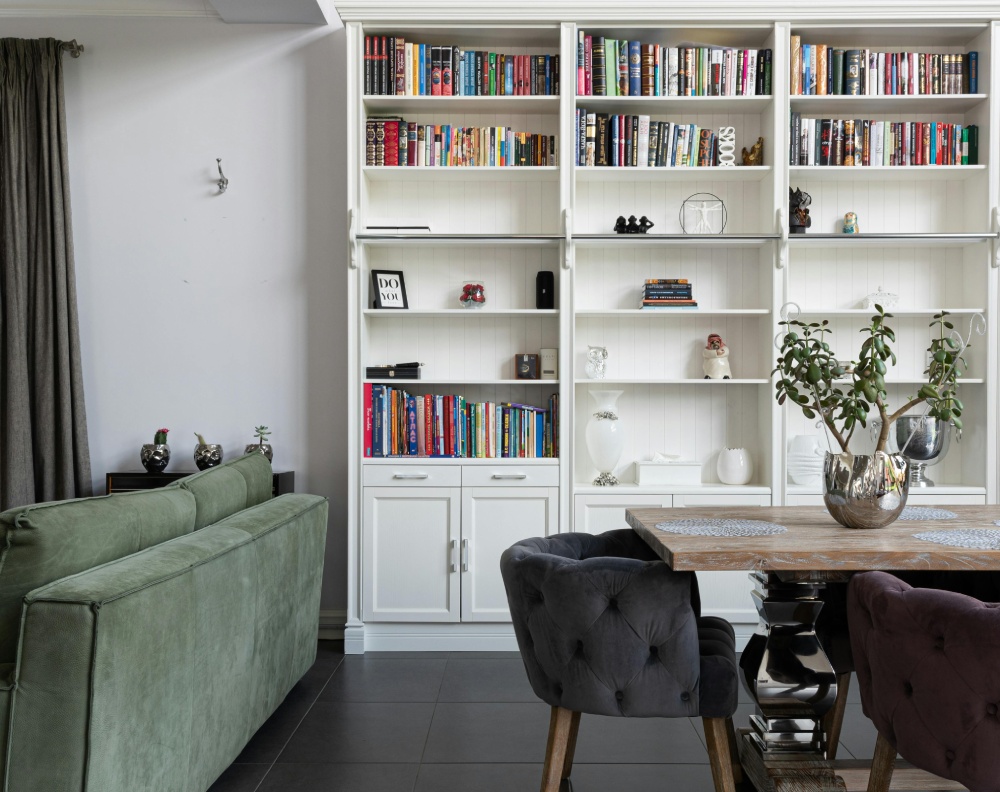
Why Material Matters: Solid Woods and Artisan Bronze
Material affects durability first, so choose high-quality options to create a sense of luxury. Solid woods such as oak, walnut, and maple are preferred for their durability. They also pair well with accent pieces and hardware, shaping the room’s visual and tactile experience.
Choose artisan bronze hardware to add character, contrast, and detail to cabinet doors, drawers, and ladder rails. Bronze hardware ages naturally and holds custom-built joinery details well. Together, high-quality fixtures, hardware, and accessories enhance the library’s overall atmosphere.
The Centerpiece: Why Every Dream Library Needs a Rolling Ladder
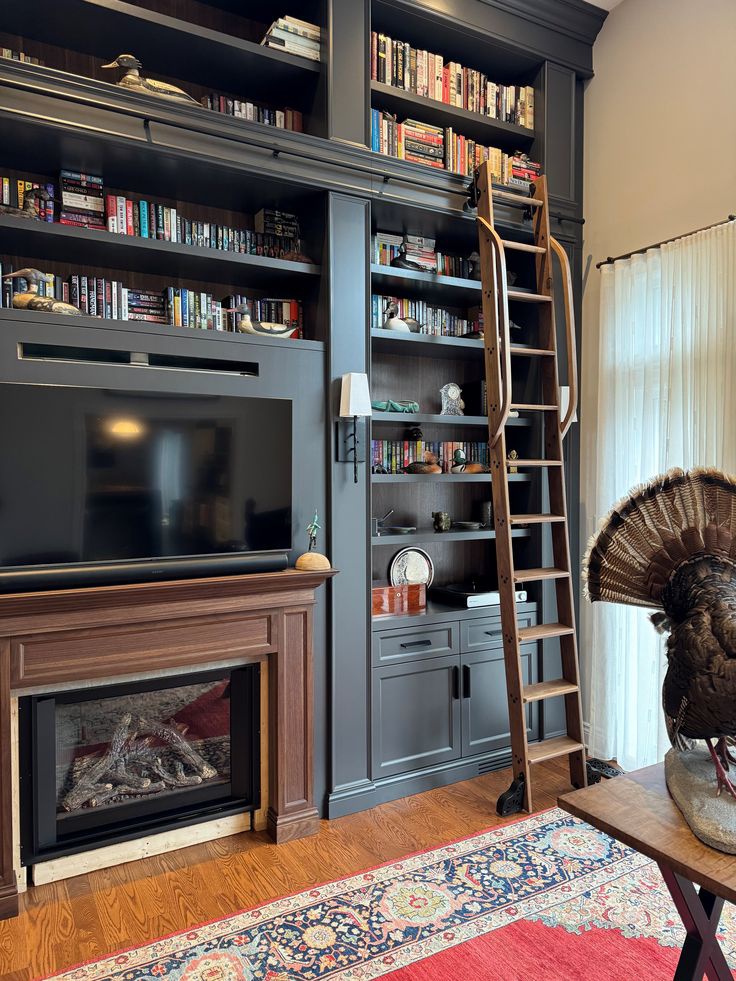
Your library needs a rolling ladder, not just for safe access to upper shelves—these are centerpieces that enhance the room’s aesthetics. Rolling ladders add function and presence, introducing vertical emphasis and movement. They signal intention and turn shelving into a complete, usable system.
You can pair rolling ladders with tall shelving and securely mounted rails. Choose designs with solid rungs and smooth-glide bronze hardware to support frequent use. Maintain high-quality materials and a cohesive palette to let the ladder blend with the rest of the framing.
Home Library Design Ideas by Layout
The design is your first stop when establishing a luxury home library. It guides the fixtures and hardware you’ll need to make your library functional and authentic.
1. The Grand Reading Room: Floor-to-Ceiling Joinery
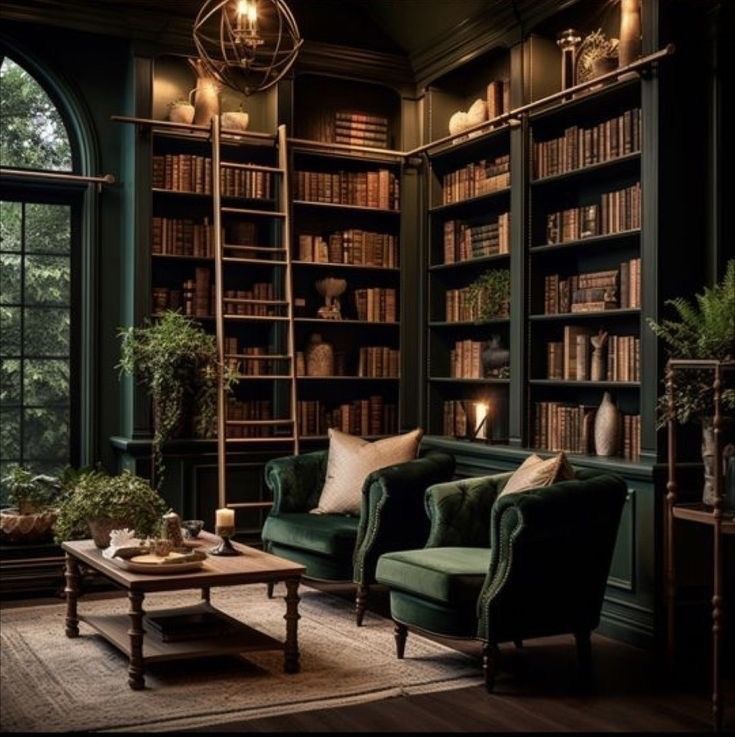
A grand reading room is a dedicated destination rather than a pass-through space. It features floor-to-ceiling joinery that creates a sense of enclosure, drawing the eye upward and visually anchoring the room. Built-ins are sized for books and display, with adjustable shelving used for libraries with varying collections.
Lower cabinets provide concealed storage, keeping reading areas uncluttered. Sofas and chairs are positioned to face shelves, fireplaces, or windows. A side table may be featured for lighting and books. Tall custom wood joinery also requires integrated ladders and upper lighting.
The home library design works best for rooms with generous ceiling height, where shelving, lighting, and circulation can function together. Designers start with meticulous planning, including determining wall thickness, outlet placement, and ladder clearance. This helps prevent retrofits that could disrupt symmetry or require visible surface-mounted solutions.
2. The “Jewel Box” Library: Elevating Small Alcoves
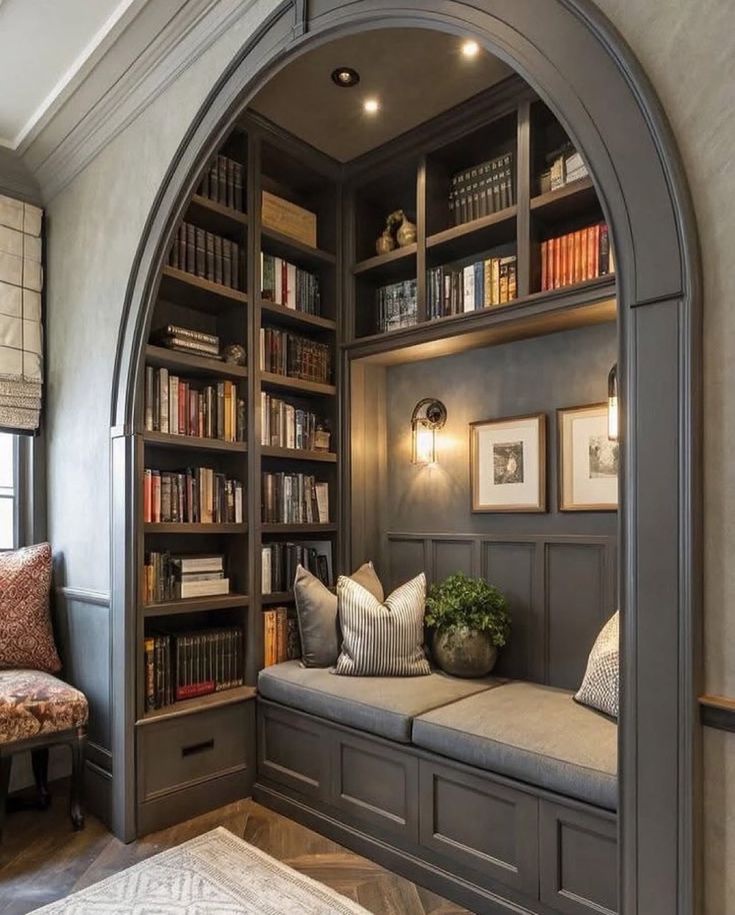
If you have a compact space, the jewel box library is a perfect fit. This design focuses on elevating small alcoves, under-stair zones, and unused corners into immersive reading environments. Built-in shelvings help wrap walls and create depth without taking up floor space.
Controlled illumination is achieved using wall-mounted sconces and integrated shelf lighting. Seating is also carefully selected to be proportional. A single lounge chair or built-in bench will work just fine, provided it is comfy and supportive. Rich finishes and hardware details can be added to enhance visual weight in tight spaces.
Jewel boxes feel intentional rather than improvised, with the library occupying a space clearly designed for that purpose. Sightlines from adjacent rooms are framed by the depth of the cabinetry, trim details, and door openings, making the alcove a dedicated destination within the overall layout.
3. The Dual-Purpose Library: Dining and Office Combinations
A dual-purpose library is precisely what the name suggests—it serves two roles. The library can also function as a dining room or home office without sacrificing comfort. These spaces rely on zoning rather than walls to separate functions.
Shelving offers a backdrop for dining tables or desks, keeping frequently used books within reach. Layered lighting supports multiple activities, shifting from ambient lighting during meals to focused task lighting when working. Furniture is selected at an appropriate scale to maintain clearance for movement.
Storage is also flexible, accommodating books and functional items, such as tableware or office supplies, without mixing them visually. Use furniture spacing, lighting control, and storage separation to prevent overlap, preserve the library’s identity, and keep dining settings and work areas practical.
4. The “Hidden” Library: Secret Doors & Pivot Hinges
Hidden libraries introduce an element of surprise while preserving visual calm elsewhere. This is a great idea for creating cozy beautiful libraries distinct from other rooms. It conceals your library behind flush panels, secret doors, and pivot hinges that blend into surrounding walls.
The hidden concept creates a private reading retreat or hidden shelving in shared spaces. Use hinges, latches, and high-quality hardware that support the load and operate smoothly. Choose wraparound shelving, controlled lighting, and dramatic design elements for a distinct interior character.
Keep entrances without visible pulls or exposed mechanisms on the outside. Optimize wall thickness, swing clearance, and reveal lines to align the door cleanly and eliminate gaps, uneven seams, or misaligned trim details that may give away the library’s presence.
5. The Hallway Gallery: Utilizing Transitional Spaces
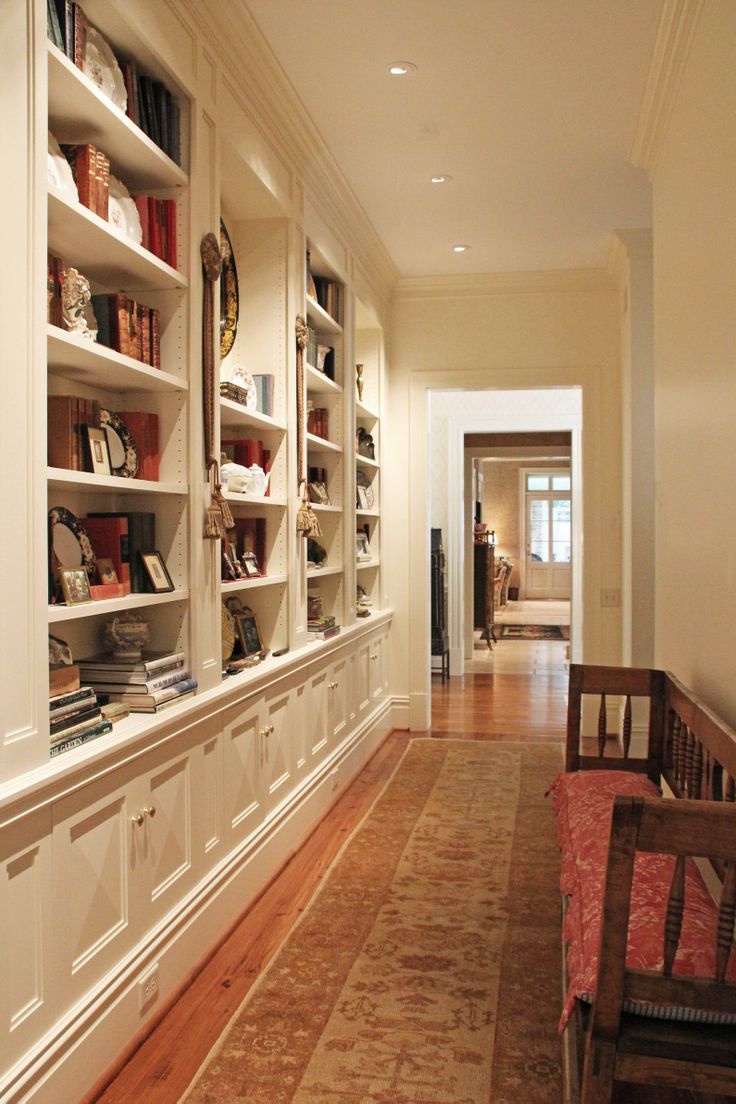
Hallway libraries transform transitional spaces into functional galleries. If you have long corridors with consistent circulation, adding linear shelving can create a stylish hallway library. Keep the depth shallow to maintain clearance and avoid narrowing walkways.
Lower shelving works best here, but can be paired with an upper display to balance openness and storage. Use continuous lighting to guide movement while illuminating spines evenly. Maintain a cohesive aesthetic using neutral palettes and matching hardware and trim detail. Hallway galleries are stylish, small home library ideas for limited space.
Space the shelves rhythmically to align with door openings and artwork, creating a cadence that supports visual rhythm and flow. Since hallways are high-traffic areas, use durable finishes and protected edges that can withstand contact and cleaning over time.
The Details: Hardware Ideas that Elevate the Space
Home library details are mostly found in the hardware. The cabinets, doors, windows, and ladders can all be fitted with unique hardware that adds texture, color, and tactile value, as shown below:
6. Choosing the Right Cabinet Hardware for Built-ins
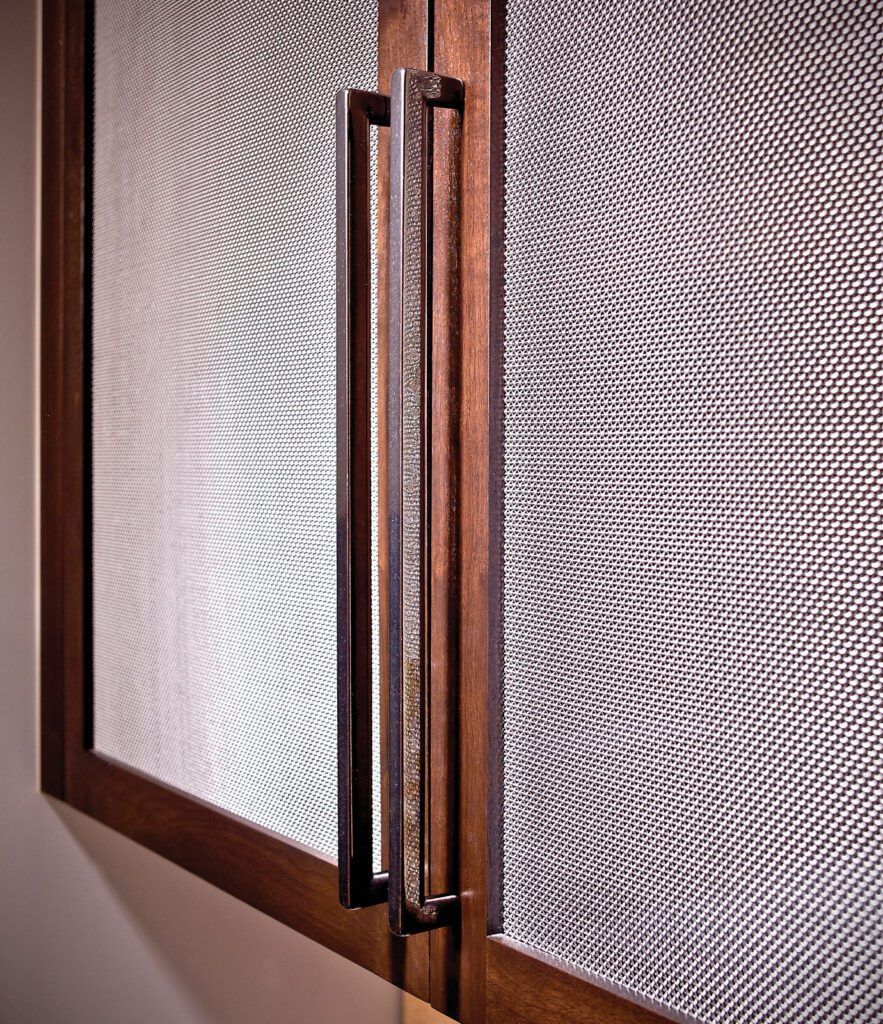
The right cabinet hardware serves both functional and aesthetic roles in home libraries. Pulls and knobs should be balanced to support the weight of solid wood doors and drawers. You can use elongated pulls on tall cabinet fronts and knobs on smaller compartments or inset doors.
Place the hardware consistently and in alignment to preserve rhythm across shelving runs. The finishes should complement wood tones, pairing warm metals with darker stains and muted finishes with lighter woods.
Avoid overly decorative profiles unless the library framing is ornamental to begin with. Such profiles may distract from book spines. Choose ergonomic pulls, preferably smooth, bronze designs with easy grip and no sharp edges. Use fewer repeated hardware styles to maintain cohesion, keeping shelving proportions and materials as the focus.
7. Library Ladders: Function Meets Sculpture
Ladders are a common feature of most home library design ideas due to their practicality and architectural role. Beyond access, these additions introduce vertical movement and visual interest. You can use rolling ladders for tall shelving, allowing smooth repositioning without damaging the floor or cabinetry.
Fixed ladders also work, especially in compact layouts where reach is limited. Rails should be designed with enough clearance to glide effortlessly without obstructing walkways or seating. Wood ladders are the popular choice and integrate well with shelving. Metal designs help add contrast. Hardware should support weight quietly and reliably, without resistance or rattling.
Ladder angles must be accurately proportioned and tested before installation to verify compliance with OSHA safety standards and provide comfort. The ladder is a distinct sculptural design element that reinforces your library’s identity, while remaining functional, safe, and easy to use.
8. Door Hardware: Creating a Grand Entrance
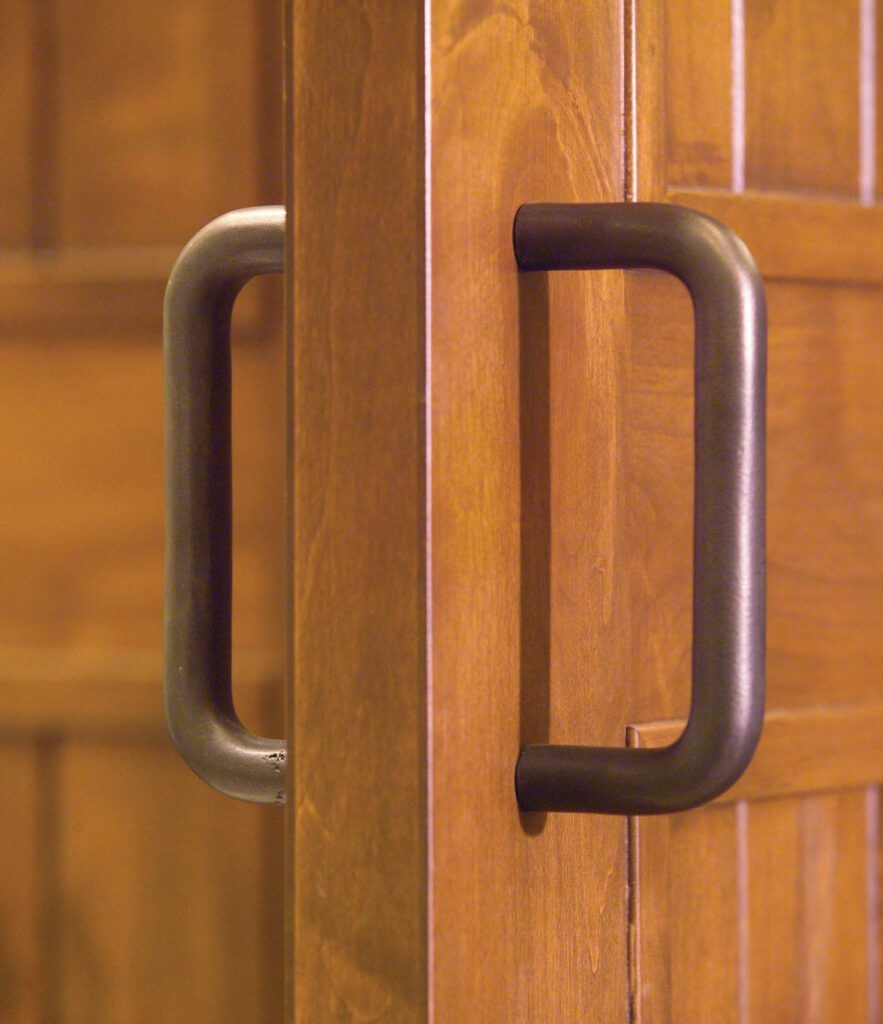
Using the right door hardware helps set the tone for entering your home library. Whether you prefer formal or understated, the hardware should signal a transition. Solid handles, levers, and pull sets create a sense of weight and permanence.
If you have double doors, maintain symmetry to reinforce balance. For single doors, choose bold hardware placement. Review latch feel and resistance to choose a smooth, quiet action that enhances the experience. Coordinate finishes with interior fixtures for continuity.
For libraries with inset or concealed doors, select precision hardware that aligns with the flush without visible gaps. Oversized pulls and textured finishes are best suited to statement entries. They can help add presence without ornamentation.
Door hardware should be intentional and primary to the aesthetics, as it frames the first impression and sets expectations for craftsmanship and detail throughout the space.
9. Window Hardware: Framing the View
Home libraries with windows require curated hardware choices that reinforce the space’s character and aesthetic. Window hardware supports light control and visual structure. Curtain rods, rings, and brackets should align with shelving heights and trim lines to maintain balance.
Use strong rods that can support heavy, light-filtering fabrics without sagging. Mount hardware slightly higher and wider than the window frame to maximize daylight and perceived scale. Coordinate finishes with shelving hardware, maintaining the same aged metal or brushed textures for visual cohesion.
The hardware should blend with the library’s overall architectural rhythm rather than appear as separate elements. Select the right window hardware and proper installation to support smooth operation and prevent disruption to reading areas. For layered treatments, use brackets with sufficient clearance between sheers and heavier panels to support easy use.
Lighting Ideas for the Perfect Reading Ambiance
Library lighting options support reading, book discovery, and reflection. Some offer illumination, while others are designed for warmth and the perfect reading ambiance.
10. Layering Light: Chandeliers and Sconces
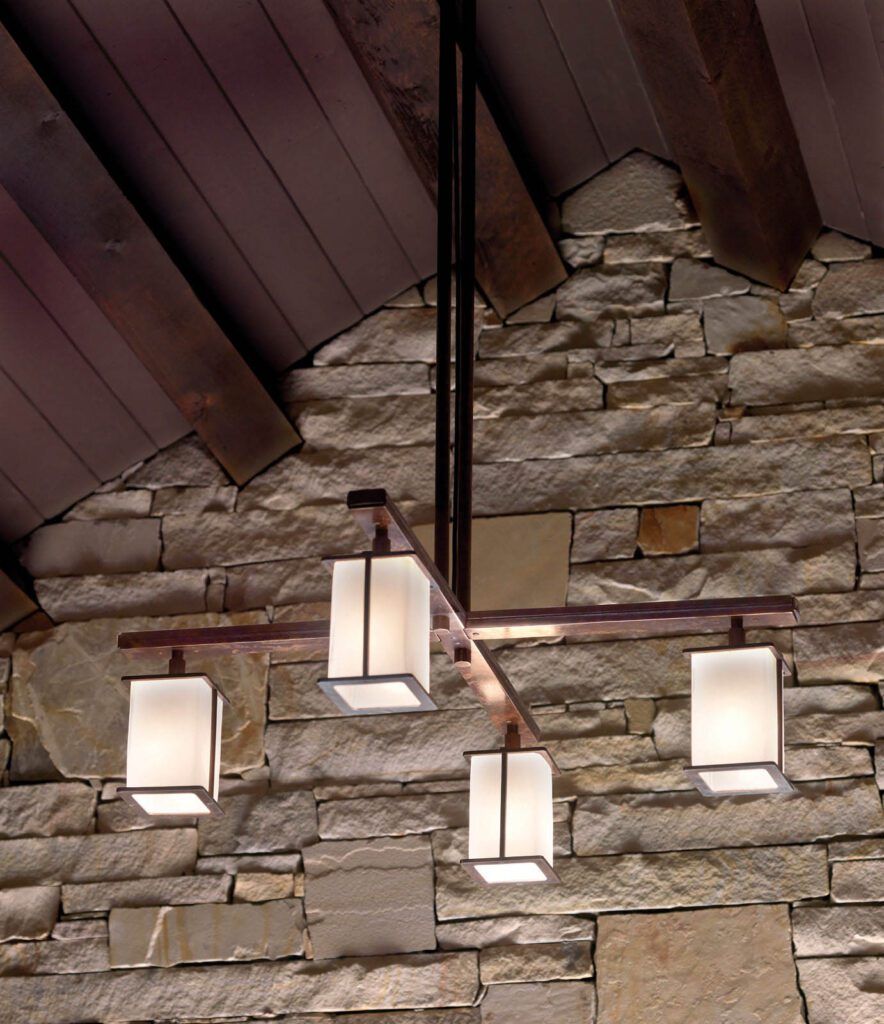
Layering is one of the most obvious in-home library ideas for lighting installations and upgrades. It creates balance, allowing the space to function through the day and evening.
A central chandelier is a stylish choice for ambient lighting and visually anchors the room, especially in larger layouts with high ceilings. Wall sconces add secondary illumination and help reduce shadows, creating a more comfortable reading environment. Position them evenly along shelving walls or near seating areas to reduce glare and distribute light.
You can use dimmable controls for more flexibility, shifting from general illumination to a softer atmosphere for reading or relaxation. Use light fixtures that are proportionate to the ceiling height and the depth of the shelving.
Avoid single sources that overpower the room. Instead, use layers to create an adaptable setting for reading, browsing, and hosting guests.
11. Illuminating the Shelves: Picture Lights & Bronze Finishes
Shelf lighting highlights books and the architectural details of your library. Use picture lights mounted above shelving runs to provide focused illumination without washing the entire wall. These are perfect for showcasing artwork, collections, and decorative objects integrated into shelves.
Use adjustable arms to fine-tune light direction and reduce glare on glossy book covers. Warm-toned bulbs are ideal for creating a soft glow that enhances wood grain and surface detail. Metal finish options with a subtle patina add depth and a natural aging effect over time.
Conceal the wiring to preserve clean lines in your custom installation. Shelf lighting should remain functional, keep the shelving visually legible after dark, and reinforce the library’s layered lighting strategy.
12. Creating Warmth with Organic Materials
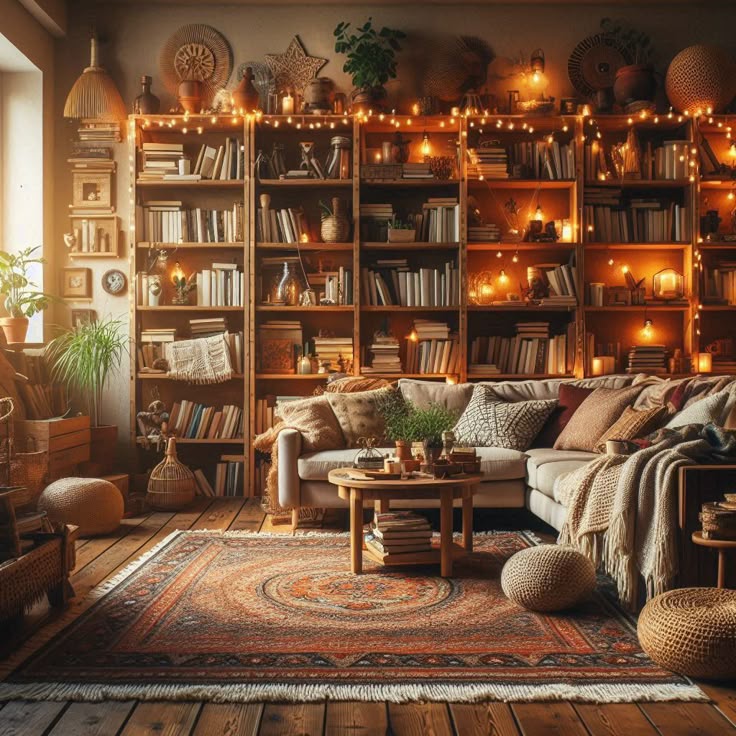
Going organic is always a beautiful direction when comparing library ideas for home reading comfort. Organic materials influence how light behaves within the library and help reduce visual fatigue. They also align with materials and options used in libraries—wood, bronze hardware, neutral palettes.
Wood surfaces absorb and soften illumination, preventing harsh reflections. Leather seating diffuses light, creating subtle tonal shifts throughout the room. Natural fibers in rugs and window treatments reduce echo and help contain light. If you know how to choose the right lighting, organic materials can help create visual comfort and controlled illumination.
Place seating zones away from direct light, preferably in softer reflected light. Shelving areas can have clearer illumination. Avoid overly polished surfaces that bounce light unpredictably. Rather, choose textured finishes and gainy surfaces that help absorb the light while creating depth.
Styling Your Library: A Curator’s Approach
The style you choose for your home library is influenced by personal preferences and how you intend to use the space. You can display books and other collections, highlight specific sculptures or accents, or enhance functionality using hooks, brackets, and rails, as suggested below:
13. Displaying Collections Beyond Books
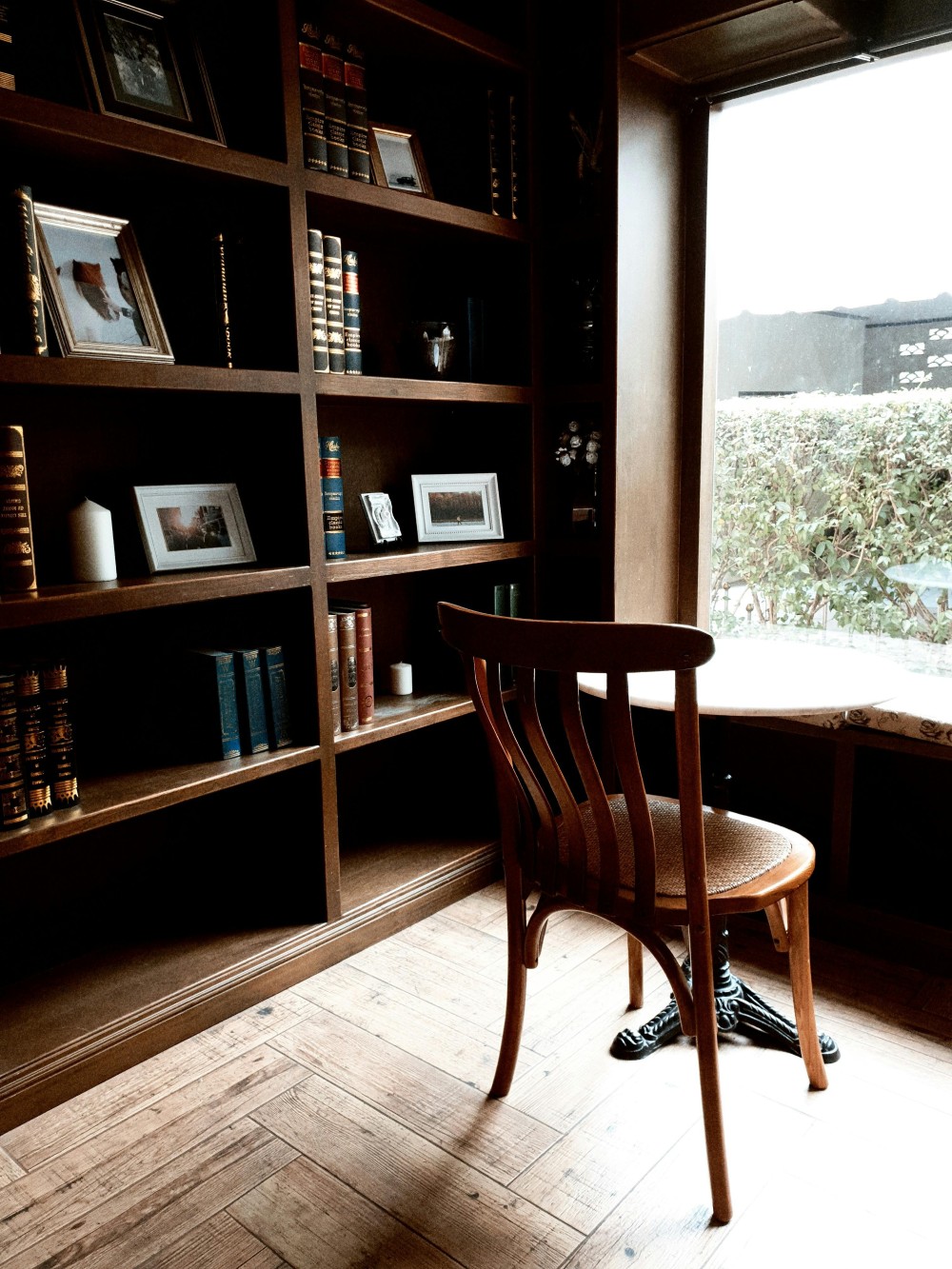
If you have collections that reflect your personal interests, a home library offers the ideal setting to display them. You can also use seasonal items to keep the space vibrant and active without constant redesign. While simple, these reading room home library ideas can break visual repetition or create dynamic, welcoming spaces.
Integrate sculptures, framed prints, or archival photographs naturally among book stacks to break visual repetition. Use spacing intentionally, leaving some shelves partially open to give items presence. If you have vintage globes, maps, or ceramics, place them at eye level or within the sightlines of your seating, where they are best appreciated.
You can group smaller objects in odd-numbered arrangements for balance or vary scale to prevent dull uniformity. Avoid overcrowding by keeping each item in its unique space. Items on a library shelf should feel displayed, not stored. Focus on creating visual pauses that complement the books and enhance the narrative and character of the space.
14. Mixing Textures: Wood, Leather, and Patinated Metal
Using different textures can add depth to a library without further ornamentation. Use solid wood shelving to introduce warmth and structure, or leather seating to add softness in high-use areas. Painted metal elements, such as ladder rails or hardware, also add contrast and age gracefully.
Reserve metal for functional touchpoints, such as cabinet, door, ladder, and window hardware, and leather for seating or desk surfaces. Wood should be used for architectural elements. This separation prevents indiscriminate blending and keeps the space purposeful and visually legible. Balance heavy materials with lighter accents to maintain visual weight across the room.
The right texture can also influence the room’s acoustic feel. Use materials that help reduce echo to make your space more comfortable for reading and conversation.
15. Selecting Accessories: Hooks, Shelf Brackets, and Rails
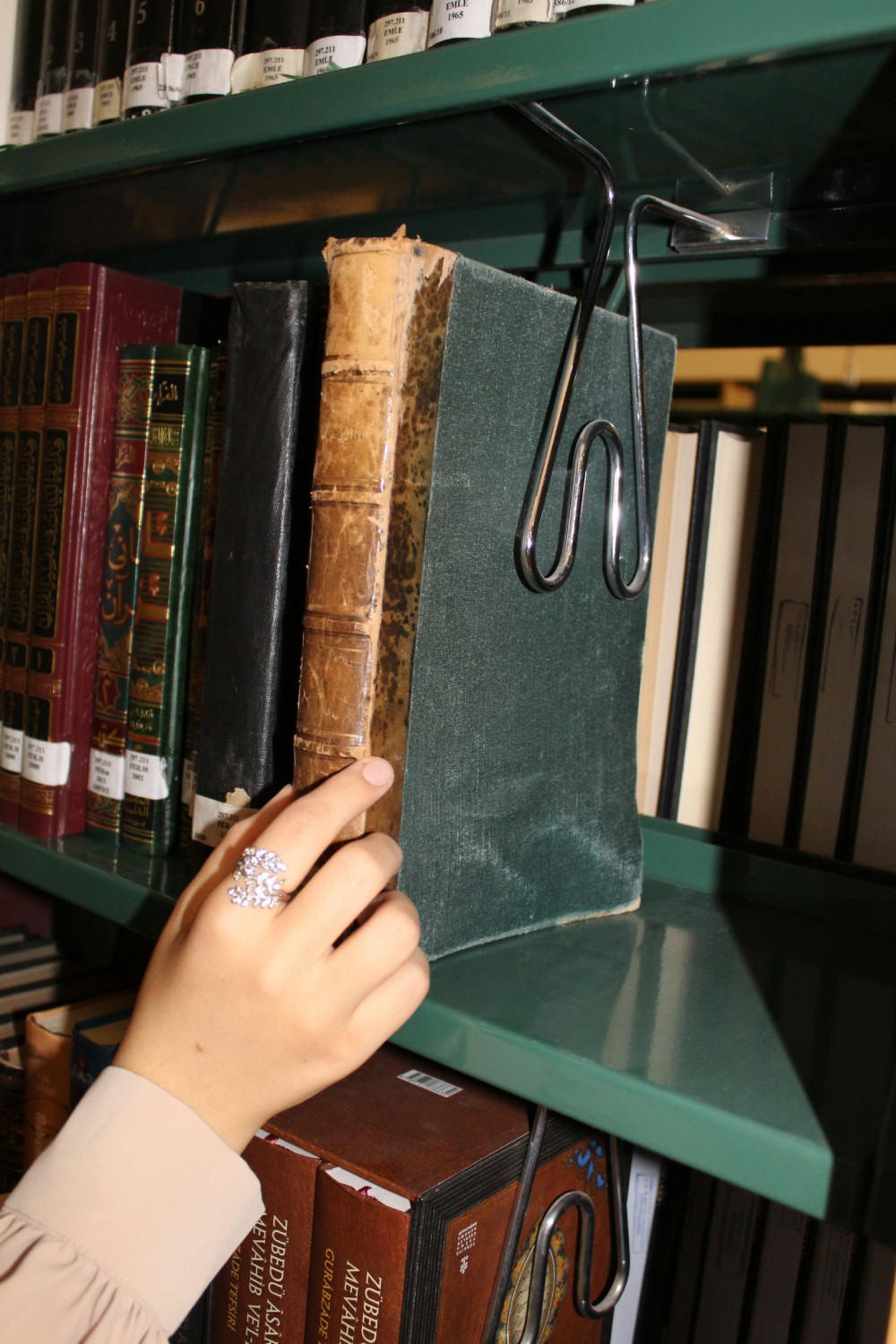
Library accessories support use without distracting from books or architecture. Hooks can be used near entryways or seating areas to allow guests to hang bags, keys, and headphones without cluttering chairs and tables.
Sturdy shelf brackets help add structure and rhythm along open shelving runs when intentionally exposed. Use brackets with sufficient load ratings for the books, especially for deep shelves. Install rolling ladder rails and display system rails securely, aligning them to offer visual symmetry. Accessories should feel tactile and solid when handled to reinforce quality.
Placement should also be optimized so that each item serves a specific purpose and reduces unnecessary relocation. Choose bronze or other high-quality options to elevate your reading room cozy home library with a sophisticated touch.
FAQs About Home Library Ideas
How Do I Incorporate a Library Ladder in a Standard Room?
Measure the ceiling height and shelving depth, then choose a rolling or fixed ladder that fits comfortably in the space. The ladder should not obstruct pathways. Its rails and brackets should also be securely installed and selected to match other hardware choices and finish options.
What Are the Best Finishes for Dark Wood Library Shelves?
Warm metals such as brushed bronze or aged brass are ideal finishes for hardware. They add tactile quality and durability. Brown leather, natural fibers, and muted tones work well for seating and rugs. Warm, lighter finishes offer the desired contrast.
How Deep Should Library Shelving Be for Custom Built-Ins?
The shelving can be customized to fit your space, but 10-12 inches is a standard depth that suits most books. For greater depth, 14-16 inches accommodates oversized volumes. Leave a slight overhang to add decorative display items.
Can I Install a Home Library in an Open-Plan Living Room?
Yes. You can use freestanding shelving, partial walls, or glass partitions to define your library area in an open-plan living room. Plan the layout carefully to maintain sightlines and circulation without creating a distinct zone enclosed for focus.