Does it feel like every modern bathroom you visit looks almost the same? We hear you.
Many homeowners end up defaulting to tried-and-true palettes: ones that overuse or over-emphasize colors like crisp whites, warm beige, or soft greys. While utilizing muted colors can offer a universal appeal, this is a good consideration when the intent is to renovate the home for better resale value. But if your goal is to craft a space to live in, you want the aesthetic to feel personal, layered, and unmistakably you.
If you’re over the beige spa aesthetic in bathrooms and want something bold and magnetic, the allure of a dark green bathroom stands on its own. When paired with handcrafted bronze hardware or warm natural stone, the effect is quietly luxurious without trying too hard.
In this guide, we talk about 8 different ways to seamlessly create a dark green bathroom that fits your bathroom size and the overall style of your home.
Why Dark Green Works in Bathrooms
A color scheme focused around dark green sounds unconventional for a modern bathroom, but that’s exactly why it works.
By default, darker shades of green carry both weight and character. Using them in central features of a bathroom, including the bathtub, vanity, and flooring, gives the entire space a sense of refined depth. The space feels warm but still commands attention. This is why dark green hues were a staple in Victorian bathrooms.
Now, dark green bathrooms are having a moment again. In a world full of square shapes and clean lines, a dash of dark green brings an organic quality indoors that’s reminiscent of the forest canopies and natural landscapes. Here’s why you should consider them for your bathroom aesthetic:
The Psychology and Mood Behind Deep Green Hues
In design theory, bold dark shades like dark green act as an anchor. But subconsciously, they project a sense of wealth and opulence as well. This is why corporate or financial brands use green to project reliability and their connection with money.
Dark green hues have also long been associated with balance, renewal, and quiet strength. Some designers love using a palette that features dark green alongside other earthy colors, which can promote a sense of calm similar to the one we experience in the arms of nature.
How It Complements Lighting, Size, and Style
Playing with light and proportions is key in powder bathrooms. Warm light gives the appearance of a larger space, so you might want to pair a tiled or painted dark green wall with a lot of warm lighting for smaller baths. In larger bathrooms, dark green can be used more liberally, such as across statement walls or tiled shower areas, with accent lighting to highlight textures and architectural details.
If your style leans modern, pick a vanity and tub with clean lines, slim-profile mirrors, and bronze hardware finishes that contrast well with the richness of dark green. For a more earthy or bohemian style, you can incorporate natural textures like warm wood, rattan accents, or stone basins. Fancy the Victorian or vintage style? Think darker shades of marbles, curved silhouettes, or globe sconces.
Comparing Popular Dark Green Shades
Here are some timeless dark green shades you’ll fall in love with:
- Emerald Green: A favorite since the Victorian era, it works beautifully in modern luxe bathrooms or Art Deco-inspired ones, especially when paired with brushed brass, marble, or glossy tiles.
- Forest or Hunter Green: Deep, moody, and classic in equal measures, this shade brings a quiet sophistication that suits evergreen or transitional interiors. It’s perfect for panelled walls, freestanding tubs, or spaces with warm metallic accents.
- Olive Green: Warm and grounded, olive tones are ideal for organic or Mediterranean-style bathrooms. They pair best with natural textures like limestone, warm wood, or plaster walls.
- Sage or Muted Green-Gray: Soft and versatile, sage tones bring a sense of lightness to Scandinavian, Japandi, or minimalist bathrooms. It works well in smaller bathrooms when paired with brushed nickel, matte black, or pale oak finishes.
- Teal-Leaning Dark Green: This shade has a certain contemporary charm to it that suits coastal, modern, or eclectic bathrooms where contrast and color are part of the package. Paired best with white marble, terrazzo, or sleek black fixtures for a balanced look that still feels polished.
1. Use Dark Green Tile for Texture and Depth
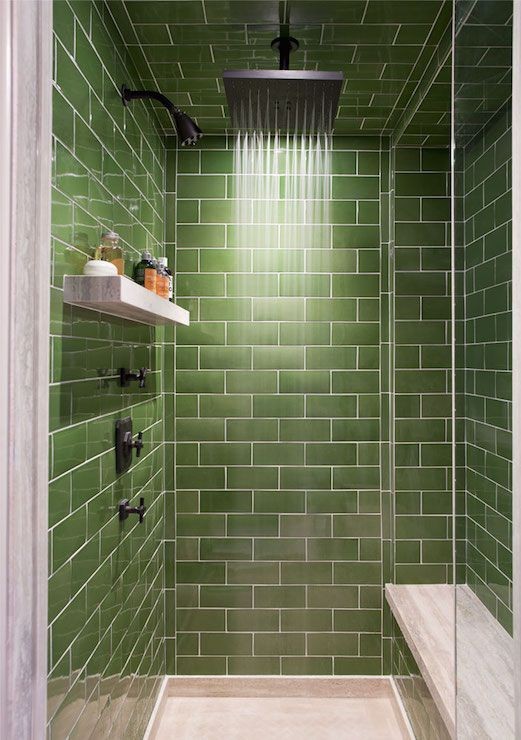
Dark green tiles effortlessly add character to any space. Versatile as they are, they fit shower walls, backsplash, and flooring perfectly. The aesthetic differs depending on where you choose to infuse this color and how you balance it out with lighting and other elements.
Backsplash, Shower Walls, and Flooring Examples
A dark green backsplash looks magnificent as one of the main focal points of the bathroom. Think glossy emerald subway tiles or hand-finished zellige pieces to create a rich, light-catching backdrop for the vanity.
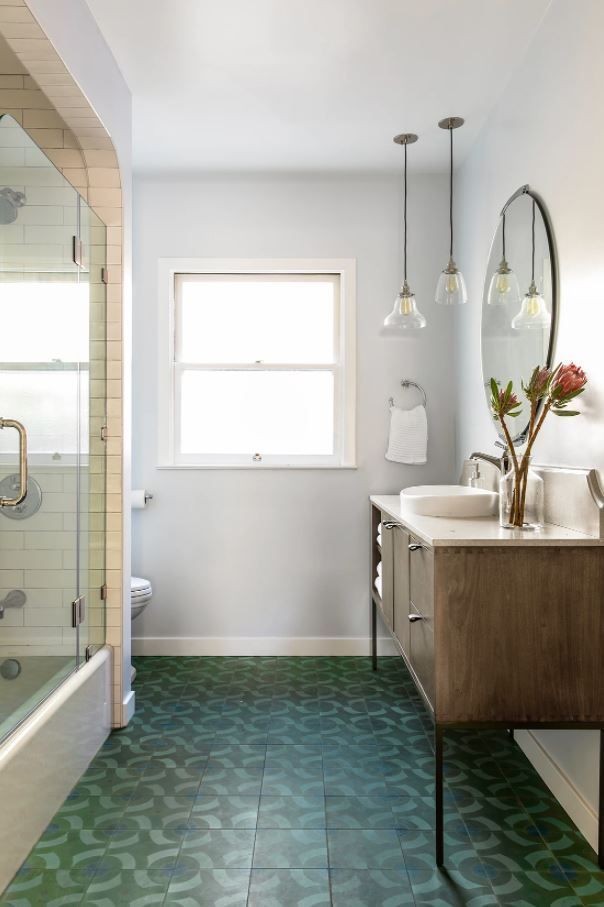
For flooring, a shade like a deeper matte can be the star. It grounds the room softly and adds a tailored, bespoke feel without competing with the walls. If you have a neutral wall paint, this is where you can add color without going overboard. Matte hexagons, mosaic sheets, or stone-effect tiles offer texture underfoot while keeping the palette cohesive.
Source: Pinterest
Pairing With Grout Colors and Finishes
Pairing the wrong grout with even the most aesthetic tiles can easily distract the eye from the overall design. For a seamless, more elevated look, match dark green tiles with grout of a similar shade. A charcoal grout also blends in and keeps the focus on the tile’s texture and finish. This works especially well with zellige, large-format tiles, or elongated subway patterns, where you want the richness of the shade to stand out on its own.
Want to emphasize the intricate herringbone, kit-kat, or stacked vertical tile patterns instead? A warm gray grout adds a refined outline that highlights the shape without overwhelming it. It brings just enough definition to show off the pattern, especially when paired with a soft matte or satin finish. Glossy tiles, on the other hand, look beautiful with slightly contrasted grout that brings out their sheen and texture.
2. Paint the Walls in a Rich Forest or Emerald Green
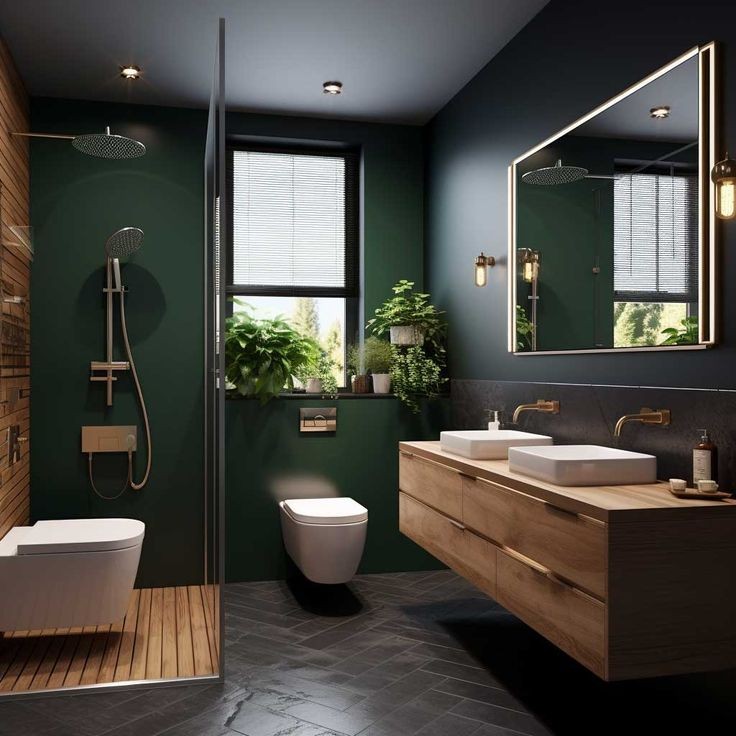
You can flip the script by keeping your bathtub and vanity fixtures largely neutral or white, and painting the walls in a rich forest or emerald green color for an immersive feel. If you don’t mind the dramatic aesthetics, this one will be an instant favorite.
Source: Pinterest
Choosing the Right Shade for Your Light Conditions
Consider how much natural lighting your bathroom receives, as the shades can look remarkably different under different lighting conditions. In sunlit spaces, a saturated emerald will look jewel-like and vibrant, but can feel slightly cooler or more muted in the evening. Still, it’s an exquisite match for a large bathroom with lots of natural light.
In dimmer or smaller bathrooms, a warmer forest green will work better, creating a cozy, enveloping feel.
Pro Tip: Want to be absolutely sure you’re picking the right paint color? Test a few swatches on different walls and observe them at various times of day. Compare to see which one you prefer.
Tips for Accent Walls vs. Full Coverage
While some people prefer the aesthetic effect of color drenching, i.e, covering the walls, trims, and ceiling in the same color—it can be a bit much for others. An accent wall can introduce the moodiness of dark green and pair that with the airiness of neutral wall colors. A happy balance, if you will.
Not sure how to decide? Try painting just one wall first and see how it looks with the other elements in the room. If you feel bold, paint all the walls the same deep green and layer in mirrors, warm lighting, and subtle textures for a cocooning effect.
3. Add a Dark Green Vanity as a Focal Point
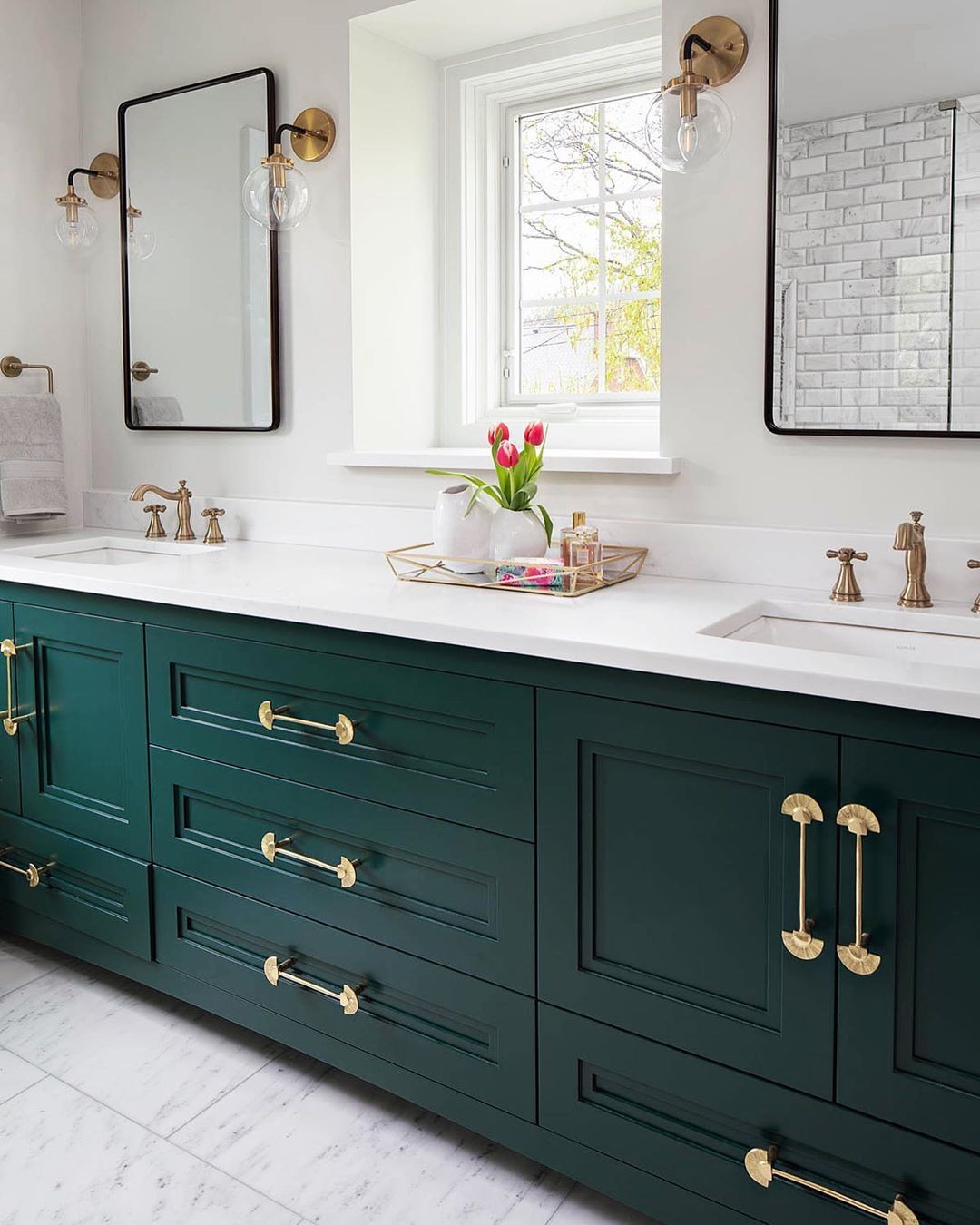
Picking a dark green vanity is a simple way to add drama, especially if you don’t have room to make more substantial changes, like retiling the floor.
Source: Pinterest
Contrasting With Brass, Bronze, or Matte Black Hardware
Pairing a dark green vanity with metallic or dark finishes instantly elevates its presence. Brushed brass or aged bronze add subtle richness, lending themselves to a more timeless aesthetic, while matte black injects modern appeal.
Color/Material Pairing Table: What Works With a Dark Green Vanity
Here’s a cheat sheet you can use to match the right vanity color with other elements in your bathroom:
| Vanity Shade | Recommended Countertop | Ideal Hardware Finish | Complementary Sink/Fixture Ideas |
| Forest Green | White marble or cream quartz | Aged bronze or brushed brass | Undermount ceramic sink, bronze faucet |
| Emerald Green | Light gray concrete or soft wood | Matte black or polished brass | Matte black faucet, gold mirror trim |
| Olive or Sage Green | Natural oak or limestone | Antique brass or warm bronze | Vessel sink, mixed-metal light fixtures |
| Charcoal Green | White quartz or terrazzo | Satin nickel or dark bronze | Wall-mounted faucet, muted metallic sconces |
Coordinating Countertops and Sinks
A countertop is a big piece of the bathroom puzzle—it must complement your vanity for a cohesive look. We recommend light surfaces like marble, cream quartz, or soft wood to create contrast and keep the space feeling airy. Natural stone and concrete options work too, and add their unique flair of texture and depth.
Sinks should match both the countertop and the bathroom hardware. Choose an undermount for a streamlined look, or a vessel sink to create a sculptural focal point.
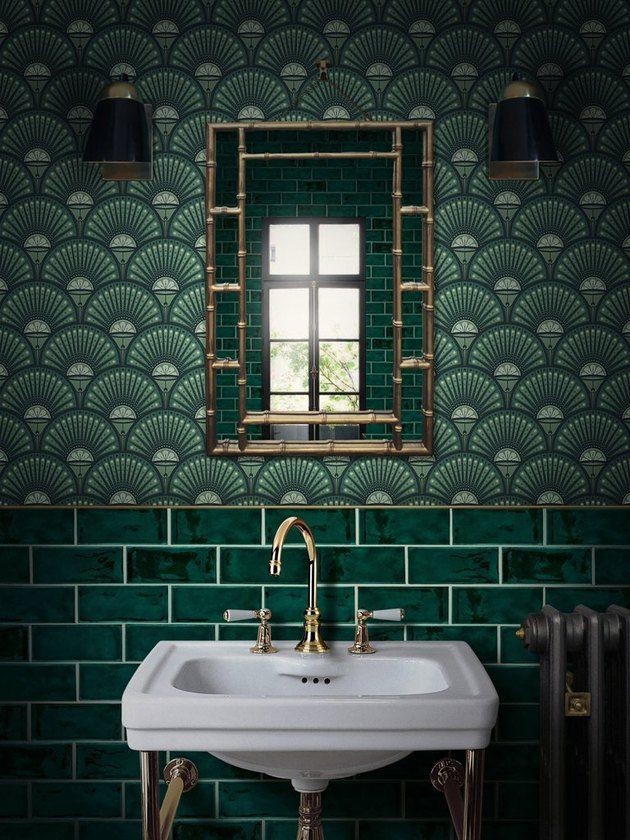
4. Try Moody Green Wallpaper With Pattern or Texture
If you want to have fun with depth and texture, dark green wallpapers with rich, patterned designs will become your mi amor.
Source: Pinterest
Here’s how to use them:
Art Deco, Botanical, and Geometric Styles
Trying to achieve a specific aesthetic? The pattern you pick plays a big role:
- Art Deco: Fan-shaped or scalloped motifs in emerald or teal create a glamorous, vintage-inspired style with a sense of rhythm and sophistication.
- Botanical: Leafy or fern-inspired prints bring a natural, serene, and layered style, adding texture and an elegant, grounded mood to the space. Here are some elegant bathroom ideas for inspiration.
- Geometric: Interlocking shapes, honeycomb repeats, or clean linear motifs create a structured, contemporary style that feels both dynamic and refined.
Where to Use Wallpaper in Bathrooms
Wallpaper works best when used with intention. Cover the wall behind a vanity to create a strong focal point, line a powder room wall to add intimacy and drama, or apply a vertical panel to introduce texture and interest. In larger bathrooms, a full accent wall can feel immersive, but keep surrounding walls neutral and pair with simple, high-quality fixtures so the pattern reads as deliberate and refined.
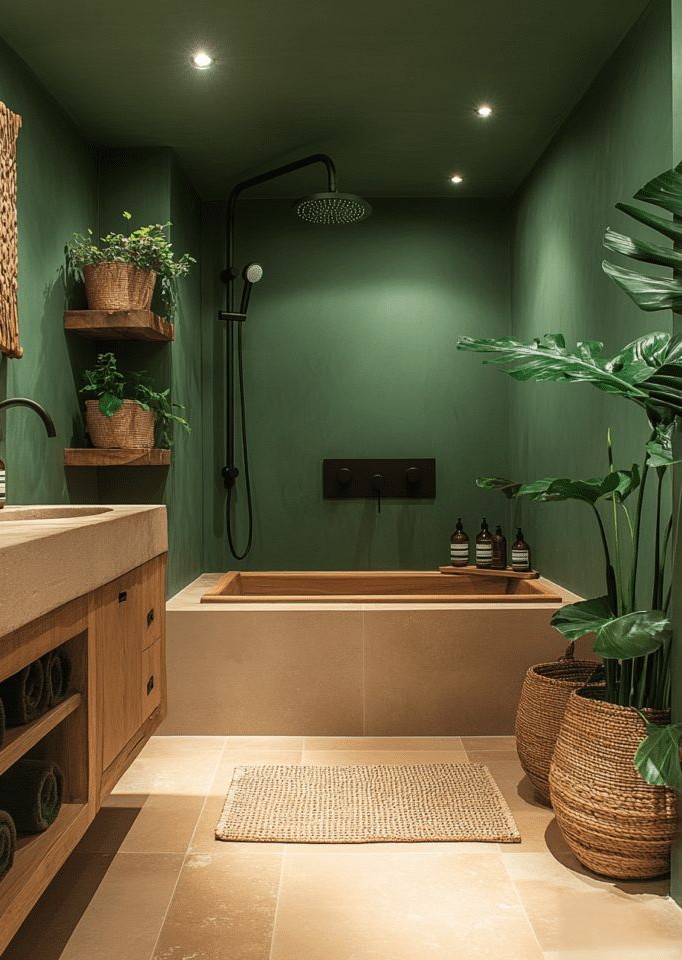
5. Mix in Wood and Natural Materials for Warmth
Dark green can feel bold and moody, so layering in natural materials is essential for balance. Thoughtful touches of wood, stone, or organic textures bring warmth and a grounded elegance that keeps the space feeling inviting.
Source: Pinterest
Wood Cabinetry, Shelves, and Trim With Green Tones
Choose warm-wood cabinetry to complement rich green tones. A floating walnut vanity or slatted oak cabinet feels elevated without competing with the color. For storage or decorative space, open wood shelving can add a clean, layered aesthetic.
Stone, Rattan, and Organic Textures
Add tactile interest in your bathroom with honed limestone or travertine countertops, rattan cabinet fronts, woven baskets, and pendant lights. These textures soften the bold green and create a sense of depth and refinement.
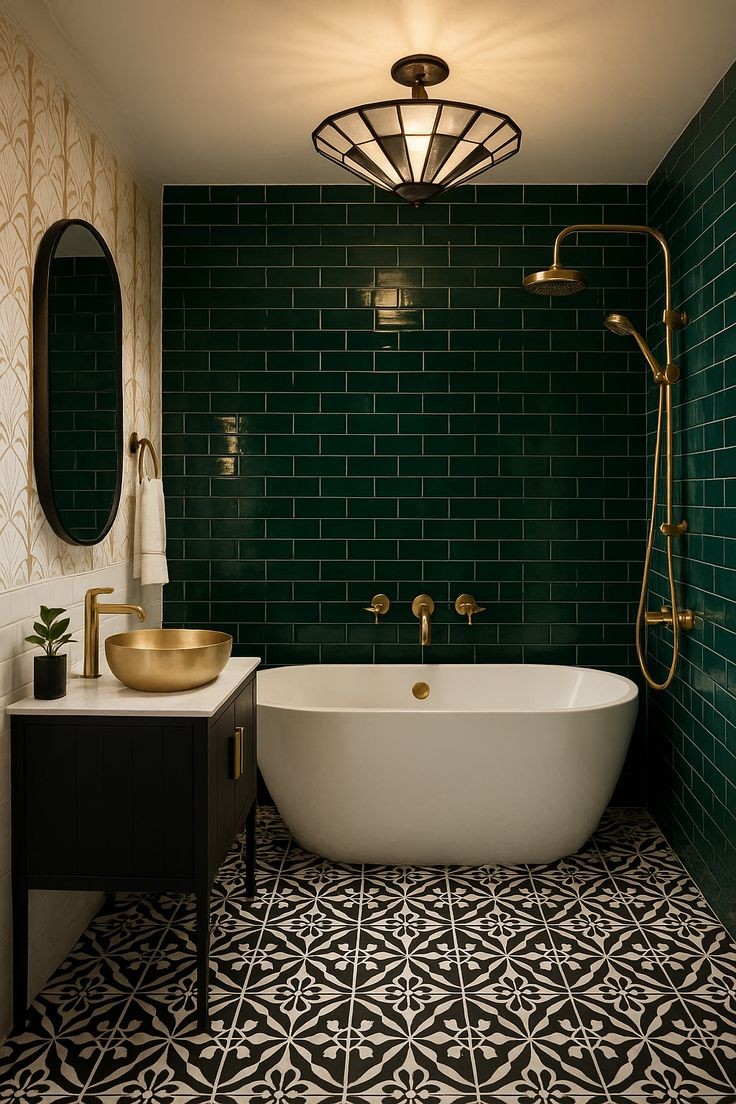
6. Add Metallic Accents to Elevate the Look
Bronze Finishes for Luxury Contrast
With dark green accent walls, metallic fixtures like brushed bronze reflect light gently, breaking up the darker tones and drawing the eye to key design details such as mirrors, faucets, or lighting fixtures.
Source: Pinterest
How to Balance Shine With Moody Tones
Use metallic fixtures strategically to create contrast. Focus on key details such as the mirror frame, faucet, or drawer pulls rather than covering every surface.
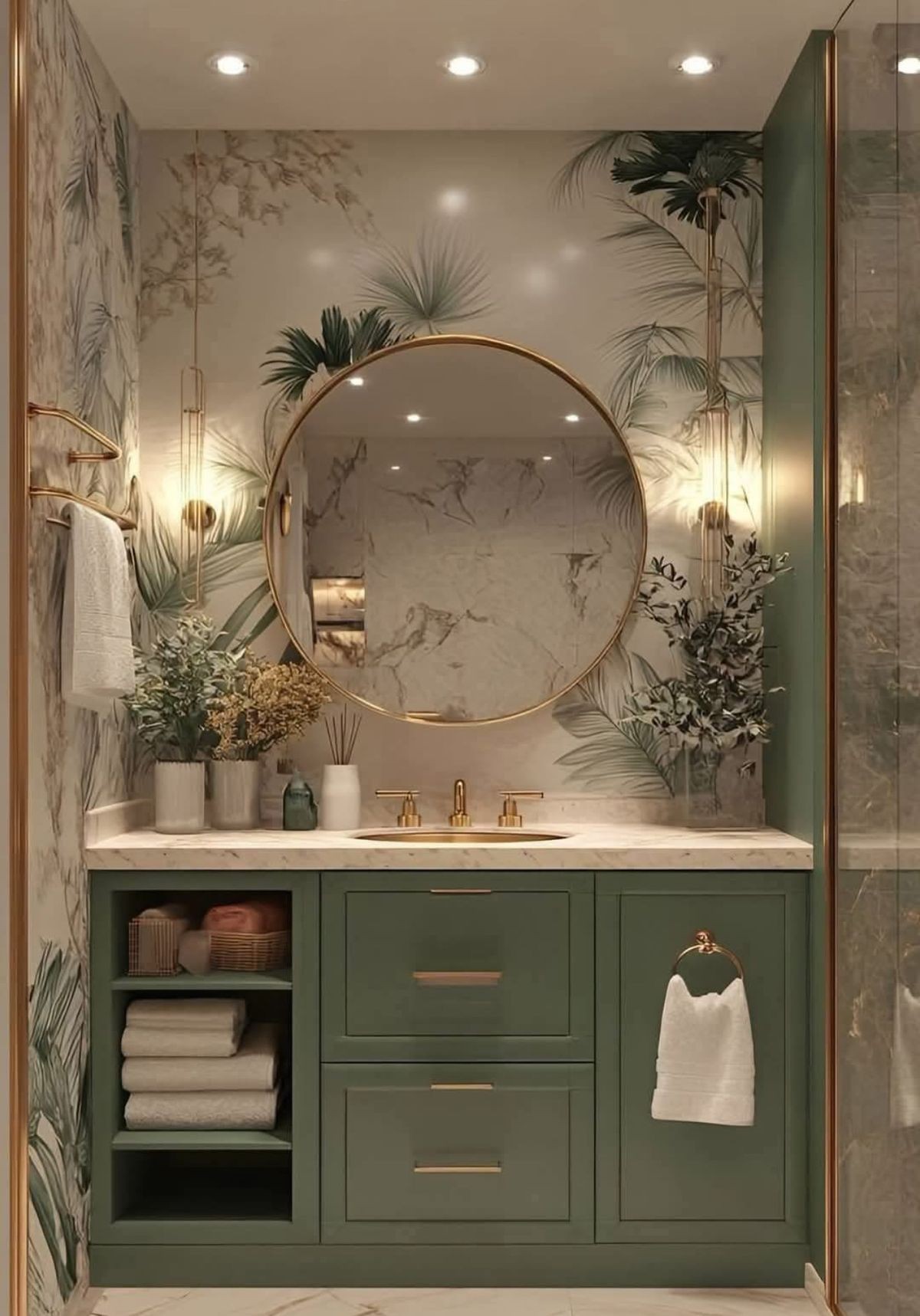
7. Style With Green Accessories for Subtle Cohesion
Accessories are a simple way to tie a dark-green bathroom together. Thoughtfully chosen ones in matching or complementary hues reinforce the palette, while small seasonal or botanical touches can infuse texture and life into the space.
Source: Pinterest
Towels, Rugs, and Decor in Matching Hues
If you have dark-green walls, cabinetry, or tiles but they feel disjointed, accessories in matching or complementary colors can reinforce the palette. Adding elements like emerald cotton towels or deep green bath mats can build a sense of cohesion that makes the whole design seem intentional.
Bringing in Seasonal or Botanical Touches
Green is inherently linked to nature. Build on this association by adding plants, floral arrangements, or seasonal accents like Christmas decor to make the space feel organic and earthy.
8. Light the Space for Mood and Function
With darker colors, it’s particularly important to emphasize a good amount of lighting for a balanced ambiance. You don’t want the space to feel shadowy or dull, so it’s best to opt for warm white or soft yellow LED lighting of around 2700K to 3000K. This enhances the richness of dark green tones without making the space feel closed in.
Maximize the use of natural light if that’s an option. Nothing makes a space feel naturally roomier than the first rays of sun bouncing in through the windows. Plus, the shade will appear to shift beautifully throughout the day as sunlight bounces off it—fresh and energizing in daylight, moody and intimate by night.
Fixtures That Highlight Green Tones
Warm metallic fixtures like brass or bronze sconces softly reflect light. We particularly love globe lights and sculptural wall lamps with this palette.
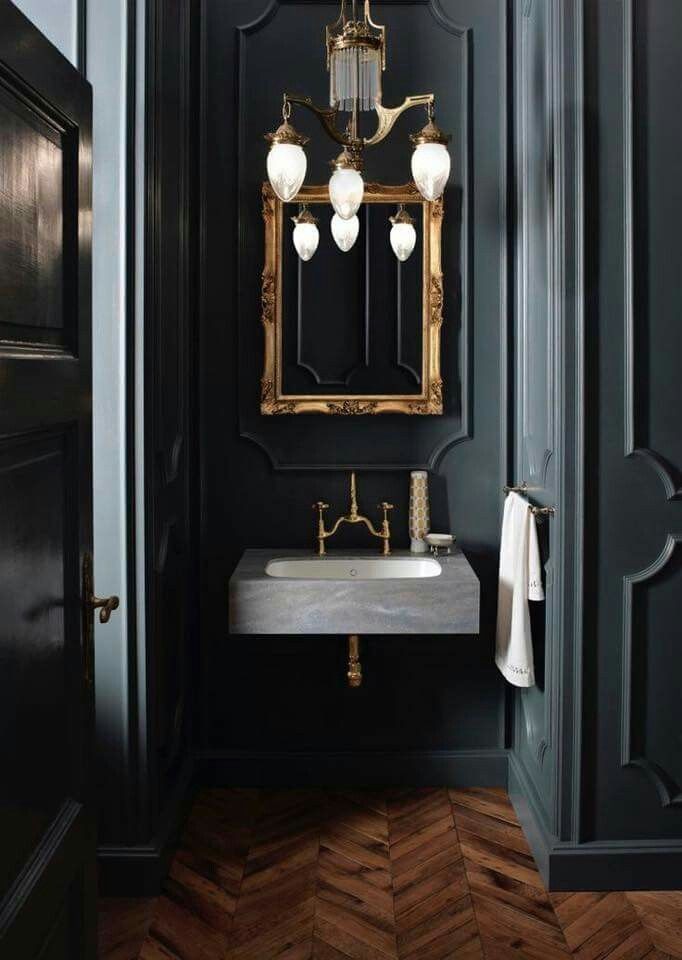
Source: Pinterest
Layering Ambient, Task, and Accent Lighting
Bathroom lighting needs to be both aesthetic and functional. Combine general ceiling or recessed lighting for overall clarity, targeted illumination at mirrors or vanities for daily routines, and subtle accent lights to showcase tile details, architectural features, or statement walls. The result? A space that feels dynamic but bespoke.
FAQs About Dark Green Bathroom Ideas
Is Dark Green a Good Color for a Bathroom?
It has been a popular choice in the bathrooms for centuries for a reason—it’s versatile, bold, and unique. You really can’t go wrong.
Do Dark Green Bathrooms Increase Home Value?
Certainly. When styled thoughtfully, dark green bathrooms feel high-end. This can appeal to buyers seeking a classic aesthetic.
What Colors Go Best With Dark Green in Bathrooms?
Green is a bold color, so other colors in the palette should be less dramatic. Warm metals, soft neutrals like cream or beige, natural wood, and stone all work beautifully. White or light gray are neutral colors that fit almost all palettes seamlessly, so they can be used to add balance to the interiors as well.
Can Small Bathrooms Handle Dark Green Walls?
For sure. If a dark green hue is balanced with warm lighting, mirrors, and lighter surfaces, it can make a small bathroom feel cozy rather than cramped.