Few interior design styles are as bold as Art Nouveau, a decorative movement known for its flowing lines, tactile lines, and integrated design.
When other styles offer rigid geometry, Art Nouveau interior design favors sinuous curves and organic forms. The style is influenced by nature, art, and crafts, and features surfaces, fixtures, and finishes that contribute to its expressive aesthetics.
Art Nouveau can be expressed in architecture, furniture, sculpted hardware, organic motifs, decorative arts, glassware, and even door hardware. It features floral patterns, subtle curves, elegant silhouettes, and linear designs.
This guide explores more about Art Nouveau style and design, from its curves and craftsmanship to the hardware and finishes that define it.
What Is Art Nouveau Interior Design?
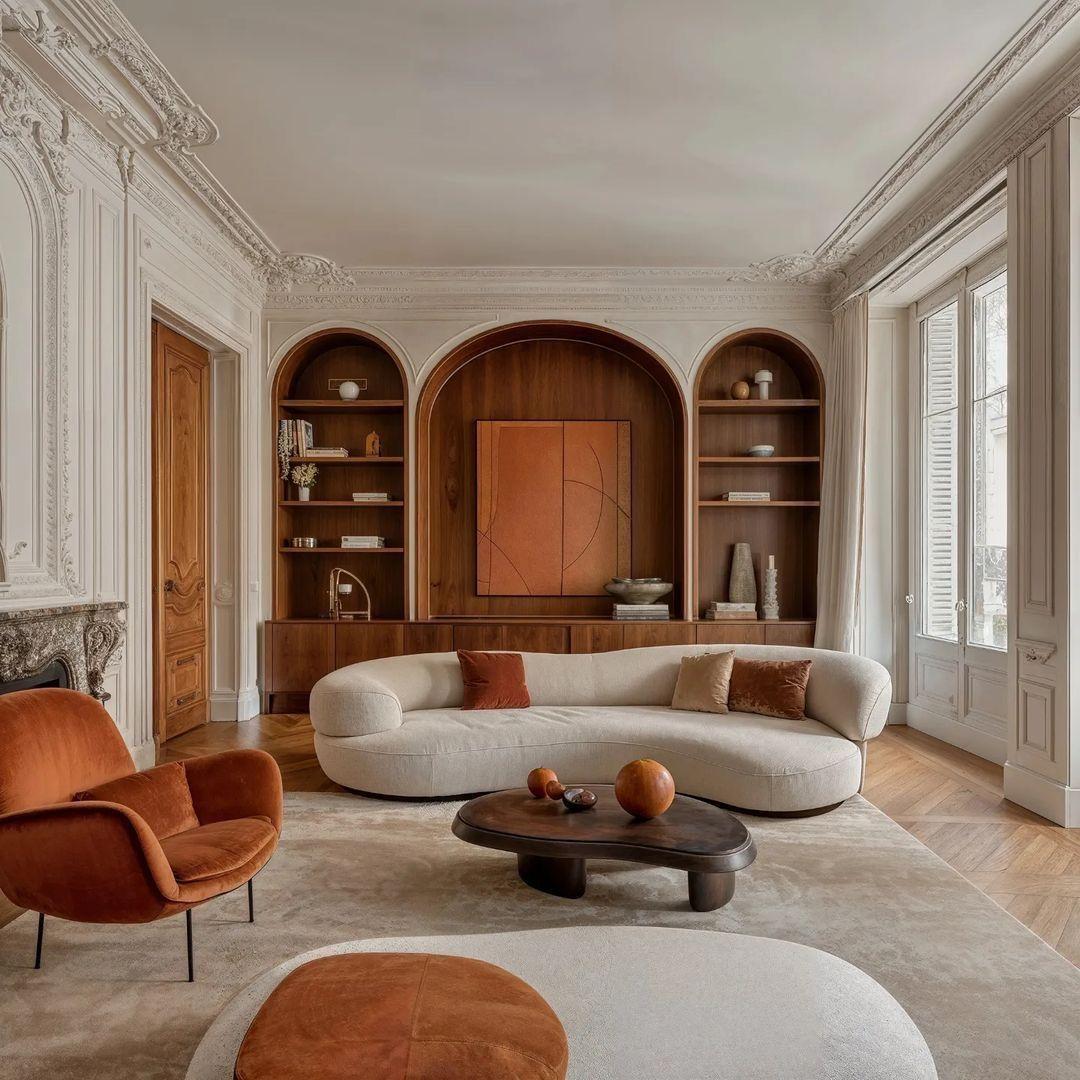
Art Nouveau interior design is a nature-inspired decorative style that uses architecture, furniture, hardware, and finishes in harmony for a continuous artistic expression.
Origins and Artistic Philosophy
Art Nouveau emerged at the turn of the 20th century as a step away from the industrial mass production and prevalent historicism of the 19th century.
The movement began in Britain, drawing inspiration from the English Arts and Crafts movement, but its influence spread fast to France, Japan, and the United States.
It was a celebration of nature, beauty, and artisanal interior design, challenging the traditional hierarchy to make art more accessible and affordable. Designers opted for natural abstraction as opposed to realism, emphasizing soft curves, growth, and movement.
Art Nouveau also kept fine art and functional together, conceiving architecture, interiors, furniture, lighting, and hardware as one piece to form unified interiors.
Key Characteristics of the Style
The Art Nouveau interior design style is defined by its fluidity, asymmetry, and organic movement. The walls, ceilings, furniture, and fixtures feature curved lines rather than rigid geometry.
Ornamentation is used for decoration and visual anchorage, and is derived from stylized natural elements, such as plants, flowers, insects, and human form. Material details, such as wood grain, glass texture, and metal patina, are celebrated rather than concealed.
Color palettes are rich but harmonious, flowing seamlessly without harsh contrasts. Repeated motifs and materials help soften the visual complexity, resulting in cohesive, immersive interiors.
Art Nouveau vs. Art Deco vs. Modern Organic
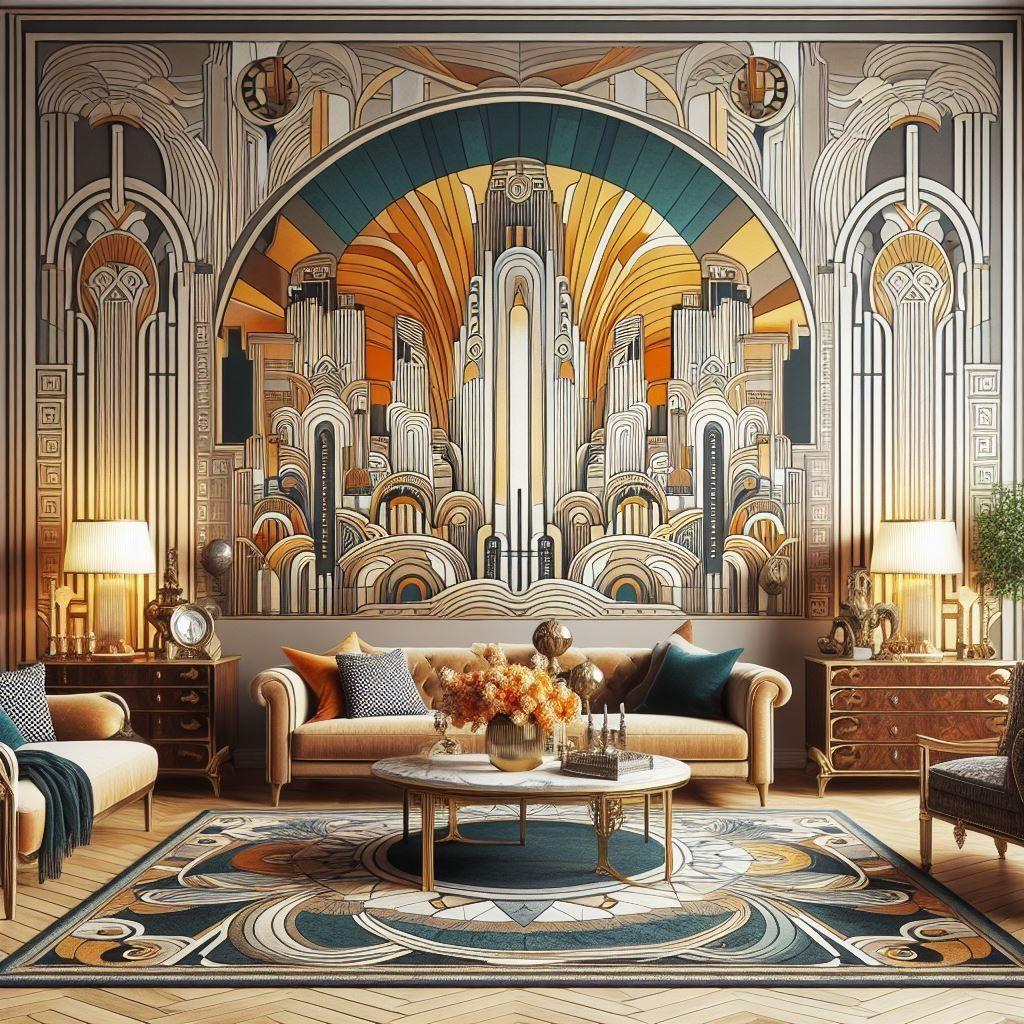
Art Deco was the modern design style that overtook Art Nouveau, which peaked at the 1900 Paris International Exposition. Although the two designs have similarities and are sometimes confused, their principles differ significantly.
Art Nouveau emphasizes curves, ornament, and natural inspiration, resulting in expressive and decorative interiors. Art Deco favors symmetry, bold geometry, and machine-age luxury. It features sharp lines and dramatic contrast.
Modern organic designs are more like Art Nouveau, featuring nature-infused pieces, but eliminating ornamentation. The style focuses on simplicity and minimalism. In other words, Art Nouveau celebrates craftsmanship and visual storytelling, while modern organic interiors prioritize calm restraint.
Art Nouveau Materials, Colors, and Motifs
The materials and motifs of an Art Nouveau interior are rooted in nature and craftsmanship. Colors, textures, and ornaments are also used to create sensory richness and organic interiors that are expressive, yet unified.
Nature-Inspired Forms and Symbolism
Nature inspires the visual language of Art Nouveau interiors, translated into flowing, stylized forms, as opposed to literal representations. The style’s forms and symbolism showcase inspiration from vines, flowers, leaves, insects, animals, and the human form.
Motifs appear carved into wood, cast in metal, etched into glass, or woven into textiles. Lines branch, curl, and intertwine, and rarely stop abruptly. This approach results in continuity and movement, creating interiors that feel immersive and alive.
Typical Color Palettes and Materials
Earth tones, such as olive green, ochre, warm brown, and muted terracotta, are the foundation of an Art Nouveau room. They offer richness and harmony, and are a perfect pair for jewel tones like emerald, deep blue, and amber, which add depth and contrast.
Transitions are soft and blended, preventing sharp color breaks. Materials are chosen for their texture and authenticity, with wood, stone, ceramic, glass, and metal the preferred options. They are often left visible to highlight grain, veining, handwork, and variation.
Common Decorative Elements (Glass, Ceramics, Fabrics)
Many decorations are used to express the character of an Art Nouveau interior. Glass is frequently used in strained, etched, or molded forms, and helps introduce color and fluidity to windows, doors, mirrors, and lighting fixtures.
Ceramic tiles bear floral patterns and curving lines, making them the preferred choice in fireplaces, kitchens, and bathrooms. Fabrics add softness and movement, with silk, velvet, and embroidered textiles preferred because they deliver the handcrafted aesthetic.
Patterns are kept organic to echo natural forms, and decorative elements are integrated throughout the interior, rather than in isolation, to reinforce continuity.
How Hardware and Finishes Shape the Look
Hardware helps translate organic design forms and principles into tactile details that connect spaces and add character through their craftsmanship. Finishes also have a defining role in unifying the interior and shaping Art Nouveau design, as shown below.
Bronze and Copper in Art Nouveau Interiors
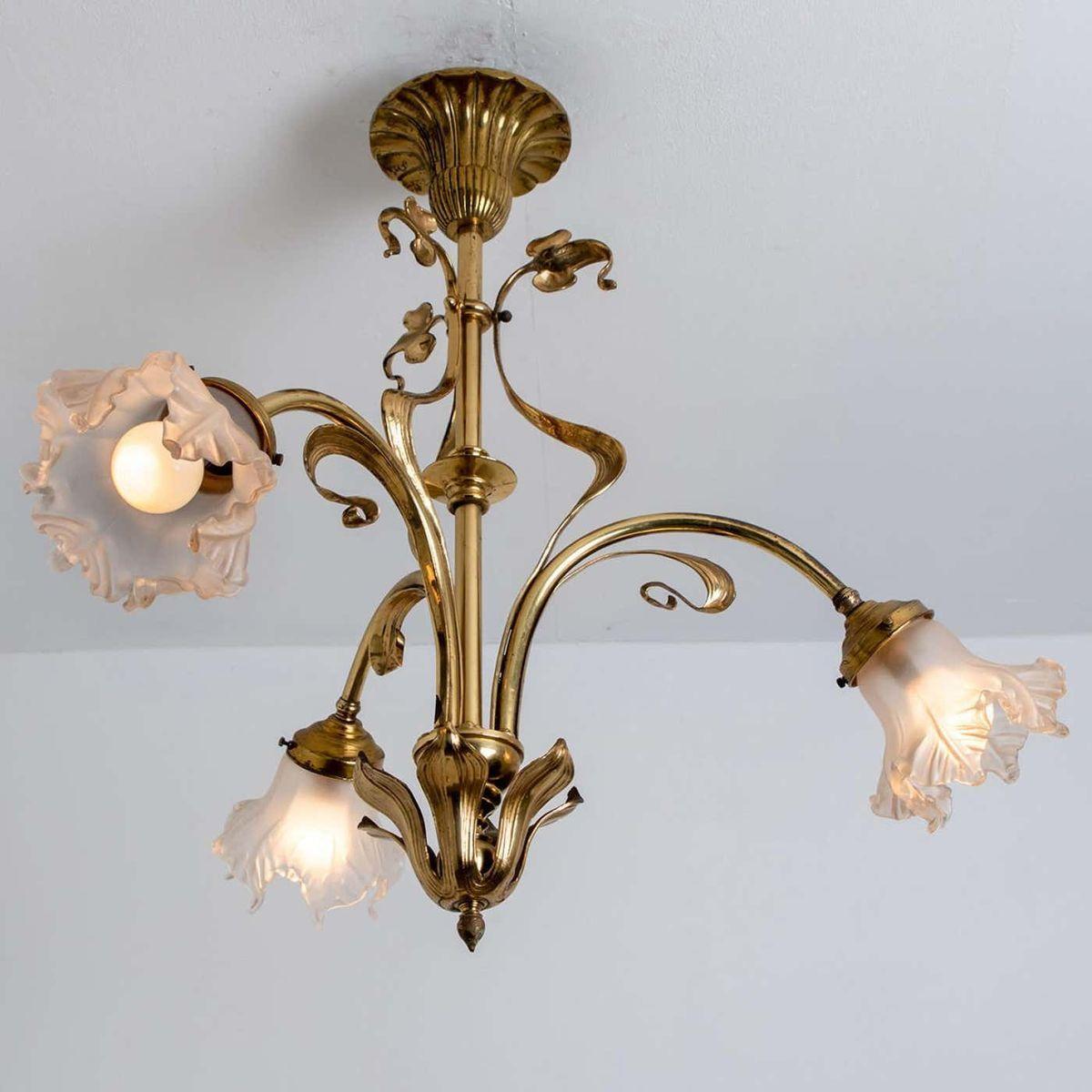
As a classic interior design concept, Art Nouveau calls for aged materials and rustic components. Bronze and copper are staples of the design, featured in metal hardware and decor pieces. They add warmth, malleability, and expressive character.
Bronze and copper allow for sculptural forms, making them suitable for handles, light fixtures, railings, and decorative accents. Unlike polished chrome or steel, bronze and copper feel aged and alive, developing depth and variation over time. Their natural aging enhances the organic philosophy of Art Nouveau designs.
Aged metals also offer authenticity. You can mix different metals thoughtfully to add rich textures and hues that remain consistent with your palette. Use the pieces consistently throughout the interior to create visual cohesion and link architectural elements, furniture, and fixtures into a unified, flowing expression.
Curved Door and Cabinet Hardware Details
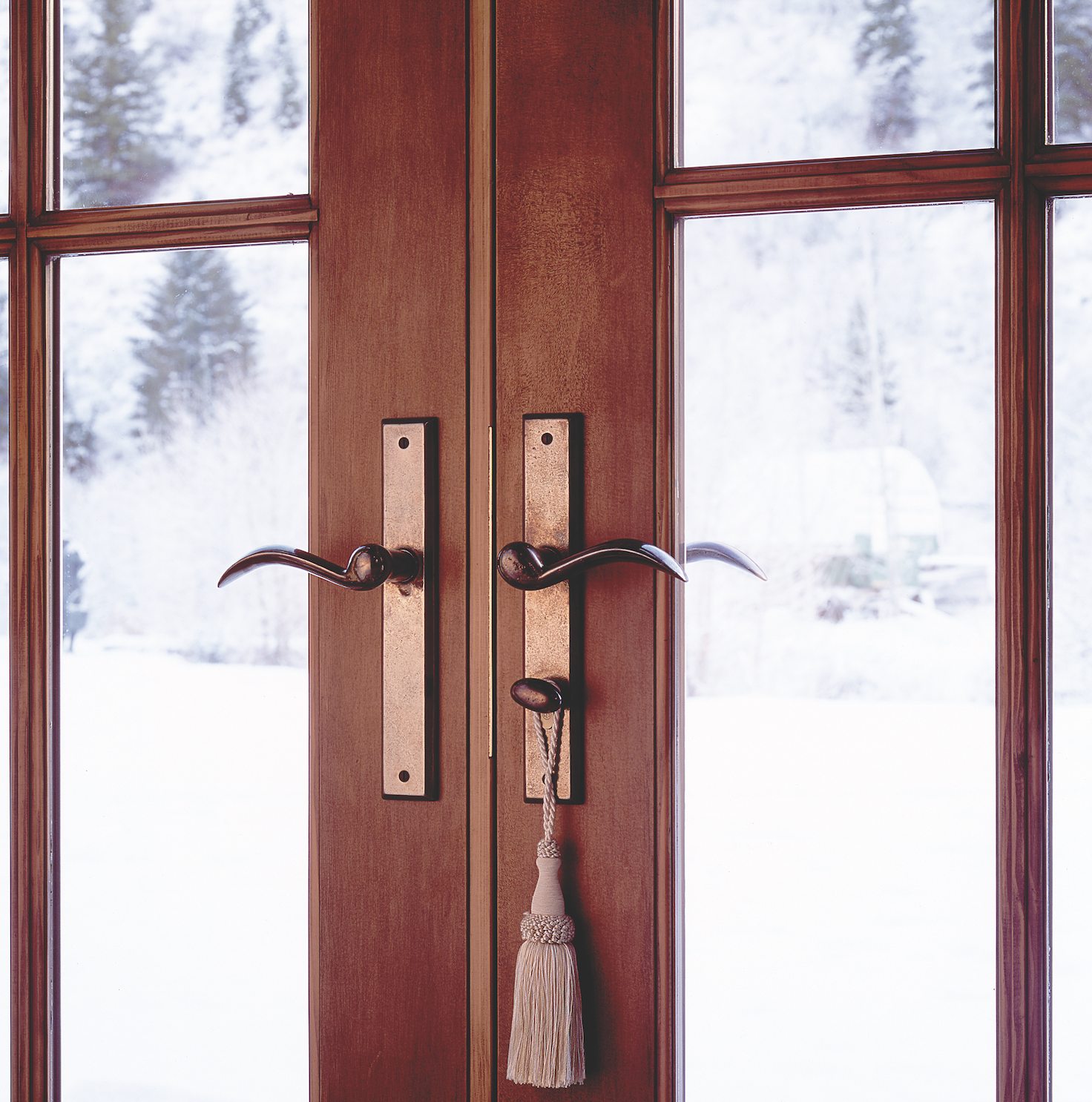
Hardware pieces in Art Nouveau interiors are miniature works of art above everything. While functionality is a core requirement, these pieces feature flowing silhouettes, floral engravings, elongated whiplash curves, and other intricate design elements.
Door hardware, such as knobs and handles, features smooth lines that soften transitions and blend into the surrounding design with minimal contrast. Cabinet handles and details also carry gentle arcs that feel natural to the hand.
Scale and proportion are carefully determined to enhance the overall design without overwhelming it. Repetition across rooms establishes rhythm and continuity, resulting in organic movement that defines Art Nouveau spaces.
Aged Patinas and Organic Textures
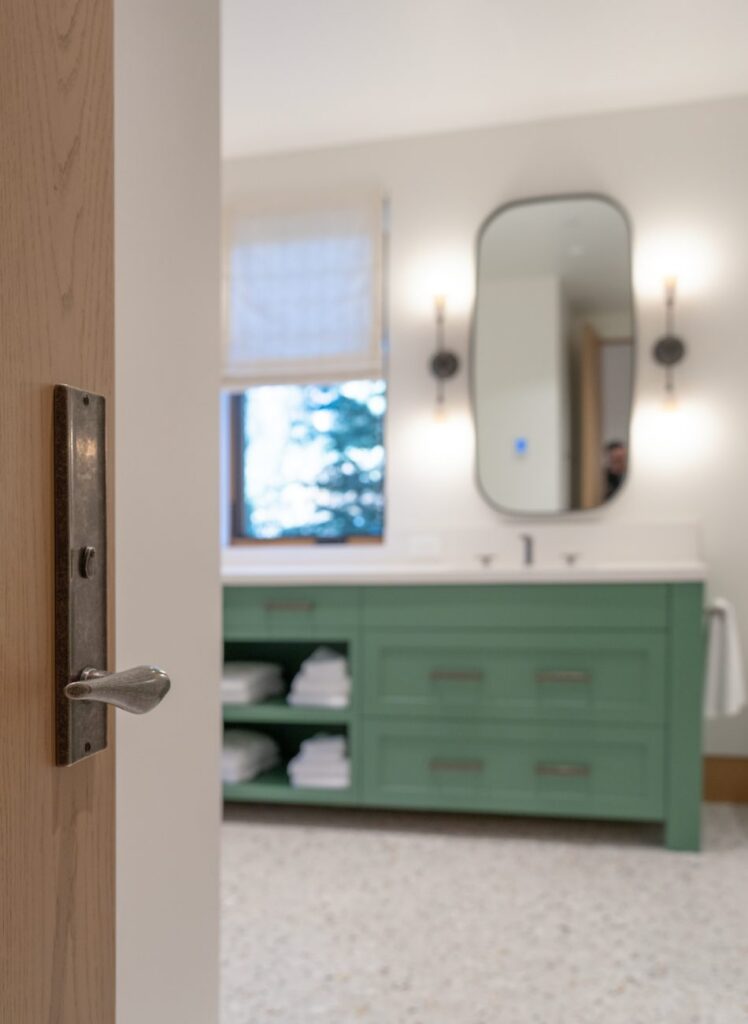
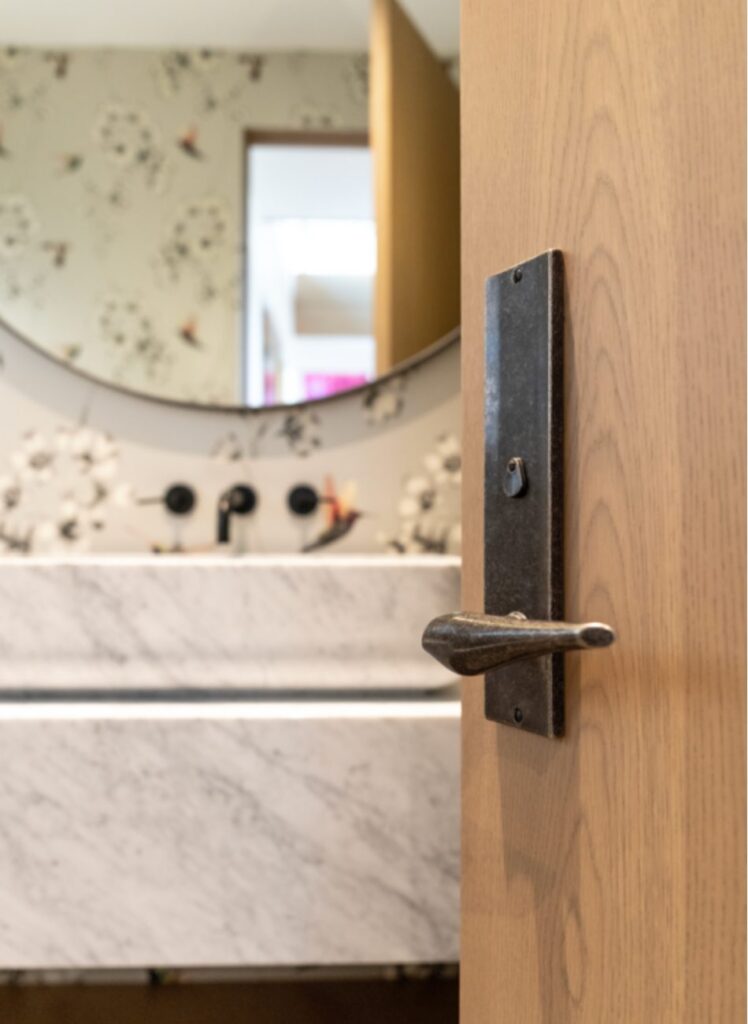
Aged patinas emphasize time, material authenticity, and tactile depth, which fit right into the Art Nouveau style interior design.
Oxidized bronze, darkened copper, and softly brushed finishes are often used to create surfaces that interact dynamically with light. These textures add visual interest and rustic, organic flair without appearing worn.
Organic finishes also complement carved wood, textured glass, and ceramic finishes, preventing sterile interiors. Patinas are generally soft, so they help reduce visual contrast without hindering variation, allowing decorative elements to blend seamlessly.
Finishes That Complement Art Nouveau Motifs
Art Nouveau interiors feature finishes chosen to enhance decorative motifs and achieve a cohesive expression. Satin and matte are preferred finish options because of their subtle sheen that allows curves and textures to remain the focus.
Hand-applied finishes also work perfectly with the aged, rustic, organic style. High-gloss surfaces are avoided because they feel modern and tend to be reflective. Instead, designers choose finishes that reveal brush marks, casting lines, and natural variation.
Color treatments are subdued to prevent isolation and blend in with the overall palette. Finishes are also planned across walls, hardware, fixtures, and furniture to create intentional movement throughout the interior space.
Room-by-Room Art Nouveau Design Guide
Although Art Nouveau focuses on continuity and visual cohesion, each room retains its individual character, complete with defined fixtures, textures, and finishes. This room-by-room design guide explores how to execute the style in your home.
Entryways: Statement Hardware and Lighting
The entryway is where you introduce your Art Nouveau interior design aesthetic, setting expectations for what lies ahead. This space benefits from expressive hardware that communicates craftsmanship.
Curved door handles and decorative escutcheons can be used to add detail, while warm metal finishes establish visual rhythm. Arched openings, carved wood panels, and flowing ironwork also help reinforce movement.
Sculptural light fixtures can feature stained or etched glass to cast soft, patterned illumination. Entryways are transitional spaces, so restraint is required to avoid clutter and improve traffic.
Living Rooms: Flowing Forms and Warm Materials
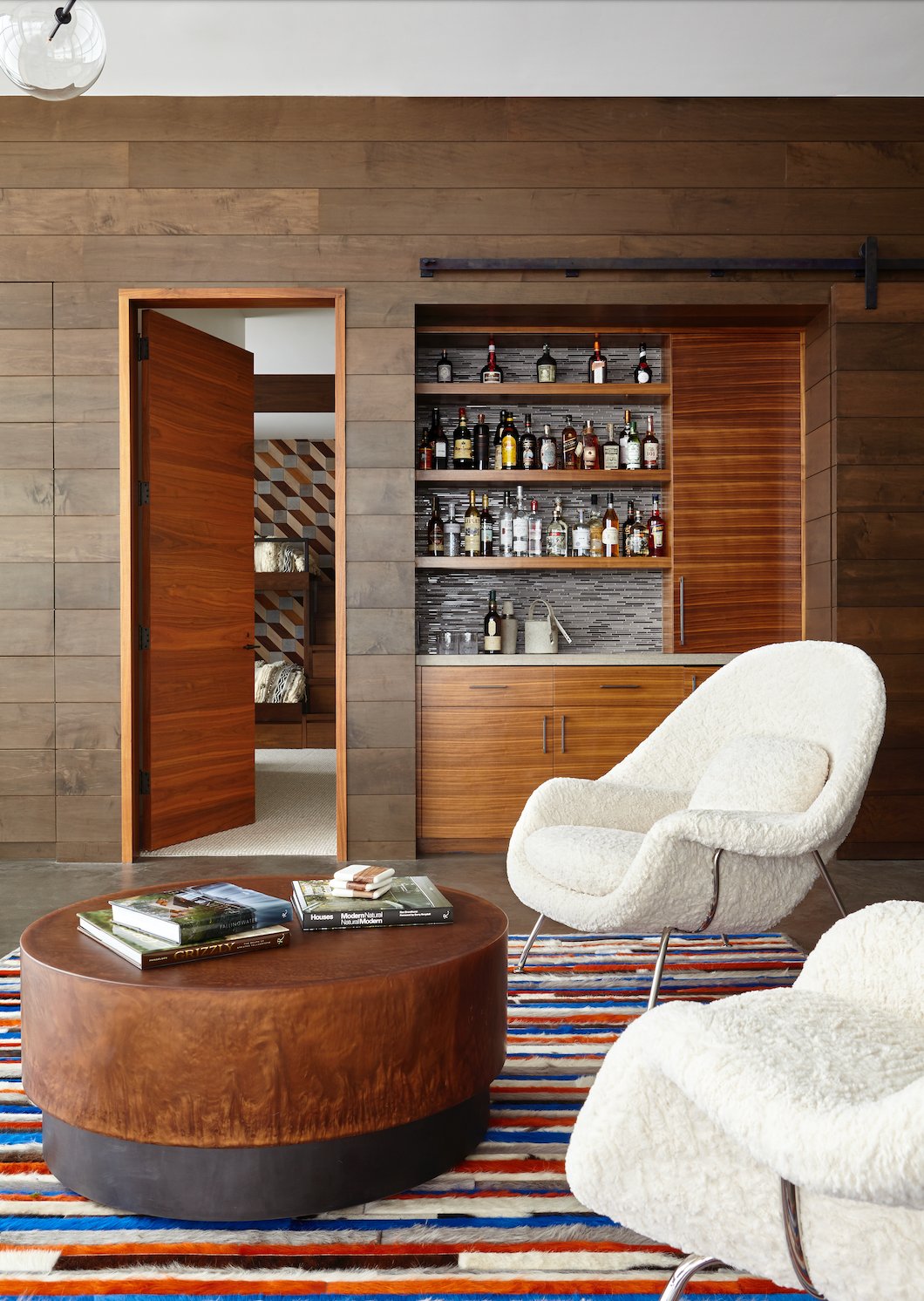
Art Nouveau living room design involves balancing comfort, artistry, and visual flow. Furniture items feature softened silhouettes, curved arms, and integrated detailing, avoiding sharp edges and lines.
Wood paneling and decorative moldings blend in with layered textiles with the help of material repetition and curves, rather than heavy ornamentation. This approach creates living rooms that feel inviting and expressive, while adding dynamic textures and warmth.
The textures are further enhanced using warm materials and metals like bronze and copper in places, such as lighting, fireplace surrounds, and hardware. Lighting is kept functional and sculptural, providing both illumination and visual anchorage.
Kitchens: Custom Bronze Fixtures and Details
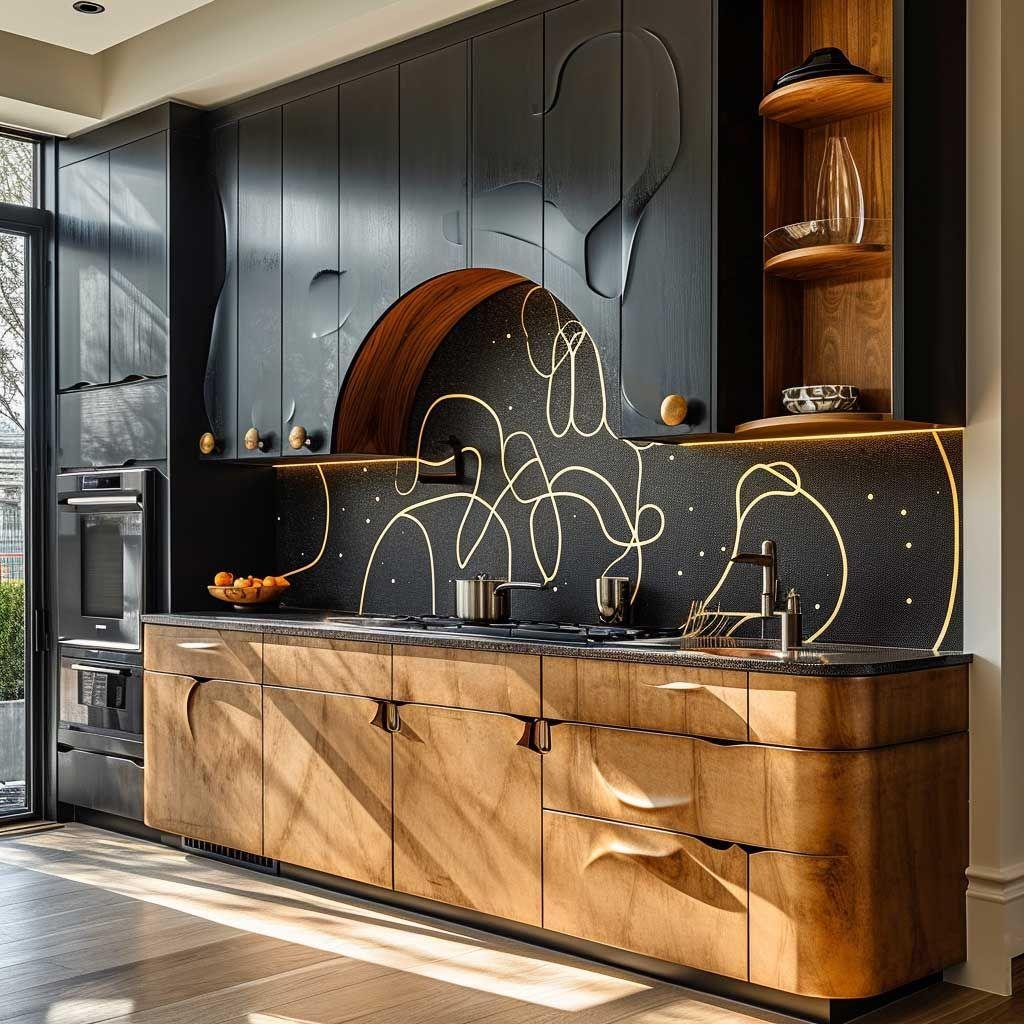
Functionality meets refined artistry in Art Nouveau kitchens, where custom bronze or patinated metal fixtures bring warmth and continuity to a space dominated by hard surfaces.
Kitchen cabinet hardware features curved forms that help soften visual transitions, besides improving ergonomics. Backsplashes may incorporate decorative tiles with flowing patterns to add subtle movement.
Natural materials, such as wood, are accented using soft, warm metallic shades in premium hardware. Stone countertops also feature expressive grains and veining. Each surface contributes to the ongoing movement and transition between different parts of the kitchen.
Bathrooms: Stained Glass, Patinas, and Tactile Surfaces
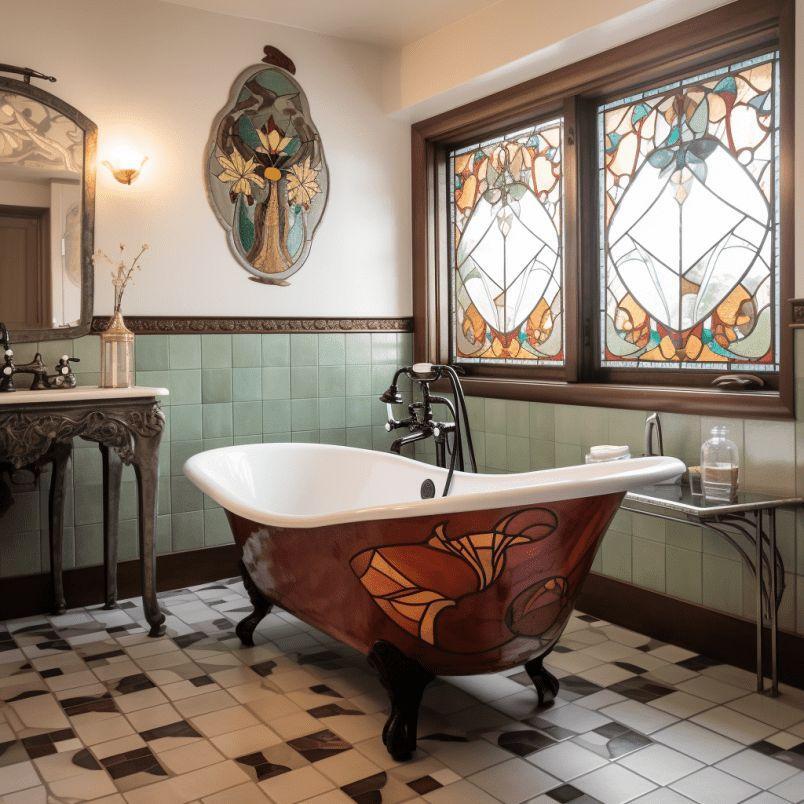
Art Nouveau bathrooms offer sensory richness and practicality achieved using stained or frosted glass, ergonomic hardware, and functional lighting and flooring. Stained glass introduces color while maintaining privacy.
Aged bronze adds visual consistency and elegance to kitchen and bath fixtures, encouraging interaction through texture rather than shine. Ceramic tiles with organic patterns help create visual continuity, and lighting is diffused and atmospheric, yet bright enough to support daily routines.
Rather than appearing ornate, Art Nouveau bathrooms are designed for immersion and relaxation. They balance decorative detail with practicality to create spaces that feel restorative and visually engaging.
Bedrooms: Soft Curves and Period-Inspired Accents
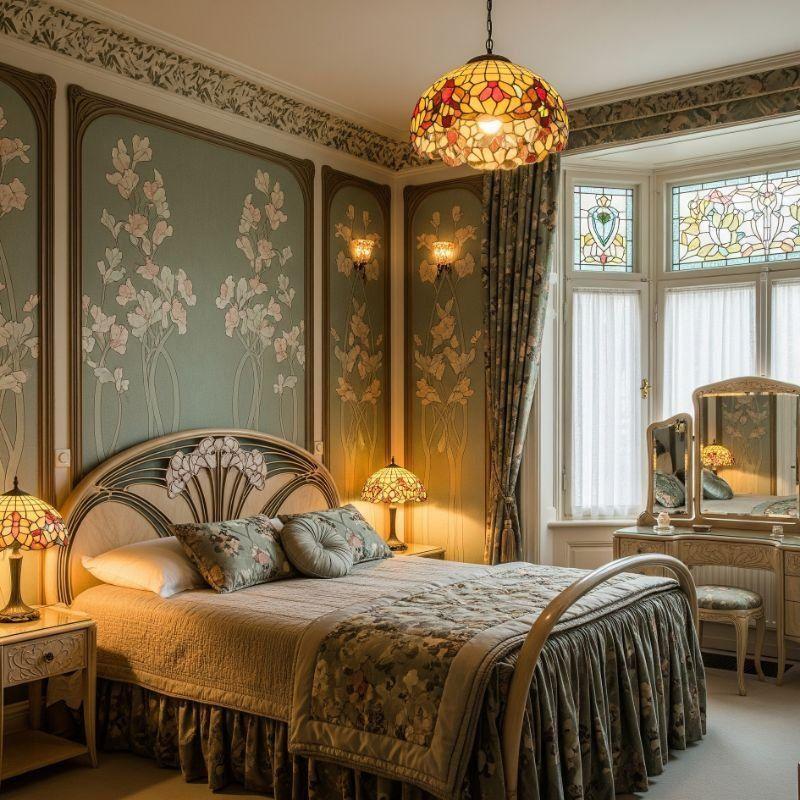
Bedrooms in Art Nouveau interior design expose the style’s softer, intimate touches, with curved headboards, flowing textiles, and gentle ornamentation, the preferred angle. They help establish a sense of calm and pair well with decorative elements that draw from historical motifs.
Metal accents are used sparingly in lighting or hardware to maintain warmth without adding visual weight. The color palette leans more toward muted earth tones and softened jewel shades that reduce the need for additional transitional items.
Variations naturally blend into each other, resulting in cohesive interiors that offer emotional comfort. Texture, proportion, and subtle detailing reinforce the laid-back appeal of these bedrooms, which is different from the bold, expressive living rooms and kitchens.
Visual Inspiration: Art Nouveau Hardware Lookbook
With a visual hardware lookbook, you can see how Art Nouveau principles translate into practical design decisions, such as hardware, finishes, craftsmanship, and continuity across historic and contemporary interiors.
Curated Examples From Historic and Modern Homes
Historic homes showcase Art Nouveau architecture interior in its purest form, where the design was a single flowing expression with all elements contributing. The architecture, hardware, lighting, and furniture were designed together, like in these examples:
Interior railings curving organically up the staircase, following the natural path without sharp corners.
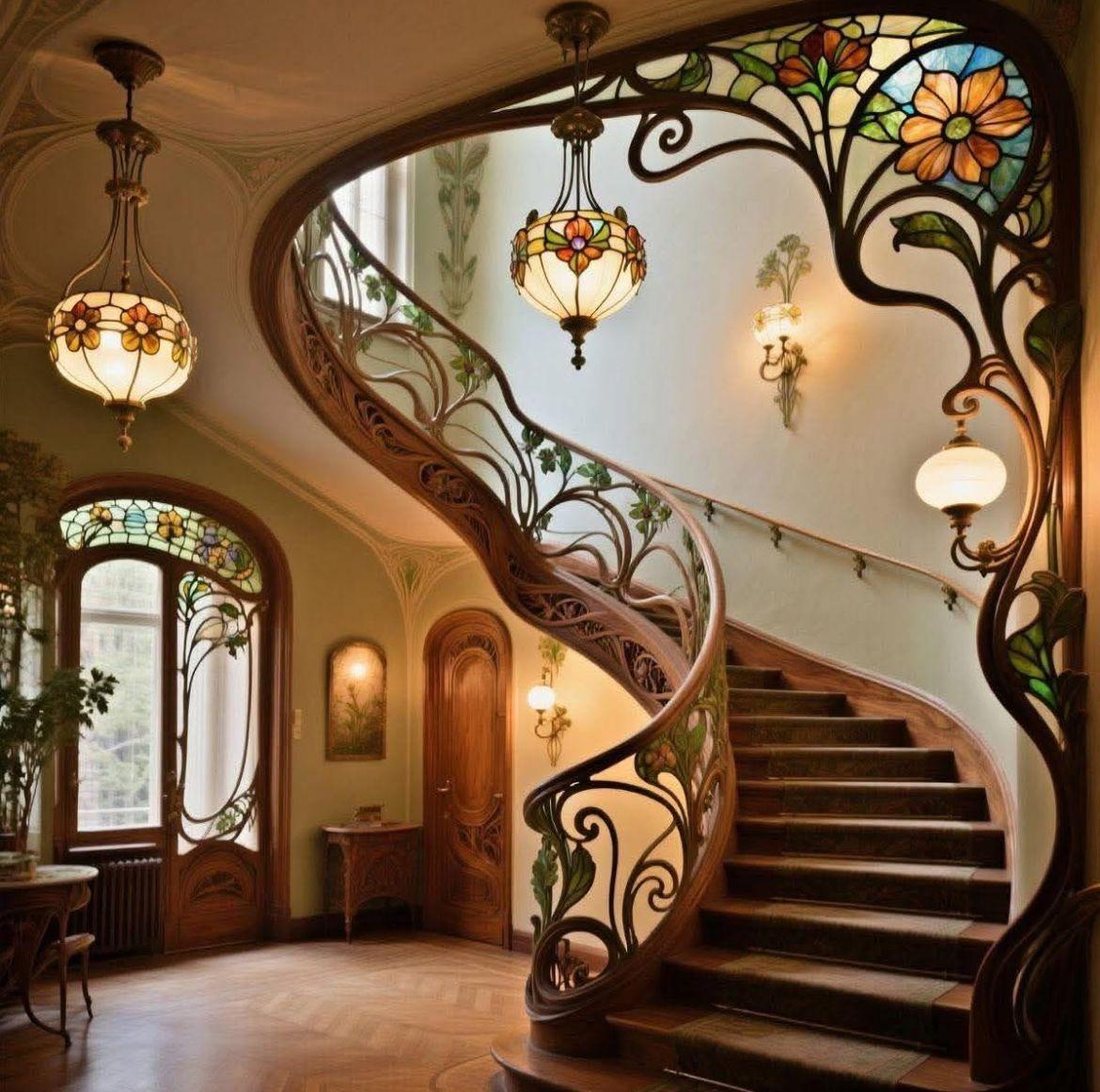
Decorative fixtures echoing botanical motifs
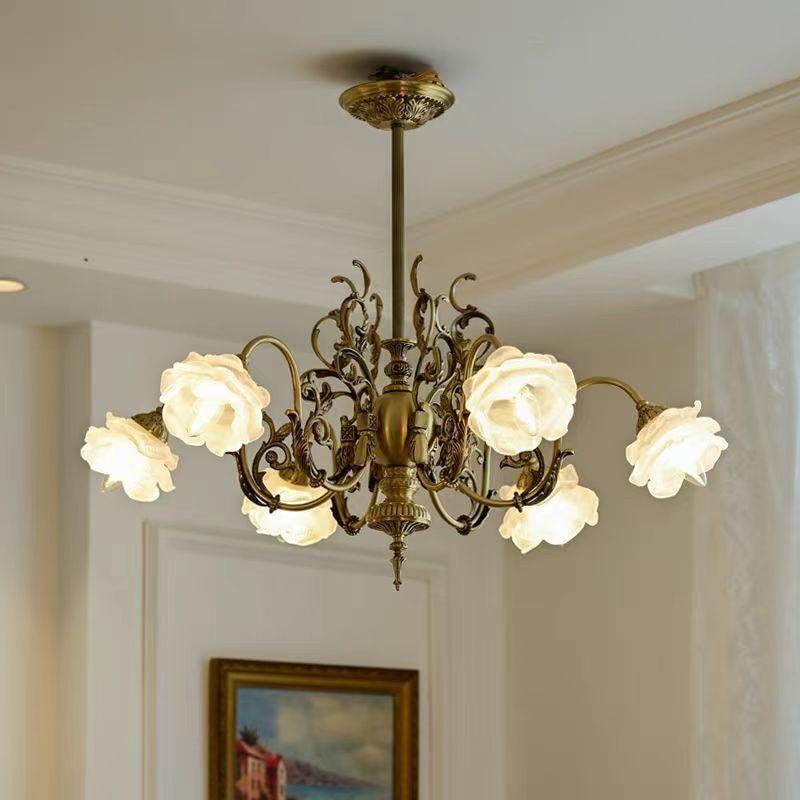
These interiors demonstrate design principles, such as material repetition, harmony, and moderation. Modern homes reinterpret historic ideas with restraint, using simplified curves and fewer decorative elements, while preserving organic movement. The focus on statement hardware, warm metals, and tactile finishes.
How to Mix Antique Influence With Modern Living
Art Nouveau is an antique style that blends effortlessly with modern living if you choose the right items. Selectivity and consistency are key to creating inviting interiors that are functional and aesthetic.
Rather than recreating period interiors, use expressive elements, such as curved hardware and patinated fixtures, and pair them with clean-lined furnishings. Another example is adding curvy furniture and sculptures to soften the edges in modern layouts.
Use neutral backdrops that allow decorative hardware to stand out without competing for attention. Treat antique-inspired pieces as focal points within a modern minimalist framework to avoid clutter. Align materials and forms and use intentional pieces that help capture the essence of classic and contemporary styles.
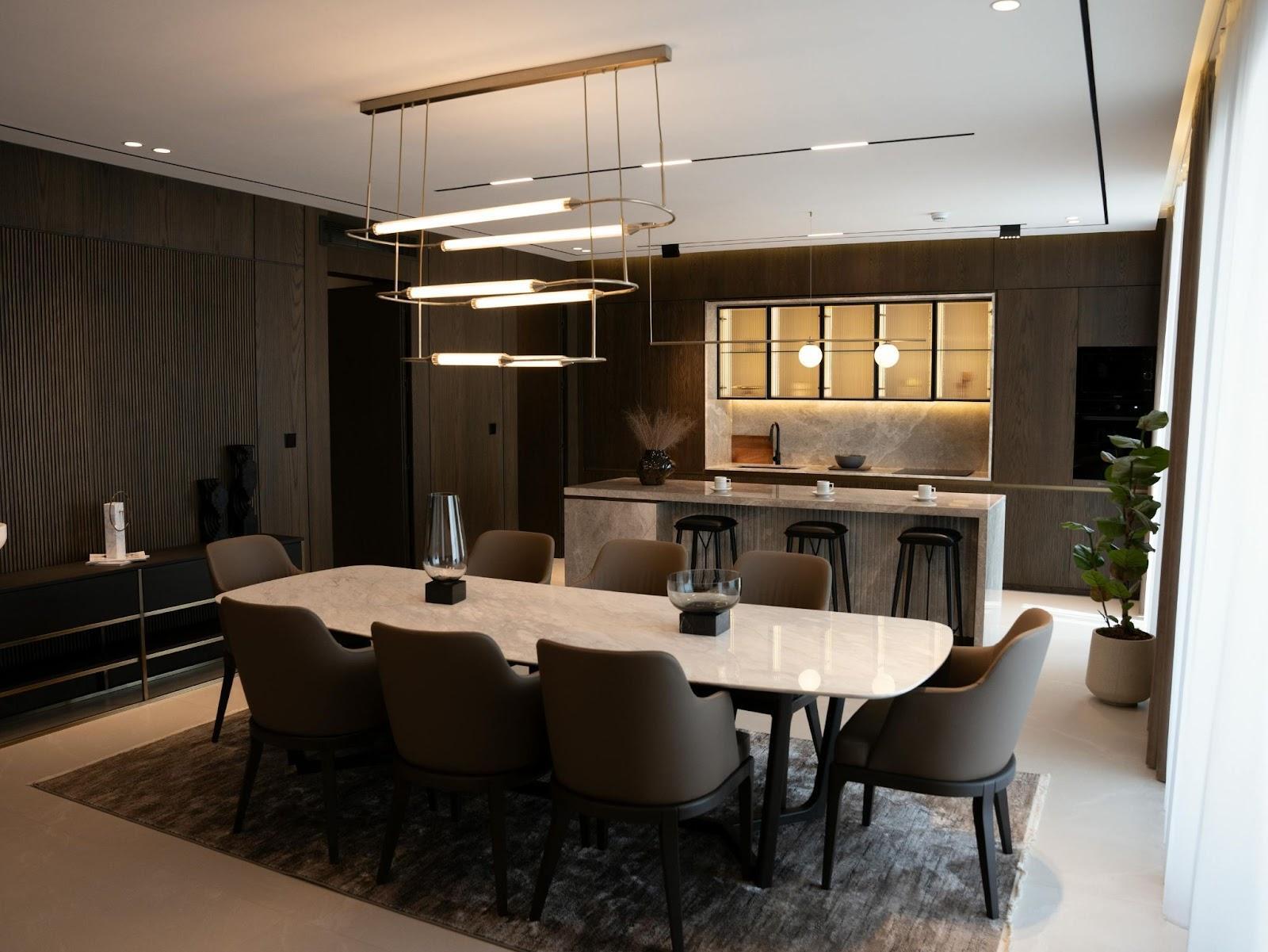
Why Art Nouveau Still Inspires Today
People who prefer an alternative to rigid minimalism and defined styles may find Art Nouveau inspiring for a change. The style embraces emotion, individuality, and craftsmanship, providing an unhinged level of customization in an increasingly standardized design landscape.
Revival Trends in Architecture and Interiors
Recent design trends show a renewed interest in vintage styles and principles, such as Art Nouveau, especially in residential and boutique commercial spaces.
Architects and designers are reintroducing curves and decorative metalwork, while owners are going for handcrafted finishes rather than uniform, industrial aesthetics. Advances in fabrication also enable the production of organic forms that look expressive, making the design more accessible.
Instead of a strict historical revival, contemporary interpretations focus on selective integration. People are using Art Nouveau interior design elements to add character and softness to existing modern spaces.
A larger pool of reference resources also makes it easier for people to compare different implementations of the style and find new ways to apply it in their design.
Emotional Appeal of Organic Design
By mirroring natural rhythms, curves, and human movement, Art Nouveau interiors connect with people on a deeper emotional level than modern designs. The curved lines feel instinctive and comforting, while the textured materials invite touch and interaction.
Absence of harsh geometry creates visual calm even in detailed spaces. Continuous movement also increases immersion, and organic designs convey care and intention. The interiors feel thoughtfully crafted rather than prefabricated and assembled, resulting in an emotional resonance and timeless appeal.
The materials, textures, hardware, and finishes used also create warm, inviting interiors that promote relaxation and social interactions.
Final Tips for Creating Your Art Nouveau Space
Art Nouveau interior design style requires thoughtful curation and balance. You should also work with an architect, designer, or supplier who can ascertain material integrity to support longevity and daily living.
Where to Source Art Nouveau-Inspired Hardware
Specialty manufacturers, artisan workshops, and heritage hardware brands that emphasize craftsmanship are the ideal places to source your hardware. Rocky Mountain provides premium hardware and finishes for various interior design projects, allowing you to bring your vision to life. You can find high-quality bronze hardware for doors, cabinets, kitchen and bath, and other applications. Choose pieces made from solid bronze or copper with hand-applied finishes and organic forms. Prioritize high-quality hardware and select products that align with your overall material palette and design language rather than purchasing decorative pieces in isolation.
Designing With Balance: Artful vs. Overdone
Balancing interior design elements is a skill and an art form that distinguishes seasoned designers from the rest. A decorative style like Art Nouveau requires a limited number of focal elements.
Statement hardware, lighting, or patterned glass can all anchor the space, so you don’t need to layer too many motifs or finishes. Negative space is just as important as ornamentation, as it gives the eye a place to rest.
Use consistency in materials and curves to achieve cohesion. Apply with restraint to avoid overdone spaces that can dilute visual clarity and create unnecessary clutter.
Be artful and intentional, evaluating all aspects, including texture, color, proportion, material, and finish. Blend function with aesthetics to install pieces that provide more value.
FAQs About Art Nouveau Interior Design
What Defines Art Nouveau Interior Design?
Flowing lines, nature-inspired motifs, and integrated craftsmanship are the highlights of Art Nouveau interiors. The spaces are unified, where architecture, furniture, hardware, and finishes work together to create a cohesive artistic environment.
What Colors Are Used in Art Nouveau Interiors?
Art Nouveau interiors use earthy greens, muted golds, warm browns, soft creams, and jewel tones, such as amber and emerald. These tones are blended harmoniously to avoid harsh contrasts and create organic, flowing continuity.
Can I Combine Art Nouveau With Contemporary Styles?
Yes, Art Nouveau can be combined with contemporary styles using selective curves, warm metal hardware, and organic finishes paired with clean layouts, neutral palettes, and modern spatial planning.
Yes, Art Nouveau can be combined with contemporary styles by using selective curves, warm metals, and organic finishes as focal elements within clean layouts, neutral palettes, and modern spatial planning.
What Materials Are Common in Art Nouveau Finishes?
Bronze, copper, carved wood, stained glass, stone, ceramic tile, and textured fabrics are the common materials in Art Nouveau finishes. They’re often hand-finished to highlight natural variation, patina, and craftsmanship, allowing material authenticity to excel.
Is Art Nouveau Interior Design Expensive?
Like most interior designs, Art Nouveau is adaptable to various budgets, depending on the scale and scope of the project. Some decorative items are costly because of the quality and level of detail, while others are abundant and therefore affordable.
Where Can I Buy Art Nouveau-Style Hardware?
Purchase hardware that matches the Art Nouveau style from reputable specialty wholesalers and retailers, such as Rocky Mountain. You’ll find specialty hardware brands, antique options, and artisanal pieces that align with your project.